

On 10 June 2025, the Financial Supervision Commission (FSC), the Bulgarian supervisory authority of the insurance sector, imposed a temporary ban on the provision of new and the extension of the term of existing cross-border products and services of ZAD DallBogg: Life and Health AD (ЗАД „ДаллБогг: Живот и Здраве“ АД) – under the freedom […]
EU member states agree to extend temporary protection for refugees from Ukraine

The Council reaches a political agreement about extending the temporary protection for more than 4 million Ukrainians who fled from Russia’s war of aggression. Source link
Israel-Iran crisis

Any military climbing in the Middle East should be censored, said the UN chief in a brief statement published by the office of his spokesperson. “He is particularly concerned about Israeli attacks on nuclear installations in Iran while the talks between Iran and the United States on the status of the Iranian nuclear program […]
Originally published at Almouwatin.com
Displacement doubles while funding shrinks, warns UNHCR
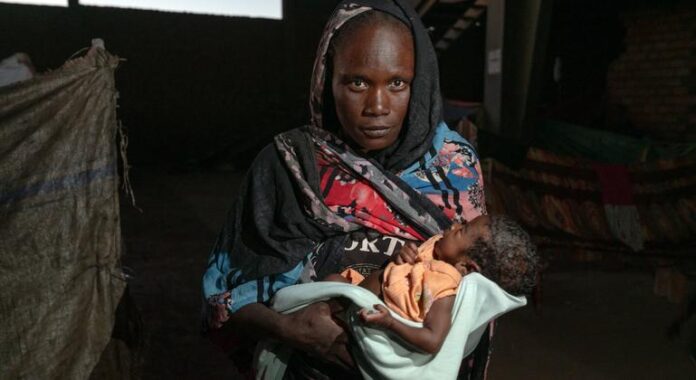
In December last year, the overthrow of the Assad regime by opposition forces reignited hope that most Syrians could see home again soon. As of May, 500,000 refugees and 1.2 million internally displaced people (IDPs) returned to their areas of origin.
But that’s not the only reason Syria is no longer the largest displacement crisis in the world.
Sudan sets a grim record
More than two years of civil war in Sudan has seen it pass Syria with 14.3 million people displaced since April 2022, 11.6 million of whom are internally displaced – that’s one-third of the entire Sudanese population, representing the largest internal displacement crisis ever recorded.
The UN refugee agency’s (UNHCR) latest report released Wednesday highlights the sheer scale of the problem, noting “untenably high” displacements – but it also contains “rays of hope,” despite the immediate impact of aid cuts in capitals around the world this year.
“We are living at a time of intense volatility in international relations, with modern warfare creating a fragile, harrowing landscape marked by acute human suffering,” said High Commissioner for Refugees Filippo Grandi.
A place to live in peace
By the end of 2024, 123.2 million people worldwide were displaced, representing a decade-high number, largely driven by protracted conflicts in Sudan, Myanmar and Ukraine.
73.5 million people worldwide have fled within their own countries, and of the 42.7 million refugees living beyond their borders, 73 per cent are hosted in low and middle-income countries, with 67 per cent are hosted in neighbouring countries.
Sadeqa and her son are refugees who have faced repeated displacement. They fled from Myanmar after Sadeqa’s husband was killed in 2024. In Bangladesh, they lived in a refugee camp for Rohingya Muslims, but the camp was overcrowded, leading them to flee again via boat.
She got on the boat not knowing where it was going. Ultimately, the vessel was rescued after weeks at sea, and now, she and her son live in Indonesia.
“We are searching for a place where we can live in peace,” Sadeqa said.
There are countless stories like hers. However, at the same time, Mr. Grandi said that there were “rays of hope” in the report. This year, 188,800 refugees were permanently resettled into host countries in 2024, the highest number in 40 years.
Moreover, 9.8 million people returned home in 2024, including 1.6 million refugees and 8.2 million internally displaced people mostly in Afghanistan and Syria.
‘Long-lasting solutions’
While 8.2 million IDPs returning home represents the second-largest single year tally on record, the report noted continuing challenges for returnees.
For example, many of the Afghan and Haitian refugees who returned home in the past year were deported from their host countries.
The report emphasized that returns must be voluntary and that the dignity and safety of the returner must be upheld once they reach their area of origin. This requires long-term peace-building and broader sustainable development progress.
“The search for peace must be at the heart of all efforts to find long-lasting solutions for refugees and others forced to flee their homes,” Mr. Grandi said.
‘Brutal’ funding cuts
In the last decade, the number of people who have been forcibly displaced worldwide has doubled but funding levels for UNHCR remain largely unchanged.
The report explained that this lack of increased funding endangers already vulnerable displaced communities and further destabilizes regional peace.
“The situation is untenable, leaving refugees and others fleeing danger even more vulnerable,” UNHCR said.
Schengen: Council approves declaration to commemorate 40th anniversary and renew its commitment for the common travel area
The Council approves a declaration to mark the 40th anniversary of the signing of the Schengen Agreement. Source link
World News in Brief: “ indifference and impunity ‘

Tom Fletcher noted that more than 30 million people need humanitarian assistance. In addition, with the famine declared in several places and more than 14.6 million displaced people, Sudan represents the largest humanitarian crisis in the world.
“On the other hand, the international community has said that we will protect the inhabitants of Sudan. Residents of Sudan should ask us if, when and how we will start to keep this promise, “said the rescue chief.
When will the international community fully finance the efforts to help Sudan?
When will the responsibility for violence in Sudan occur?
He called on the international community to stop acting with “indifference and impunity” towards Sudan,
“Broken” health system “
Since Sudan conflict broke out in April 2022, civil infrastructure across the country have been damaged or destroyed, including health and water and sanitation systems.
The health system in particular has been “broken into pieces”, according to Mr. Fletcher, leading to epidemics of measles and cholera increasingly disastrous.
Cholera epidemicwhich started in July 2024 and is now confirmed in 13 of the 18 states of Sudan, infected more than 74,000 people in total and killed 1,826.
“I saw the devastation caused by the cholera epidemic in Khartoum, where the health system was devastated by the conflict and has trouble facing the formidable request for health establishments,” I saw the trend of health establishments, Dr. Shible Sahbni, WHO representative in Sudan.
The World Health Organization (WHO), in partnership with the Sudanese Ministry of Health, launches a vaccination campaign on the 10 -day cholera in the state of Khartoum.
The campaign will aim to reach 2.6 million people in order to contain the cholera epidemic in the state.
“Vaccines will help stop cholera on its traces while we strengthen other response interventions,” said Dr. Sahbni.
CPI judges express support for colleagues sanctioned by us
Judges at International Criminal Court (ICC) expressed his solidarity with their colleagues who were recently sanctioned by the United States government, describing the decision as “coercive measures aimed at undermining the independence of the judiciary”.
“The judges are united and will continue to exercise their functions independently, impartial and conscientiously, fulfilling requests from the rule of law,” they said in a statement on Thursday.
The United States announced sanctions on June 6 against four judges from Benin, Peru, Slovenia and Uganda. The judges are currently overseeing a 2020 case which alleys war crimes in Afghanistan committed by the American and Afghan armies and the CPI arrest warrants in 2024 issued for the Israeli Prime Minister Benjamin Netanyahu and the former Minister of Defense Yoav Gallant.
The International Court of Justice
The UN Human Rights Head, Volter Türk, had previously declared that he was “deeply disturbed” by these sanctions, arguing that they corroded international governance and justice.
No inappropriate influence
The ICC is an independent judicial organization established under the status of Rome, adopted in 1998. Although it is not part of the United Nations, the CPI Works in close collaboration with her in a cooperative framework.
In the press release, the judges said that they decided and will continue to decide on affairs based on facts and regardless of threats, restrictions or incorrect influence “of any quarter or for any reason”.
“The judges reaffirm that they are equal in the execution of their functions and that they will always support the principle of equality before the law.”
More than 80 million Europeans suffering from neglected chronic respiratory diseases
Chronic respiratory diseases such as asthma are largely underestimated, sub-diagnosed and poorly managed in Europe-affecting 80 million people and costing $ 21 billion per year, the United Nations World Health Organization (WHOsaid Thursday.
A new WHO report in Europe and European respiratory society underlines how smoking and air pollution stimulate the growing crisis.
“We take 22,000 breaths per day, but respiratory health remains one of the most neglected areas of global health,” said Professor Silke Ryan, president of the European Respiratory Society.
6th Cause of death
Data analysis shows that chronic respiratory diseases are the sixth cause of death in Europe. They are often poorly diagnosed due to low diagnostic systems, limited training and inadequate health data.
Although effective treatments are available, deaths related to asthma remain high in young people, while chronic obstructive pulmonary disease is responsible for eight deaths by respiratory disease.
While preparations begin for the high -level meeting of 2025 on non -transmitted diseases, that Europe has urged governments to prioritize chronic respiratory diseases, to fix measurable targets and to fight against deep causes such as tobacco and air pollution.
Originally published at Almouwatin.com
Famine stalks two counties in South Sudan as fragile peace is threatened
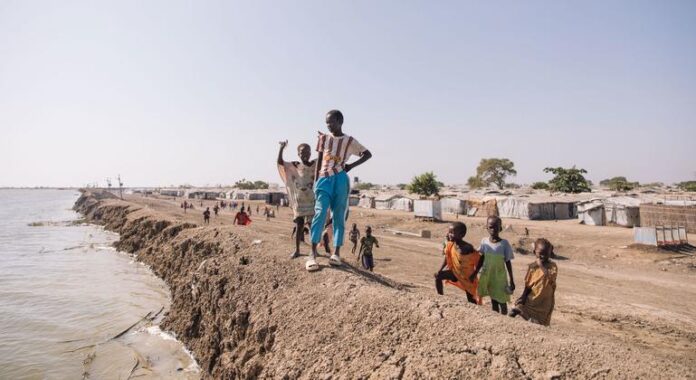
The warning comes amidst increased violence and a worsening food security condition which has 11 out of 13 counties in the state facing emergency levels of hunger and 32,000 of these inhabitants facing catastrophic level hunger conditions, almost three times previous estimates.
“We are seeing the devastating impact conflict has on food security in South Sudan,” said Mary-Ellen McGroarty, Country Director for the World Food Programme (WFP) in South Sudan.
“Conflict doesn’t just destroy homes and livelihoods, it tears communities apart, cuts off access to markets, and sends food prices spiralling upward,” Ms. McGroarty said.
Country-wide hunger
In total, 7.7 million people across South Sudan will face acute food insecurity, accounting for over half of the entire population. Additionally, 2.3 million children in South Sudan face malnutrition, a rise from 2.1 million at the beginning of the year.
FAO expects these numbers to increase as the country prepares to enter the lean and wet season which will further diminish food supplies and potentially worsen displacement.
The agency did note that counties in which violence has been largely absent have seen improvements in food insecurity as a result of increased crop production and humanitarian efforts. However, hunger continues.
Despite such ongoing challenges, Meshack Malo, the country representative of FAO in South Sudan, said that these results are proof of the “dividends of peace.”
Descent into conflict
South Sudan, the world’s youngest country, gained independence in 2011 and immediately fell into a brutal and devastating civil war which ultimately ended in 2018 thanks to a peace agreement between political rivals which has largely held.
However, recent political tensions and increased violent attacks, especially in the Upper Nile State, threaten to unravel the peace agreement and plunge the nation back into conflict.
“South Sudan cannot afford to sink into conflict at this point in time. It will plunge already vulnerable communities into severe food insecurity, leading to widespread hunger,” said Meshack Malo, Country Representative of FAO in South Sudan.
Humanitarian difficulties
FAO said that humanitarian access must be improved in order to address the worsening hunger situation.
The FAO report also emphasized that peace and capacity building is the only sustainable solution for food insecurity in South Sudan.
“Long-term peace is essential, but right now, it is critical our teams are able to access and safely distribute food to families caught in conflict in Upper Nile, to bring them back from the brink and prevent famine,” said Ms. McGroarty.
Discurso del presidente António Costa durante la ceremonia del 40 aniversario de la firma del Tratado de Adhesión de España a la Comunidad Económica Europea

El 12 de junio de 2025, el presidente del Consejo Europeo, António Costa, participó en la celebración del 40.º aniversario de la firma del Tratado de Adhesión de España a la CEE en Madrid. En su discurso, destacó la transformación democrática de España, su contribución vital a la UE y la perdurable fuerza de la solidaridad europea. También insistió en la necesidad de mantener la unidad para afrontar los desafíos globales actuales y forjar juntos el futuro de Europa.
The United Nations General Assembly adopts the ceasefire resolution of Gaza by an overwhelming majority

The movement followed the Security adviceThe fact of not adopting a similar resolution last week due to a lonely veto by the permanent member of the United States.
The resolution was supported by 149 Member States, with 12 votes against and 19 abstain. Among those who opposed the resolution were the United States and Israel, which were joined among others by Argentina, Hungary and Paraguay.
India, Georgia, Ecuador, Romania and Ethiopia were among the countries abstaining.
End famine as a weapon of war
Presented by more than 20 countries, it strongly condemns the use of famine as a weapon of war, requires a complete lifting of the Israeli humanitarian aid and insists on the protection of civilians under international law.
Although the resolutions of the General Assembly are not legally binding, they have significant political and moral weight.
On June 4, the Security Council did not adopt its draft resolution after a veto by the United States, a permanent member.
Meanwhile, famine conditions continue to threaten lives across Gaza, and the reports persist that civilians are killed or injured while trying to access foods to distribution points independently of the UN but supported by Israel and the United States.
The Assembly passes like stands of the Security Council
Opening of the special session, President of the General Assembly Phillémon Yang said that “horrors in Gaza should end” after 20 months of war. He criticized the paralysis and the incapacity of the Security Council and the inability to assume his central responsibility to maintain peace and security.
He called the situation on the “unacceptable” field, emphasizing the deprivation of food, water and medicine for civilians, the continuous captivity of hostages and the need for urgent international action.
Mr. Yang noted that the high -level meeting of next week in New York on the implementation of a two -state solution, chaired by France and Saudi Arabia, claiming that it would offer a chance for a renewed commitment to peace in the occupied Palestinian territory.
Key elements of resolution:
- Ceasefire: Call an immediate, unconditional and permanent ceasefire by all parties.
- Hostages: Requires the immediate and unconditional release of all the hostages held by Hamas and other armed groups.
- Implementation: Exhort the complete and immediate implementation of the Security Council resolution 2735 (2024), including the ceasefire, hostage exchanges and prisoners, the return of displaced persons and the withdrawal of Israeli Gaza troops.
- International law: Reaffirms that all parties must respect international humanitarian law and human rights, with particular attention to civil protection and the responsibility of violations.
- Famine as a weapon: Strongly condemns the use of famine and the denial of aid as a tactical of war.
- Humanitarian access: Requires complete, safe and undoubted help delivery – including food, medicines, water, shelter and fuel – in any Gaza.
- Detention practices: Calls for human treatment and the release of those who are arbitrarily detained and on the return of the remains.
- CIJ advisory opinion: Recalls the request for an urgent advisory opinion from the International Court of Justice on the obligations of Israel in the occupied Palestinian territory.
- End of the blockade: Request that Israel immediately lifts the blockade on Gaza and opens all passages to the borders to obtain aid deliveries.
- Responsibility: Exhorts Member States to take the necessary measures to ensure that Israel complies with its international legal obligations.
- United Nations and humanitarian staff: Calls for full respect for the work and immunity of United Nations personnel and humanitarian workers.
- Protection of humanitarian workers: Exhorts humanitarian organizations and the UN to ensure the safety of their staff.
- Medical neutrality: Underlines the duty to protect medical workers, health establishments and transport routes.
You can catch up with the full meeting by going to our cover live from the emergency session and today’s developments in Gaza, here.
Originally published at Almouwatin.com
