Wednesday, September 30, 2026
Home Blog Page 564

Syria: Up to one million people plan to return home in desperation

0
Syria: Up to one million people plan to return home in desperation

According to UN refugee agency, UNHCR, 600,000 people could be on the move in the next six months, according to its latest survey.

UNHCR spokesperson Celine Schmitt said on Friday that people will need “housing, jobs, schools, hospitals, electricity and clean water” – all of which are lacking after 14 years of civil conflict.

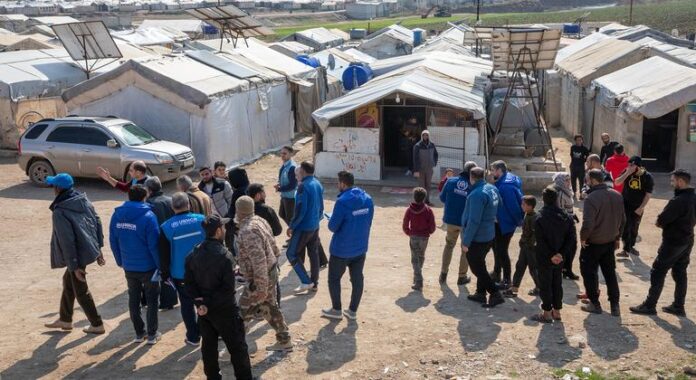
She described meeting one mother living in a tent with her children having fled from the rubble of her former home, without access to water, or employment – with the nearest school two kilometers away.

Yearning for home

The mother said she was “planning to take her tent and to go back home and put the tent next to her house, just to be back home…She was asking for small humanitarian help to be able to restart, to rebuild her life.”

Twenty-three districts in Syria could see their populations at least double, placing additional strain on already overstretched basic services and infrastructure.

The survey showed that 51 per cent of households intend to return to their areas of origin, with 93 per cent planning to go home within three to twelve months.

The survey took place between 26 January and 23 February, surveying 4,800 households – more than 29,000 individuals – in 514 displacement sites across northwest Syria.

As of January, more than 3.4 million IDPs were still in the northwest. The intention to return is particularly strong among IDPs in Idleb, where two in three households are opting to head home. Former frontline areas in the Idleb and Aleppo governorates are the primary intended destinations.

UN support for returnees

UNHCR and partners are providing transport, legal assistance and support in repairing damaged homes as well as mattresses, blankets and winter clothing for the tough months ahead.

“Nearly 14 years after the crisis began, Syria is at a crossroads, urgently needing support for rebuilding as years of conflict have devastated the economy and infrastructure, leaving 90 per cent of the population reliant on aid,” said Ms. Schmitt.

“There is now hope and a historic opportunity. UNHCR calls on the international community to make a firm commitment to support Syrians with essential aid for returnees and by investing in early recovery.”

Temporary shelters stand in rows in rural Aleppo in Syria.

Seven million displaced overall: IOM

A new report released on Friday by the UN migration agency, IOM, shows that around 750,000 IDPs have already returned to their places of origin in Syria since November 2024. – but some seven million remain displaced.

IOM’s Displacement Tracking Matrix (DTM) – the first such report on Syria since 2022 – shows that one in five displaced people in Syria are residing in tents or makeshift shelters, facing harsh living conditions.

Around 28 per cent of those who returned to their places of origin are residing in damaged or unfinished buildings.

“Syria remains a major humanitarian crisis, and the needs are immense.” said IOM Director General Amy Pope.

“IOM is dedicated to helping the people of Syria on their journey to recovery, and collecting and analyzing data like we’ve done in this new Displacement Tracking Matrix report is one of the key ways we will do that.”

As it re-establishes its presence in Damascus, IOM is reactivating its data collection operations in Syria so it can address critical knowledge gaps and enhance humanitarian coordination.

Returns from Lebanon, Türkiye and Iraq

Since January 2024, a total of 571,388 individuals have returned to Syria from abroad, of whom 259,745 returned to the country after November 2024, when events that led to the toppling of the Assad regime in early December gathered pace.

About 76 per cent of arrivals from aboard returned to their place of origin, while others returned to another location likely due to significant damage and security concerns in their place of origin, said IOM.

Fifty percent of Syrians returning from outside the country came from Lebanon, 22 per cent from Türkiye and 13 per cent from Iraq.

Source link

Weekly schedule of President António Costa

0
Weekly schedule of President António Costa

Weekly schedule of President António Costa, 10–16 March 2025

Source link

Millions in Central Sahel and Nigeria face food cuts amid WFP funding crisis

0
Millions in Central Sahel and Nigeria face food cuts amid WFP funding crisis

The crisis is being exacerbated by the expected early arrival of the lean season – the period between harvests when hunger peaks. Chronic hunger is being driven by conflict, displacement, economic instability and severe climate shocks, WFP said, with devastating floods in 2024 affecting over six million people across West Africa.

Funding shortfalls will force the agency to suspend food assistance for two million crisis-affected people, including Sudanese refugees in Chad, Malian refugees in Mauritania, internally displaced persons (IDPs) and vulnerable food-insecure families in Burkina Faso, Mali, Niger and Nigeria.

“With millions expected to face emergency levels of hunger at the peak of the lean season, the world must step up support to prevent this situation from getting out of control,” said Margot van der Velden, WFP’s Regional Director for Western Africa.

The UN food agency urgently requires $620 million to ensure continued support to crisis-affected people across the Sahel and in Nigeria over the next six months.

Acute food insecurity

An estimated 52.7 million women, men and children are projected to experience acute hunger between June and August 2025, according to the latest projected regional food security analysis.

Despite the ever-increasing needs in West and Central Africa, the proportion of the population facing extreme hunger is projected to increase by over 20 per cent by June 2025.

An underfunded region

Needs are chronically underfunded. As a result, WFP underscores that it is being forced to regularly make the difficult decision to cut rations, effectively taking from the hungry to feed the starving.

In Chad, the influx of refugees arriving from Sudan is placing enormous pressure on already limited resources, fuelling tension and competition between communities.

This is particularly concerning as the country enters its sixth consecutive year of severe food insecurity in 2025, with more than a 200 percent increase since 2020.

In neighbouring Nigeria, the prolonged humanitarian crisis, worsened by high inflation and weather-related shocks, is endangering the lives of children, pregnant women and entire communities.

During the June-August lean season, 33.1 million Nigerians are expected to face severe food shortages.

A call to action

WFP is working with national governments to assess and adapt its response to ensure urgent assistance reaches the most vulnerable, while also calling for safe and unhindered access to crisis-affected families.

“We need to act now to allow WFP to reach those in need with timely support. Inaction will have severe consequences for the region and beyond, as food security is national security,” Ms. van der Velden warned.

Source link

Media advisory – Eurogroup meeting of 10 March and Economic and Financial Affairs Council of 11 March 2025

0
Weekly schedule of President António Costa

Main agenda items, approximate timing, public sessions and press opportunities.

Source link

Occupied Palestinian Territory: Israeli operations continue to have dire consequences

0
Occupied Palestinian Territory: Israeli operations continue to have dire consequences

The UN relief agency for Palestine refugees (UNRWA) reports that Israeli authorities have started demolishing more than 16 buildings in Nur Shams refugee camp, after destroying more than two dozen homes over the past week in the occupied West Bank.

Those displaced are staying at public shelters in Jenin and Tulkarm, with many lacking bare necessities, according to a new assessment from the UN aid coordination office (OCHA).

“Less than half of the people our teams interviewed said they could afford food, with many reducing or skipping meals. Children are also unable to attend school,” UN Spokesperson Stéphane Dujarric told reporters at the regular daily briefing in New York.

Humanitarian efforts

Since the beginning of the Israeli operation in January, humanitarian partners have been providing life-saving assistance, distributing food parcels and daily meals.

Over 5,000 families have received cash assistance to meet their basic needs, and relief efforts have included the provision of bedding, dignity kits, water storage tanks and mobile latrines in Jenin, Tulkarm and Tubas.

Access restrictions

Meanwhile, according to OCHA, the closure of the Tayaseer checkpoint since February has severely hampered movement for more than 60,000 Palestinians.

On the first Friday of Ramadan, these restrictions prevented thousands of Palestinian worshippers from reaching holy sites.

While the Israeli authorities have allowed Palestinians access to East Jerusalem and the H2 area of Hebron, they have set up hundreds of metal barriers and imposed restrictions based on age and gender, with the condition that worshippers possess Israeli-issued permits.

OCHA has deployed teams to identify potential protection risks and possible measures for Palestinians to cross, with particular attention to the most vulnerable.

No aid entering Gaza

In Gaza, humanitarian organizations warned on Friday that the closure of all crossings for nearly a week has cut off the flow of critical aid, exacerbating suffering among civilians who have already endured months of hardship.

“It is critical that humanitarian assistance is allowed to enter Gaza without delay,” said Mr. Dujarric.

Under international humanitarian law, Israel, as the occupying power, is required to ensure that people’s essential needs are met, including by facilitating aid into Gaza. 

Source link

Sudan: Access to stricken Zamzam camp ‘is nearly impossible’

0
Sudan: Access to stricken Zamzam camp ‘is nearly impossible’

“I am deeply worried about reports of destruction of homes and livelihoods in North Darfur,” said Clementine Nkweta-Salami, UN Resident and Humanitarian Coordinator for Sudan. “Civilians continue to pay the price. Access to Zamzam camp is nearly impossible, just when people need support the most. We need unimpeded humanitarian access to deliver life-saving aid.”

Zamzam camp is around 15 kilometres south of El Fasher town, the capital of North Darfur, which has been besieged by militia forces opposing the Government in Khartoum now for months. It opened in 2004 to shelter people uprooted by the war in the west of the country.

Just last week, the UN World Food Programme reported that children were already dying in the camp and that thousands could starve in the coming weeks, after it was forced to pause aid distribution amid heavy shelling.

Allies-turned-foes

Across Sudan, the Government’s Sudanese Armed Forces (SAF) have been battling their former allies- turned-adversaries, the Rapid Support Forces (RSF) militia, since 15 April 2023 when a planned transition to civilian rule broke down.

The RSF now controls virtually all of Darfur but has been laying siege to the city of El Fasher for months, close to Zamzam.

RSF militia stormed the camp on 11 February triggering several days of clashes with army troops and allied forces, according to news reports.

On Tuesday evening, in another attack on civilians that have been a feature of the Sudan conflict, dozens of mainly Muslims were believed to have been killed in North Darfur’s Abu Shouk camp after an attack on a busy market there, credited to the RSF.

That followed another reported shelling attack on the camp on Sunday which left six dead.

In a related development, the Security Council expressed grave concern over the signing of a charter by Sudan’s opposition forces seeking to establish a parallel governing authority in Sudan.

“The members of the Security Council underscored that such actions risk exacerbating the ongoing conflict in Sudan, fragmenting the country, and worsening an already dire humanitarian situation,” the 15-member body said.

$22 million in emergency aid provided

Today, two million people in 27 locations across Sudan are now experiencing famine or on the brink of it. The Sudanese army controls northern and eastern regions, while the militia and their allies hold sway in much of the Darfurs in the west and parts of the south.

To help the most vulnerable civilians, the UN’s Emergency Relief Coordinator, Tom Fletcher, announced on Thursday that $22 million is to be allocated to support lifesaving humanitarian aid in Sudan.

The funds will be released from the Central Emergency Response Fund, CERF, to offer assistance to counter the impact of the spiralling conflict, hunger, disease and climate shocks.

Child rape horrror

Earlier this week, the UN Children’s Fund (UNICEF) warned that infants as young as one year old were being raped by armed forces.

More than 220 cases of child rape have been reported since the start of 2024, the UN agency said, citing data from teams helping victims of gender-based violence.

“Children as young as one being raped by armed men should shock anyone to their core and compel immediate action,” said UNICEF Executive Director Catherine Russell.

Source link

The EU Roadmap for Women’s Rights: a renewed push for gender equality

0
The EU Roadmap for Women’s Rights: a renewed push for gender equality


Returning home after sunset, a woman removes her headphones, lowers her hood, and keeps an eye on each man she passes. She cannot stop thinking about the man who followed her home and attacked her. She is 1 in 3 women to have experienced physical and/or sexual violence in the past 12 months and to have told no one.

Meanwhile, a group of women walk back from a march for women’s rights. Some men walk past yelling and gesturing from across the street. Because one in six men still consider it acceptable to catcall women. 

For many women in Europe, these stories are unfortunately all too familiar. So too is the fact that more than 60% of the time women are the ones doing the daily cooking and/or housework. This shows that progress towards gender equality remains far too slow. There are still countless structural discriminatory norms in our societies that need to be addressed and overcome.

That is why today, ahead of International Women’s Day on 8 March, the European Commission is reinforcing its commitment to  gender equality, with a long-term vision for progress. With the new Roadmap for Women’s Rights, the Commission plans to further pave the way towards:

  • freedom from gender-based violence
  • the highest standards of health
  • equal pay and economic empowerment
  • work-life balance and care
  • equal employment opportunities and adequate working conditions
  • quality and inclusive education
  • political participation and equal representation
  • institutional mechanisms that deliver on women’s rights

The Roadmap aims to build on the significant progress achieved under the Gender Equality Strategy 2020-2025. Thanks to this strategy, historic progress has been made in the EU over the past five years, with rules on pay transparency, gender balance on company boards, and on combating violence against women. The 2025 Report on Gender Equality in the EU – which was also published today – provides a more detailed overview of this progress and where more action is needed. 

For more information

Press release: Commission unveils its Roadmap to strengthen women’s rights

Roadmap for Women’s Rights

Annual Report on Gender Equality 

Actions for gender equality

Gender equality strategy

Source link

Investigation finds many second-hand online traders fail to comply with EU consumer law

0
Investigation finds many second-hand online traders fail to comply with EU consumer law

A screening by the European Commission and national consumer protection authorities finds that nearly half of second-hand online traders fail to correctly inform consumers of their return rights. Consumer authorities will now decide whether to take action against those traders in breach of EU law.

Source link

EU speeds up efforts to strengthen defence readiness

0
EU speeds up efforts to strengthen defence readiness

At the Special European Council, EU leaders committed to strengthening the EU’s defence readiness and capabilities. They also called for increased military support for Ukraine and set out principles for a lasting peace.

Source link

Yemen: ‘Fear of a return to full conflict is palpable’, says UN envoy

0
Yemen: ‘Fear of a return to full conflict is palpable’, says UN envoy

The “current trajectory is deeply concerning,” he told ambassadors, updating them on the latest political developments in the country, where Houthi rebels – formally known as Ansar Allah – have been battling Government forces backed by a Saudi-led coalition, for more than a decade.

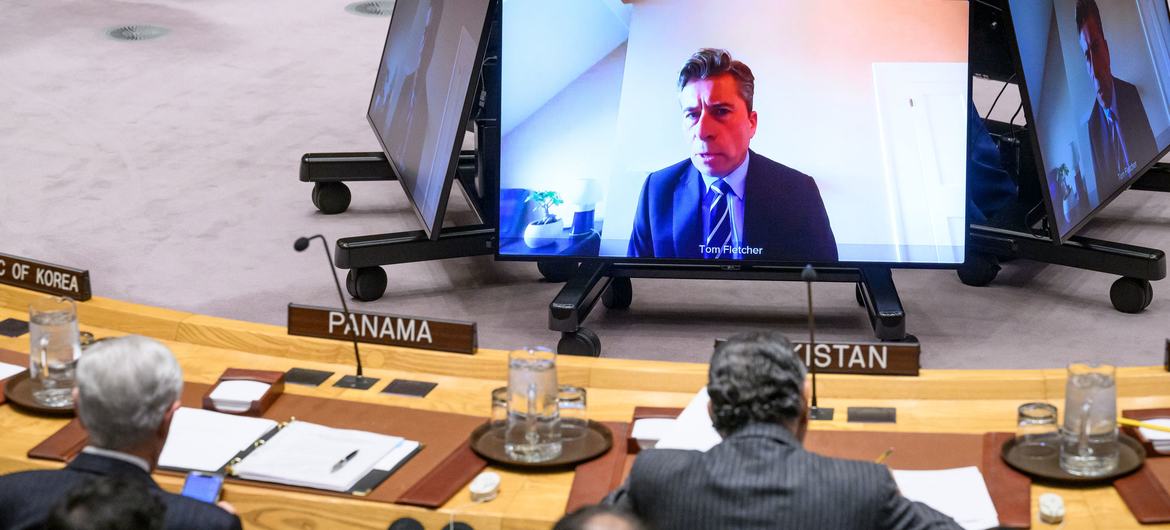
He spoke alongside UN Emergency Relief Coordinator Tom Fletcher who updated on the recent humanitarian constraints and emphasised the impact of the worsening situation facing women in the country.

Recent developments

While a resumption of large-scale ground operations in Yemen has not occurred since the UN-mediated truce of April 2022, military activity continues – and the cessation of hostilities is increasingly at risk.

“We have seen a rise in rhetoric from the parties to the conflict, pre-positioning themselves publicly for military confrontation,” explained Mr. Grundberg.

“We must not allow this to happen. Words matter. Intent matters. Signals matter. Mixed messaging and escalatory discourse can have real impacts,” he underscored.

The Special Envoy described recent reports of shelling, drone attacks, infiltration attempts and mobilisation campaigns recently witnessed in Ma’rib as well as in other areas such as Al Jawf, Shabwa and Ta’iz.

He also deplored the Houthis’ arbitrary detention of UN personnel and workers from other organizations – some for years – calling for the immediate and unconditional release of all detainees.

“Some colleagues’ parents have passed away while they have been in detention, without knowing the fate of their children,” he gravely noted.

Hans Grundberg (on screen), Special Envoy of the Secretary-General for Yemen, briefs the Security Council on the situation in Yemen.

Humanitarian constraints

Tom Fletcher brought ambassadors’ attention to the recent funding cuts UN agencies have been facing, which “have been a body blow” to aid workers efforts to save lives.

“It is the pace at which so much vital work has been shut down that adds to the perfect storm that we face”, he said.

The Humanitarian Coordinator explained the implications of such cuts, which will put aid workers in impossible situations where they have to choose “which lives not to save”.

Assault on equality

As the world readies itself to celebrate International Women’s Day on 8 March, Mr. Fletcher emphasised the “deliberate pushback against equality” witnessed in Yemen.

The crisis has disproportionately and devastatingly impacted women and girls. In 2021, Yemen ranked second to last in the World Economic Forum’s Global Gender Gap Index. And “there is no sign of progress for them,” Mr. Fletcher noted.

Yemen’s maternal mortality rate is the highest in the Middle East – more than ten times that of Saudi Arabia or Oman. Meanwhile, 1.5 million girls remain out of school, denying them their right to education and preventing them from breaking the cycles of discrimination and violence.

As funding for Yemen evaporates, “the numbers in my next briefings will be worse,” Mr. Fletcher put to the room. And yet, despite bearing the greatest burdens of war, displacement and deprivation, women remain on the frontlines of survival and recovery.

“We will do what we can to support them with the dwindling resources we have,” Mr. Fletcher said.

It is a tough time to be a humanitarian but “much tougher for the people we serve,” he continued. “The decisions you take will determine whether it gets worse,” he told ambassadors.

Tom Fletcher (on screen), Under-Secretary-General for Humanitarian Affairs and Emergency Relief Coordinator, briefs the Security Council on the situation in Yemen.

Tom Fletcher (on screen), Under-Secretary-General for Humanitarian Affairs and Emergency Relief Coordinator, briefs the Security Council on the situation in Yemen.

‘The only way forward’

The now unfolding US designation of Houthis as a Foreign Terrorist Organization has complicated international cooperation in peace efforts.

Preserving “the mediation space for the Yemenis” under the auspices of the UN to reach a just and inclusive peace is crucial, Mr. Grundberg said.

Reiterating his office’s commitment to its role, Mr. Grundberg highlighted that it would convene “the parties at any opportunity to bring an end to this decade-long conflict,” emphasising that any political process needs to include a “broad spectrum of Yemenis”.

“While this is possible to achieve, the environment for this to happen must be conducive,” he said. “Positive developments must be put on a more permanent footing.”

“We owe it to the millions of Yemenis not to waver or falter in our determination on this,” he concluded.

Source link