Wednesday, September 30, 2026
Home Blog Page 565

The ESAs acknowledge the European Commission’s amendments to the technical standard on subcontracting under the Digital Operational Resilience Act

0

The European Supervisory Authorities (EBA, EIOPA and ESMA – the ESAs) today issued an Opinion on the European Commission’s (EC) rejection of the draft Regulatory Technical Standard (RTS) on subcontracting.

The EC rejected the original draft RTS on subcontracting, which specified further elements that financial entities must determine and assess when subcontracting ICT services that support critical or important functions under the Digital Operational Resilience Act (DORA), on the grounds that certain elements exceeded the powers given to the ESAs by DORA.

Today’s Opinion acknowledges the assessment performed by the EC and confirms that the amendments proposed ensure that the draft RTS is in line with the mandate set out under DORA. For this reason, the ESAs do not recommend further amendments to the RTS in addition to the ones proposed by the EC.

The ESAs encourage the EC to finalise the adoption of the RTS without further delay as submitted to the ESAs.


Further information:

Cristina Bonillo

Senior Communications Officer
press@esma.europa.eu

Source link

UN emergency aid fund releases $110 million for neglected humanitarian crises

0
UN emergency aid fund releases 0 million for neglected humanitarian crises

The UN’s top aid official, Tom Fletcher, said that more than 300 million people urgently need assistance.

But funding has been falling annually, and this year’s levels are projected to drop to a record low.

“Brutal funding cuts don’t mean that humanitarian needs disappear; today’s emergency fund allocation channels resources swiftly to where they’re needed most,” he said.

One third of the CERF money will support Sudan and neighbouring Chad, which is home to many uprooted Sudanese.

The funds will also bolster the aid response in Afghanistan, the Central African Republic, Honduras, Mauritania, Niger, Somalia, Venezuela and Zambia.

Part of the allocation will go towards life-saving initiatives to protect vulnerable people from climate shocks, too.

Funding cuts impact aid for millions: UNICEF

Funding cuts to overseas aid levels in multiple countries are severely limiting the UN Children Fund’s ability to reach millions of children in dire need, the agency’s Executive Director said on Thursday.

UNICEF chief Catherine Russell highlighted cuts “by numerous donor countries follow two years of aid reductions at a time of unprecedented need.  Millions of children are affected by conflict, need to be vaccinated against deadly diseases such as measles and polio, and must be educated and kept healthy.”

She added that needs are outpacing resources and despite introducing efficiencies and innovation to their work, UNICEF teams have stretched every contribution to its limit.

“But there is no way around it, these new cuts are creating a global funding crisis that will put the lives of millions of additional children at risk.”

Funded entirely by voluntary contributions, the UN children’s agency has helped save millions, making “historic progress”.

Since 2000, global under-fives mortality has dropped by 50 per cent: “UNICEF implores all donors to continue to fund critical aid programs for the world’s children. We cannot fail them now,” Ms. Russell underlined.

Afghanistan: Lives and livelihoods on the line

Offering one snapshot of how cuts and shortfalls in aid are impacting one of the world’s most vulnerable nations, UN Spokesperson Stéphane Dujarric highlighted conditions in Afghanistan.

“Our humanitarian colleagues warn that Afghanistan continues to face a severe humanitarian crisis defined by decades of conflict, entrenched poverty, climate-induced shocks and rising protection risks, especially for women and girls,” he told reporters at the regular daily briefing in New York.  

More than half of the population – or 23 million people – need humanitarian assistance in the country, which has been run by the Taliban since they seized power from the democratically elected Government in August 2021.

Nearly 3.5 million children under five and more than a million pregnant and breastfeeding women are expected to become acutely malnourished, while explosive hazards continue to pose a lethal threat following decades of brutal civil conflict.

An estimated 55 people are killed or injured by ordnance every month – most of them are children.

Cuts already taking a toll

“Funding cuts are already significantly constraining the humanitarian community’s efforts to provide assistance to those most in need,” Mr Dujarric said.

In the past month, more than 200 health facilities have closed, depriving 1.8 million people from essential health services.

Malnutrition services for children have also been impacted.

“Our humanitarian partners warn that aid funding cuts will cost both lives and livelihoods – and undermine development gains,” said the UN Spokesperson.  

UN agencies and partners on the ground are urgently reprioritising programmes to ensure communities and areas most in need can be reached. 

Source link

Remarks by President António Costa at the press conference following the Special European Council meeting of 6 March 2025

0
Remarks by President António Costa at the press conference following the Special European Council meeting of 6 March 2025

During the press conference held at the end of the Special European Council meeting of 6 March 2025, President António Costa presented the main results of the discussions on Ukraine and European defence.

Source link

One in four countries report backlash against women’s rights in 2024

0
One in four countries report backlash against women’s rights in 2024

UN Women’s latest report Women’s Rights in Review 30 Years After Beijing, published ahead of the UN 50th International Women’s Day on 8 March, shows that in 2024, nearly a quarter of governments worldwide reported a backlash on women’s rights.

Despite decades of advocacy, economic instability, the climate crisis, rising conflicts and political pushback have contributed to a worsening landscape for gender equality.

A generation at risk

While 87 countries have been led by a woman at some point in history, true parity is still a long way off.

Alarmingly, UN Women reports that a woman or girl is killed every 10 minutes by a family member or intimate partner.

The digital space is also exacerbating gender disparities, the UN agency argues, with artificial intelligence and some social media platforms amplifying harmful stereotypes. Meanwhile, women and girls remain underrepresented in digital and tech-related fields.

In the past decade, there has been a disturbing 50 per cent increase in the number of women and girls directly exposed to conflict, and women’s rights defenders confront daily harassment, personal attacks and even death, UN Women said.

These findings underscore that crises such as COVID-19, soaring food and fuel prices, and the undermining of democratic institutions are not just slowing progress – but actively reversing gains.

‘We must stand firm’

“When women and girls can rise, we all thrive,” said UN Secretary-General António Guterres in his message for the day. Yet, “instead of mainstreaming equal rights, we are seeing the mainstreaming of misogyny.”

“Together, we must stand firm in making human rights, equality and empowerment a reality for all women and girls, for everyone, everywhere,” he emphasised.

UN Women Executive Director Sima Bahous echoed this urgency: “Complex challenges stand in the way of gender equality and women’s empowerment, but we remain steadfast.”

“Women and girls are demanding change – and they deserve nothing less.”

Beijing+30: The gains

As the world marks the 30th anniversary of the Beijing Declaration in 2025, the most visionary roadmap for furthering women’s rights, UN Women’s latest report shows progress that must be acknowledged.

Since 1995, countries have enacted 1,531 legal reforms advancing gender equality, maternal mortality has dropped by a third and women’s representation in parliaments has more than doubled.

Yet, as the report makes clear, significant work remains to achieve the 2030 Agenda. The newly introduced Beijing+30 Action Agenda outlines priority areas to accelerate progress.

Equal access to technology and online safety must be ensured for all women and girls, while investments in social protection, universal health care and education are all deemed essential for women’s economic independence.

Women-led organizations must receive dedicated funding to build lasting peace and women’s leadership in environmental policies must be prioritised, ensuring equal access to green jobs.

Meanwhile, countries must adopt and implement legislation to end violence against women and girls, in all its forms, with well-resourced plans that include support for community-based organizations on the front lines of response and prevention.

The Beijing+30 anniversary, alongside the upcoming UN Commission on the Status of Women (CSW69), presents a crucial opportunity to enshrine this Action Agenda in national policies, regional strategies and global agreements.

Turning words into action

As gender equality faces one of its most challenging periods in decades, UN Women is calling on governments, businesses and civil society to reinforce their commitments and push back against the pushback.

In this pivotal year for women’s rights, “UN Women is committed to ensuring that all women and girls, everywhere, can fully enjoy their rights and freedoms.”

On Friday, we’ll have LIVE COVERAGE from UN Headquarters in New York during the official commemoration of International Women’s Day, featuring content from across the world from UN agencies and partners. 

Source link

Choose compassion, reject cruelty to end HIV, says top UN rights official

0
Choose compassion, reject cruelty to end HIV, says top UN rights official

In a stark assessment of the current situation of the health crisis, Deputy UN High Commissioner for Human Rights Nada Al-Nashif warned that more than nine million people do not receive treatment, while 4,000 girls and young women contract the virus every week.

A staggering three-quarters of them live in sub-Saharan Africa, she noted, reminding Member States that while HIV is “entirely treatable and preventable…the world is off track in ending AIDS.”

Stigma fuelling crisis

“Stigma and discrimination are preventing concrete progress and paving the way for a resurgence of infections,” Ms. Al-Nashif said.

“Together, we have the power and the responsibility to change this. When human rights are promoted, health is protected.”

Other speakers echoed the need for human rights-based approaches to ensure universal access to treatment. They warned that discrimination and harmful laws targeting marginalized communities hinder access to prevention, testing and care.

Keep rights at the core

Florence Riako Anam of the Global Network of People Living with HIV (GNP+) quoted Nelson Mandela, saying that HIV is “more than a disease – it is a human rights issue.”

In many countries, criminalization, stigma and discrimination based on sexual orientation, gender identity, drug use as well as sex work continue to obstruct HIV response efforts, with deadly consequences.

GNP+, an NGO collecting data on stigma since 2008, has surveyed 100,000 people across 100 countries. The findings: nearly one in four respondents experienced HIV-related stigma.

Break the barriers

“To end AIDS for good, we must dismantle the human rights-related barriers that prevent certain populations from accessing the services they need and tackle the deep gender inequalities and underlying inequities that drive starkly different health outcomes,” said Vuyiseka Dubula, Head of Community, Rights and Gender at the Global Fund to Fight AIDS, Tuberculosis and Malaria.

Ms. Dubula, who lives with HIV in South Africa, noted that while global progress has been significant – new infections down by 61 per cent and AIDS-related deaths by 73 per cent in more than 100 countries over the last two decades—there is still much work to be done.

“This is something to be proud of, but we can go even further in the next five years if we really are focused on ending HIV” Ms. Dubula said, referring to Sustainable Development Goal 3 (SDG3) on ensuring healthy lives for all.

Compassion over cruelty

Adeeba Kamarulzaman of the World Health Organization (WHO) Science Council and the Global Council on Inequality, AIDS and Pandemics echoed the need for more compassionate methods in tackling the epidemic.

She pointed to Malaysia, her home country, which once faced a devastating HIV epidemic but has since made significant progress.

In countries decriminalizing drug use, knowledge of HIV status is 15 per cent higher and HIV incidence is five per cent lower, she explained, adding that in places where sex work is decriminalized, infection rates are further reduced by 4.5 per cent.

“When we choose compassion over cruelty, when we invest in people instead of punishing them, we save lives,” Dr. Kamarulzaman said.

Persistent discrimination

Erika Castellanos, a transgender woman and Executive Director of Global Action for Trans Equality, spoke of her experience in Belize, where LGBTIQ+ people faced up to 10 years in jail before 2016. Even after the law was overturned, little has changed.

“The stigma, discrimination and institutional barriers persist in the systems that deny us dignity, in the services that exclude us and in the societies that still see us as less than human,” said Ms. Castellanos, who has lived with HIV for 20 years.

“I am here because of the hard work, sweat, blood and tears of countless people, many of whom did not survive this epidemic,” she told the Human Rights Council.

“I am alive – because of an HIV response that valued my life.”

Source link

Special European Council, 6 March 2025

0
Remarks by President António Costa at the press conference following the Special European Council meeting of 6 March 2025

Special European Council, 6 March 2025

Source link

Gaza: Israeli aid cut threatens care for most vulnerable, warns UNICEF

0
Gaza: Israeli aid cut threatens care for most vulnerable, warns UNICEF

The agency said that despite the huge influx of humanitarian goods into Gaza during phase one of the ceasefire which began on 19 January, it has not been enough to make up for the 15 months of war when supply convoys were frequently blocked, impeded or cancelled by the Israeli military.

Speaking from Gaza, UNICEF’s Rosalia Bollen said that being unable to bring humanitarian relief into the enclave including vaccines and ventilators for pre-term babies “will have devastating real-life consequences” for children and their parents.

“If we’re unable to bring that in, routine vaccination will come to a standstill”, she told UN News. “Neonatal units won’t be able to care for preterm babies, so this is a real-life consequence that we’ll be dealing with very, very soon if we’re unable to resume the aid supplies coming in.”

The UNICEF Communication Specialist said that existing aid supplies have already been largely distributed throughout Gaza.

“The needs are so high that we haven’t been able to stockpile goods…that’s why these latest restrictions are so devastating,” she said, adding that the first phase of the ceasefire wasn’t just a pause in hostilities…it really was a lifeline for families here…The mood here is very depressed; families that I speak with are deeply worried about what the future is going to hold.”

Nutrition gains reversed

The aid blockade comes as the UN aid coordination office, OCHA, reported a slight improvement in dietary diversity during the ceasefire which humanitarians says “is now being reversed” by the aid blockade.

Before the current conflict, acute malnutrition in Gaza was almost non-existent, but today more than 3,000 children and 1,000 pregnant or breastfeeding women have been referred for acute malnutrition treatment.

In a more positive development, OCHA noted that February showed a slight improvement in the number of children and pregnant and breastfeeding women consuming the minimum required food groups.

Citing assessments by nutrition partners, the UN aid office added that about eight per cent of children consumed four or more food groups and there was “a noticeable increase in the consumption of fruits, vegetables, eggs and dairy products”, indicating increased availability at local markets.

The ceasefire between Hamas and Israel had allowed aid organisations such as UNICEF to scale up urgently needed supplies for children and their parents in Gaza. These items included vaccines for routine immunisation, disposable medical supplies for hospitals, along with syringes, gauze and specialised equipment such as incubators, and ventilators to help pre-term babies breathe.

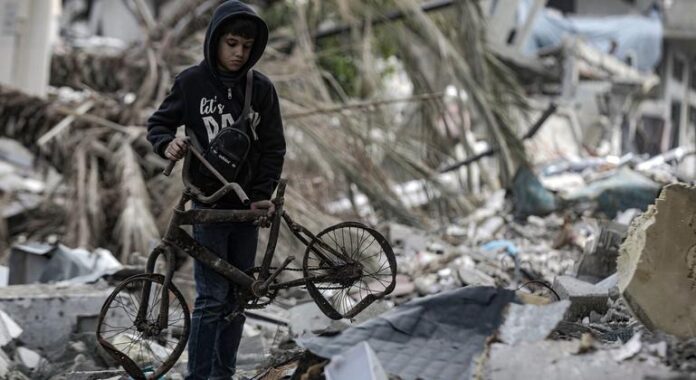
Other fundamental repairs had also been started to rehabilitate smashed public infrastructure, too.

“We had just managed to start increasing water production, especially in the north, ” said Ms. UNICEF’s Ms. Bollen. “We’ve been repairing water wells, we’ve been increasing distribution possibilities. All of that will be coming to a standstill.”


Source link

Advancing European Sovereignty in HPC with RISC-V

0


The DARE (Digital Autonomy with RISC-V in Europe) project will start by designing and developing one processor and two accelerators based on the RISC-V architecture. It will include:

  • A vector accelerator (VEC) for high-precision HPC and emerging applications in the HPC-AI convergence domain;
  • An AI Processing Unit (AIPU) designed for AI inference acceleration in HPC applications;
  • A general-purpose processor (GPP) optimised for HPC workloads in European supercomputers.

RISC-V is an open architecture built on global standards and open-source principles. This openness will enable Europe to develop sovereign HPC technologies, fostering an autonomous and leading European HPC ecosystem. RISC-V also offers an energy-efficient alternative to other microprocessor architectures.

Building on research from EuroHPC JU-funded projects such as the European Processor Initiative (EPI), MEEP, eProcessor, EUPILOT ,and EUPEX, DARE is part of the broad European Union’s strategy to reach European autonomy in strategic hardware technologies by investing and building a diverse technology portfolio including processors, (AI) accelerators, quantum chips and other state of the art hardware components. DARE aims to build prototype HPC and AI systems based on EU-designed and developed, industry-standard chiplets using competitive silicon technology nodes. Moreover, DARE will develop a full RISC-V HPC and AI software stack.

DARE represents a true European collaborative effort. With 38 partners from 13 countries—including many SMEs—this diverse consortium will strengthen the European HPC industry and drive innovation across the continent. The DARE consortium is coordinated by the Barcelona Supercomputing Center (BSC).

Anders Jensen, EuroHPC JU Executive Director stated:

“I am proud to announce the launch of the DARE project which marks a significant milestone for European digital sovereignty. This ambitious initiative will drive innovation in both hardware and software technologies and leverage the full power of HPC and AI to develop secure, efficient and European-led solutions for the future.”

More details

The DARE consortium has been selected following the call  HORIZON-EUROHPC-JU-2022-TECH-03 to establish a Framework Partnership Agreement (FPA) for developing a large-scale European initiative for a HPC ecosystem based on RISC-V. The FPA will run for six years, until 2030.

As part of this FPA, the DARE consortium will oversee the first Specific Grant Agreement (SGA) for the development of European microprocessors based on RISC-V. The DARE consortium will receive European Union funding from the EuroHPC JU with a total budget of up to € 120 million (Horizon Europe funding programme). This will be matched by additional co-funding from the participating states.

More links

Background

The EuroHPC Joint Undertaking (EuroHPC JU) is a legal and funding entity created in 2018 to enable the European Union and EuroHPC participating countries to coordinate their efforts and pool their resources with the objective of making Europe a world leader in supercomputing.     

In order to equip Europe with a world-leading supercomputing infrastructure, the EuroHPC JU has already procured nine supercomputers, located across Europe. Through the EuroHPC Access Calls, European scientists and users from the public sector and industry can benefit from these EuroHPC supercomputers, which rank among the world’s most powerful.    

The EuroHPC JU is also deploying a European Quantum Computing infrastructure, integrating diverse European quantum computing technologies with supercomputers. As part of this effort, the JU has recently procured five quantum computers, currently being deployed in Poland, Czechia, France, Germany, and Spain, with additional systems coming soon to Italy, Luxembourg, and the Netherlands. 

In parallel, the EuroHPC JU is investing in research and innovation projects to develop a full European supercomputing supply chain: from processors and software to applications to be run on these supercomputers and know-how to develop strong European HPC expertise.  

Recently reviewed by means of Council Regulation (EU) 2024/1732, the EuroHPC JU received a new mandate to develop and operate AI factories. These comprehensive open AI ecosystems located around EuroHPC supercomputing facilities will support the growth of a highly competitive and innovative AI ecosystem in Europe. In December 2024, the EuroHPC JU selected the sites that will host the first European AI Factories, set to be deployed in 2025 across Europe: in Finland, Germany, Greece, Italy, Luxembourg, Spain and Sweden. 


Source link

Horizon Europe Cluster 5 Info Day: registration open

0
Horizon Europe Cluster 5 Info Day: registration open

The event will provide prospective applicants with an opportunity to learn more about the research and innovation topics and funding opportunities to be proposed in the new Horizon Europe Cluster 5 work programme (budget: €1.2 billion). 

Horizon Europe is the EU’s flagship programme for supporting research and innovation projects, with ‘Cluster 5’ covering the themes of Climate, Energy and Mobility. 

[See ‘background’ below for more on the Horizon Europe programme structure].

Brokerage event

Following the Info Day, an onsite brokerage event will take place in the same premises at 16:00 to 19:00. Organised by GREENET, the network of Cluster 5 National Contact Points (NCP), the brokerage event will facilitate networking opportunities for prospective project partners. 

Participants looking for partners will have the possibility to present their organisation and project ideas at a plenary pitching session and in dedicated bilateral meetings organised by topic.

Cluster 5 work programme 2025

The publication of the Cluster 5 work programme 2025 is expected in April. The work programme text will be made available through a pre-publication a couple of weeks before the official publication date. 

As the work programme will be made public ahead of the event, the event aims to be more interactive than in previous years. Onsite participants will have an opportunity to address questions in person to the speakers, or via an interactive Slido Q&A that will be available also for online attendees. The Slido Q&A platform will be accessible as soon as the work programme is published, allowing for submission of questions in advance of the event.

For more information, the full programme and registration link, visit the event website 


Background

Horizon Europe is structured into three main pillars, for instance Pillar I Excellent Science and Pillar III Innovative Europe. While Pillar I covers fundamental research funded by the European Research Council and Marie Sklodowska-Curie Actions, Pillar III is dedicated to improving Europe’s innovation ecosystem and to commercialising innovation. Under Pillar II EU funding is provided to tackle global challenges and to boost Europe’s industrial competitiveness. That’s where the clusters come in.

The structure of Horizon Europe lists a total of six clusters that are broken down into individual expected impacts around overarching themes. The six clusters are

  • Cluster 1: Health
  • Cluster 2: Culture, Creativity & Inclusive Society
  • Cluster 3: Civil Security for Society
  • Cluster 4: Digital, Industry & Space
  • Cluster 5: Climate, Energy & Mobility
  • Cluster 6: Food, Bioeconomy, Natural Resources, Agriculture & Environment

The European Climate, Infrastructure and Environment Executive Agency (CINEA) manages the funding under Cluster 5, which is worth €10.8 billion.

Source link

World News in Brief: Guterres convenes Cyprus summit, violence continues in southern Lebanon, UN aid hub in Chad expands

0
World News in Brief: Guterres convenes Cyprus summit, violence continues in southern Lebanon, UN aid hub in Chad expands

UN Spokesperson Stéphane Dujarric told journalists at the regular daily briefing in New York that the leaders of both the Turkish Cypriot and Greek Cypriot communities would join UN chief António Guterres along with guarantors Greece, Türkiye and the United Kingdom, at the UN in Geneva.

The Mediterranean island was divided between north and south in 1974 after years of hostilities. The UN has led negotiations towards a settlement, with the Security Council authorising a peacekeeping force in 1964, UNFICYP.

In the absence of a lasting agreement, the force remains on the island to supervise ceasefire lines, a buffer zone and to support humanitarian activities.

Previous talks

Mr. Guterres attempted to bring the two sides together in 2017 at the Swiss Alpine resort of Crans-Montana but talks ultimately broke down. A further push was made in 2021.

The meeting later this month will take place “in the context of the Secretary-General’s good offices’ efforts on the Cyprus issue,” in in line with his commitment to continue efforts made last October. 

“The informal meeting will provide an opportunity for a meaningful discussion on the way forward on the Cyprus issue,” Mr Dujarric said.

“The United Nations remains committed to supporting the Cypriot leaders and all Cypriots.”

Lebanon: Fighting continues in peacekeepers’ area of operations

The UN Interim Force in Lebanon (UNIFIL) reported more gunfire in their area of operations on Wednesday, as well as sporadic military activity by Israeli forces, the UN Spokesperson said on Wednesday.

As of now, the Lebanese army have deployed to more than 100 locations in southern Lebanon – between the Litani River and the ‘Blue Line’ of separation between the two countries – with the support of UN peacekeepers.

Unexploded ordnance

The latest conflict has left south Lebanon, especially areas close to the Blue Line, heavily littered with unexploded ordnances, “posing very serious risks to civilians”.

The UN Interim Force in Lebanon (UNIFIL) deminers continue to assist Lebanese authorities in finding and destroying these explosive remnants. 

“Our peacekeepers have continued to discover caches of unauthorised weapons and ammunitions, including yesterday, a number of them in our Sector West, and all of them were duly reported to the Lebanese Armed Forces,” Mr. Dujarric explained.

Between 21 October 2024 and 26 February, 44 unexploded ordnances and six improvised explosive devices were discovered and destroyed.

Humanitarian work continues

At the same time, UNIFIL continues to facilitate humanitarian missions in their areas of operation, with over 60 missions having taken place since the cessation of hostilities, facilitating the return of displaced people.

Separately, the mission reports that 31 arrests have been made in connection with the attack on 14 February on a convoy near the Beirut airport. 

Mr. Dujarric emphasised the importance that “those responsible for that attack are brought to justice”, with the attack targeting the then Deputy Force Commander of UNIFIL and a number of his companions.

IOM expands humanitarian hub in Chad to aid 220,000 amid Sudan crisis

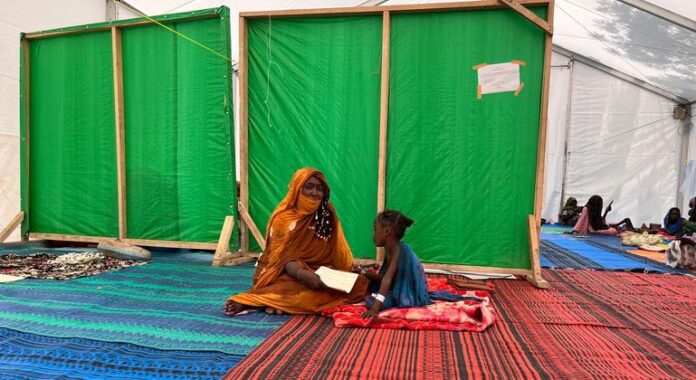
The International Organization for Migration (IOM) and the International Humanitarian Partnership (IHP) have completed the expansion of a key aid hub in Chad, in a move that will enable aid teams to reach up to 220,000 more in need.

The expanded operational capacity at the hub in Farchana will strengthen cross-border interagency humanitarian operations for Sudan – the world’s worst displacement crisis. 

Since April 2023, more than 11.5 million people have been displaced within Sudan and an additional 3.5 million have fled across borders, including an estimated 930,000 who have crossed from Sudan into Chad.

Nine million in need across Darfur

According to recent figures, nearly nine million people in the Darfur region alone require immediate assistance.

“With the strengthened cross-border operations, IOM has already reached over 82,000 people in Darfur with critical humanitarian aid, and with the expansion of the Farchana hub, we are poised to provide life-saving assistance to an additional 220,000 people in the coming months,” explained Pascal Reyntjens, IOM Chief of Mission in Chad.

“The hub also enables greater collaboration between humanitarian actors, development agencies and the government, which is essential for a comprehensive and sustainable response,” he continued.

The expansion includes office space, living quarters and other infrastructure that will help improve the effectiveness of aid work in hard-to-reach field locations in Sudan.

These enhancements will also enable international and national NGOs and UN agencies to further scale up cross-border operations from Chad into Darfur, where humanitarian needs are rapidly escalating.

Source link