Wednesday, September 30, 2026
Home Blog Page 582

DR Congo displacement, health crisis worsens amid dwindling aid access

0
DR Congo displacement, health crisis worsens amid dwindling aid access

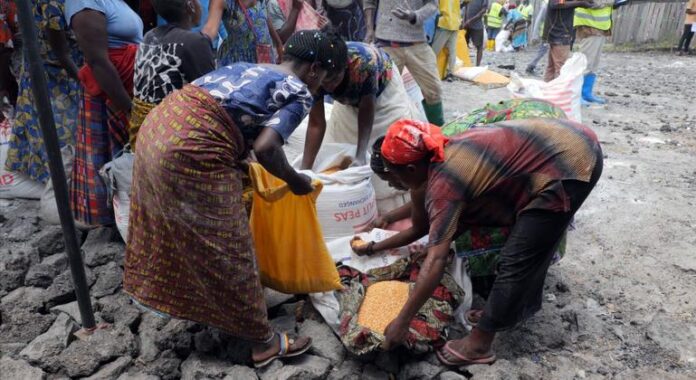
“The crisis is worsening as people flee to areas where humanitarian aid cannot reach due to insecurity,” UN refugee agency (UNHCR) spokesperson Eujin Byun told reporters in Geneva.

The development comes a day after the top UN aid official in the country Bruno Lemarquis warned that a shortage of humanitarian routes was threatening the aid operation in the region.

Advance on Bukavu

The rebels, who seized North Kivu province’s capital Goma late last month, are advancing towards Bukavu, the capital of South Kivu, following a short-lived lull in fighting.

Ms. Byun said that in South Kivu, more than half of the aid groups providing critical support to survivors of sexual violence “report being unable to reach those in need due to insecurity and continuous displacement”.

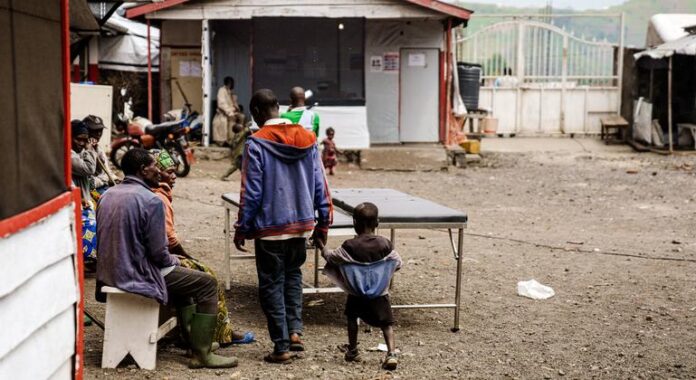
Meanwhile, in North Kivu, “the destruction of health facilities, including mortuaries, and overcrowded hospitals increase the risk of spreading infectious diseases, including cholera, malaria, and measles,” she said.

The UNHCR spokesperson also highlighted the fact that “heavy artillery shelling and looting” have destroyed 70,000 emergency shelters around Goma and Minova in North and South Kivu provinces, leaving some 350,000 internally displaced people (IDPs) “once again without a roof over their heads”.

While some 100,000 displaced people have attempted to return to their home areas – where they are met with damage to their homes and a lack of essential services – many remain stranded, Ms. Byun said.

Deadly remnants

Unexploded ordnance left over from the fighting is another obstacle to their safe return.

Ms. Byun warned of the possibility that those people “will be displaced once again”.

The UNHCR spokesperson stressed that most of the 28 IDP sites around Goma are now destroyed. The agency’s concern in terms of aid access is that the road from Goma to Bukavu has been cut off, she said.

Ms. Byun also recalled that the airport in Goma is “still not functioning for humanitarian aid”.

“Since violence has spread to South Kivu, this supply line is our biggest concern,” she added.

With the rebels pushing towards Bukavu, the UN’s Mr. Lemarquis expressed worry on Thursday about the fate of South Kivu’s main airport some 20 miles from the province’s capital, which until recently was the “main lifeline” for bringing in humanitarian personnel.

Mpox spread

Meanwhile, the spokesperson for the UN World Health Organization (WHO), Christian Lindmeier, highlighted the “heavy” impact of the hostilities on the mpox response, “particularly in Goma and the adjacent area” as the fighting spread southwards.

He stressed that the DRC is “the worst-affected country for mpox”, with Kivu being the epicentre of the highly infectious clade 1b outbreak.

Due to the rapid spread of the clade 1b strain, in August last year WHO moved to declare mpox once again a “public health emergency of international concern”, for the second time after a global outbreak of the virus made headlines in 2022.  

Earlier this month, WHO Director-General Tedros Adhanom Ghebreyesus said that before the latest violence in eastern DRC, mpox cases had been stabilizing. But the recent fighting has forced patients to flee treatment centres, increasing transmission risks.

“Out of 143 confirmed mpox patients in isolation units in Goma and around, 128 fled in fear for their lives,” Mr. Lindmeier said, stressing that only 15 patients remain in isolation.

“That’s of course dangerous for everybody around,” he insisted.

Mr. Lindmeier added that some health facilities in the area had been looted, health workers had fled, and people were unable to access healthcare because of the security situation.

Source link

Munich Security Conference: press remarks by High Representative/Vice-President Kaja Kallas upon arrival

0
Munich Security Conference: press remarks by High Representative/Vice-President Kaja Kallas upon arrival

Munich Security Conference: press remarks by High Representative/Vice-President Kaja Kallas upon arrival

Source link

World must not turn its back on Sudan’s deepening crisis: Guterres

0
World must not turn its back on Sudan’s deepening crisis: Guterres

Speaking at a high-level humanitarian conference in the Ethiopian capital, Addis Ababa, António Guterres described the situation in Sudan as a catastrophe of “staggering scale and brutality”.

He warned that it is increasing spilling into the wider region.

“It is a crisis that demands sustained and urgent attention,” he said, underscoring the need to ensure protection of civilians and humanitarians, as well as unhindered access to all those in need.

Mr. Guterres also stressed the need to stop the flow of arms and ammunition into the country.

“This flow is enabling the continuation of tremendous civilian destruction and bloodshed,” he added.

Nearly 22 months of conflict between Government forces and their former allied militia, the Rapid Support Forces (RSF), has left more than 30 million people across Sudan in need of assistance and protection.

That figure includes over 12 million displaced from their homes, of whom 3.3 million have sought refuge outside the country’s borders.

Food security and health situations are equally worrying, with less than a quarter of Sudan’s health facilities functioning in areas worst hit by fighting. Nearly 25 million people are suffering from “acute” levels of hunger.

Coordinated response

To respond to the staggering needs, the UN alongside humanitarian partners, is preparing to launch two major response plans for Sudan and its neighbouring countries, requiring a combined $6 billion to assist nearly 26 million people most in need.

“These UN-coordinated appeals far exceed any we have launched for Sudan and for the region. And indeed, it represents the unprecedented dimensions of the needs we are facing,” Mr. Guterres said, underlining the scale of the crisis.

He also applauded local responders and civil society organizations – including women-led organizations – who continue to work bravely and tirelessly to provide assistance and services in their communities, often at great personal risk.

UN Secretary-General António Guterres speaks at the humanitarian conference.

Call for a ceasefire

Mr. Guterres also highlighted the urgent need for an immediate ceasefire and protection of civilians.

“My Personal Envoy [Ramtane Lamamra] is engaging with the warring parties on concrete ways to advance these aims, including through the full implementation of the Jeddah Declaration,” he said.

Signed by the leaders of the Sudanese Armed Forces (SAF) and the Rapid Support Forces (RSF) – facilitated by Saudi Arabia and the United States – the Jeddah Declaration outlined key steps, including respect for international humanitarian law, protecting civilians from harm, facilitating humanitarian aid, and dialogue to reach a ceasefire.

Call for global solidarity

As the holy month of Ramadan approaches, Mr. Guterres called on world leaders to use their influence to support peace and humanitarian aid efforts.

“At this blessed time for peace, compassion, giving and solidarity, I urge all of you to use your tremendous leverage for good,” he said.

“We must do more – and do more now – to help the people of Sudan out of this nightmare,” he concluded.

Secretary-General Guterres speaks to the press on the sidelines of the 2025 AU Summit in Addis Ababa.

Secretary-General Guterres speaks to the press on the sidelines of the 2025 AU Summit in Addis Ababa.

Other engagements

Also on Friday, the Secretary-General took part in meetings of the African Union (AU) Peace and Security Council, focusing on the crises in Sudan and eastern Democratic Republic of the Congo (DRC).

On Sudan, Mr. Guterres reiterated that there is no military solution to the conflict and stressed the urgent need for an immediate cessation of hostilities, his spokesperson told reporters at a regular briefing in New York.

Regarding DRC, Mr. Guterres called for the swift implementation of the conclusions reached at the recent Joint Summit of leaders from the East African Community (EAC) and the Southern African Development Community (SADC).

In addition, the UN chief held bilateral meetings with African leaders, including the Presidents of Kenya, Rwanda and Guinea-Bissau, as well as the outgoing Chairperson of the AU Commission, Moussa Faki. 

Source link

Sudan, ‘the most devastating humanitarian and displacement crisis in the world’

0
Sudan, ‘the most devastating humanitarian and displacement crisis in the world’

1) The war: 2023 Khartoum clashes herald end of peace process

By the end of 2022, there were hopes that a UN- backed peace process would finally lead to a civilian administration in Sudan, after a tumultuous period which saw the fall of long-term dictator Omar al-Bashir in a military coup, followed by the harsh suppression of protests in favour of civilian rule.

“A final political agreement should pave the way towards building a democratic State”, saidformer UN Special Representative for Sudan, Volker Perthes, in December 2022. Ominously, however, he warned that “critical contentious issues” remained, not least a merger of the Sudanese Armed Forces (SAF) and the Rapid Support Forces (RSF), separate military groups which had teamed up to depose al-Bashir.

Tensions between the two sides grew in early 2023, marked by intermittent clashes, but the start of the current civil war came with the RSF attack on the capital Khartoum on 15 April. The fighting, which then spread to other parts of the country, forced the UN to evacuate Khartoum, and base operations in the relatively stable city of Port Sudan, on the Red Sea.

On Friday, the Secretary-General, described the situation in Sudan as a catastrophe of “staggering scale and brutality” at the AU’s high stakes annual meeting in Addis Ababa, the capital of Ethiopia, and warned that it is increasingly spilling into the wider region. The UN has strongly condemned the fighting, and the Secretary-General’s Personal Envoy to Sudan, Ramtane Lamamra, continues to support peace efforts, in close collaboration with regional organizations, including the African Union (AU). 

2) Humanitarian crisis: More than 30 million need aid

The war has been catastrophic for Sudan’s civilians and the numbers are staggering. Some 30.4 million people – over two thirds of the total population – are in need of assistance, from health to food and other forms of humanitarian support. The fighting has led to an economic collapse, sending the prices of food, fuel and other basic goods soaring, putting them beyond the reach of many households.

Acute hunger is a growing problem. Over half the population faces high levels of acute food insecurity, and famine conditions have been confirmed in five locations in North Darfur and the eastern Nuba mountains. Famine is expected to spread to five more areas by May of this year.

“This is a critical moment, as the consequences of food insecurity are already being felt in parts of South Kordofan, where families are surviving on dangerously limited food supplies, and malnutrition rates are rising sharply,” warned Clementine Nkweta-Salami, the UN Humanitarian Coordinator in Sudan.

Humanitarian efforts are severely hampered by the lack of security, which is putting severe constraints on humanitarian access, complicating the movement of supplies and endangering aid workers.

Despite the dangers, the UN and its humanitarian partners continue to reach vulnerable populations. The World Food Programme – the UN’s emergency food aid agency – is saving thousands of lives every day and the Food and Agriculture Organisation (FAO) successfully distributed seeds to over half a million households during the planting season. In all, some 15.6 million people received at least one form of aid from the UN in 2024.

The country’s health system is on its knees, with health facilities attacked and many health workers forced to flee. The World Health Organization and UN Children’s Fund (UNICEF) are still operational, supporting immunization for cholera and malaria, and deploying mobile medical teams.

3) Massive displacement: Equivalent to the entire Swiss population

Huge numbers of people have been forced to flee their homes for areas of relative safety, both within Sudan and in neighbouring countries, adding to regional instability. Over three million people are classified as refugees, and almost nine million are internally displaced. The total displaced population is greater than the entire population of Switzerland.

Because of the shifting frontlines, there have been successive waves of displacement, making the task of reaching those in need increasingly complicated. The UN refugee agency, UNHCR, has described the situation in Sudan as “the largest as well as the fastest growing displacement crisis globally.”

The displaced population, whether they remain in Sudan or have moved abroad, face reduced access to food, scarce natural resources and limited access to essential services. In addition, outbreaks of diseases such as cholera and measles are rampant in camps for refugees and internally displaced people.

Many of the surrounding nations have their own economic and security problems, and some are among the poorest in the world, with limited and overstretched services. Where possible, the UN migration agency (IOM) and UNHCR are protecting lives, supporting states hosting refugees, and ensuring that the needs of those fleeing are met with dignity.

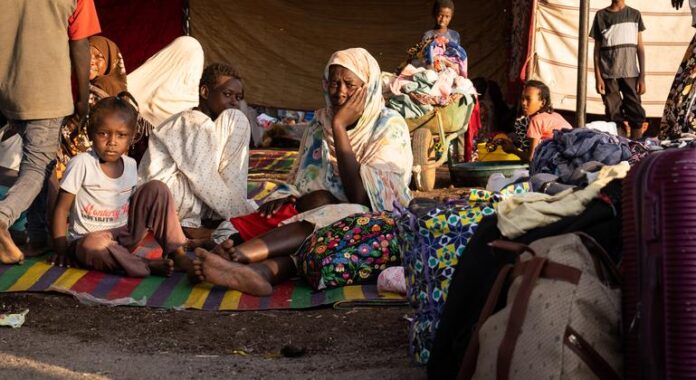
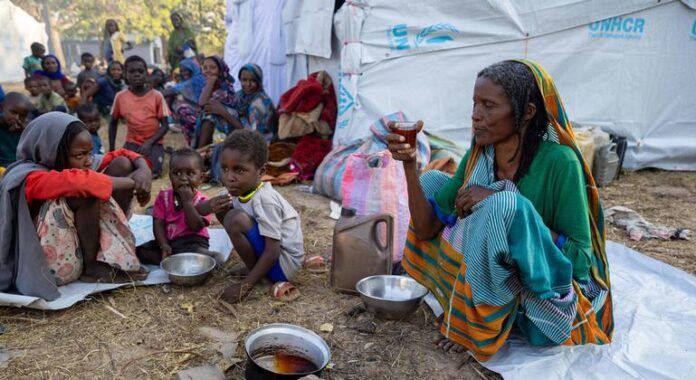
South Sudan. Sudanese refugees waiting to receive cash assistance from WFP.

4) Insecurity: Women and girls highly vulnerable

Over 18,800 civilians have been reported killed since the beginning of the conflict, and the levels of violence in Sudan are getting worse. At the beginning of February, at least 275 people were killed in just one week, a threefold increase on the previous week’s death toll.

Civilians are being hit by artillery shelling, airstrikes and aerial drone attacks: the worst affected regions are South Kordofan and Blue Nile states. As well as the general population, aid workers have been targets of intimidation and violence, with reports that some have been falsely accused of collaborating with the RSF.

A UN fact-finding mission has documented a range of harrowing human rights violations committed by both the SAF and RSF, and called for investigations into the violations, and for the perpetrators to be brought to justice.

In an interview with UN News, Edmore Tondhlana, the deputy head of the UN humanitarian office (OCHA), explained that women and girls are the most severely impacted by the conflict, with reports of rape, forced marriage and abductions. “If you look at the recent attack in South Kordofan, in which about 79 people were killed, the majority of victims were women and girls.”

However, teenage boys are also at high risk. “They cannot easily travel between frontlines. They will be suspected of spying,” added Mr. Tondhlana. Large numbers of children have been recruited into armed groups, forced to fight or spy against the other side.

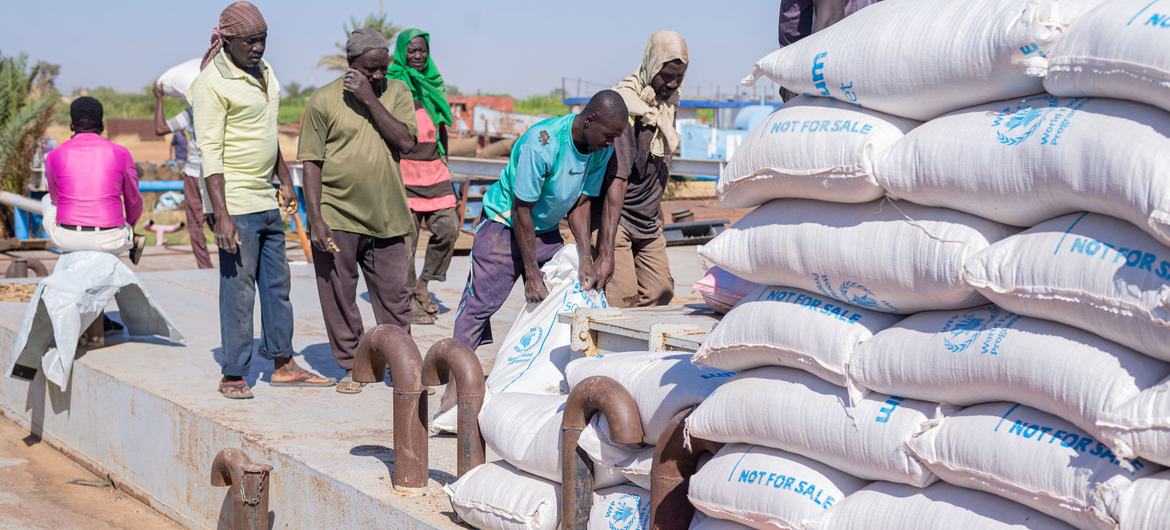
Sudan. Offloading of barge transported food aid

Sudan. Offloading of barge transported food aid

5) Funding: Billions needed

A lack of sufficient funds is severely limiting the UN’s ability to help Sudan’s population. UNHCR and partners have been able to provide less than the bare minimum of support for refugees, and food rations have been drastically cut, adding to food insecurity.

On Monday, OCHA and UNHCR will launch an appeal for funding, based on their respective response plans to the crisis. Humanitarian needs have been estimated at a record (for Sudan) $4.2 billion, with an additional $1.8 billion needed to support those hosting refugees in neighbouring countries.

Whilst the amount needed might seem large, Mr. Tondhlana emphasizes that, given the numbers in dire need, it barely scratches the surface. “We’re trying to reach 21 million people, so this essentially $200 per person over the whole year. If we break it down even further, this is around $.0.50 per day.

Source link

‘No lasting peace without Ukraine and without the EU’: Speech by President Costa at the Munich Security Conference 2025

0
Munich Security Conference: press remarks by High Representative/Vice-President Kaja Kallas upon arrival

Speaking at the Munich Security Conference 2025, European Council President António Costa highlighted that the EU will continue to support Ukraine as an integral part of its project for peace.

Source link

Georgia: Statement by the Spokesperson on the so-called presidential elections in the Georgian occupied breakaway region of Abkhazia

0
Munich Security Conference: press remarks by High Representative/Vice-President Kaja Kallas upon arrival

Georgia: Statement by the Spokesperson on the so-called presidential elections in the Georgian occupied breakaway region of Abkhazia

Source link

Aid surge into Gaza continues, UN teams prioritize immediate needs

0
Aid surge into Gaza continues, UN teams prioritize immediate needs

Amid reports that a return to full-scale war at the weekend may have been averted with the announcement by Hamas that it would comply with the agreed release of Israeli hostages, the UN Office for the Coordination of Humanitarian Affairs (OCHA) said that aid teams were “seizing every opportunity” to deliver as much relief as possible to Gazans in dire need.

Speaking from northern Gaza, OCHA’s René Nijenhuis said that families’ main concern was that the ceasefire holds.

He explained that the fragile truce had allowed aid teams to get water trucks and reach people in “desperate need of assistance. They need shelter, they need schooling,” Mr. Nijenhuis said. Children are pleading: “Where’s my school? I want to go to school,” the OCHA officer added.

Truck lifeline

Thousands of trucks carrying food, shelter and medicines have entered the Gaza Strip at a rate of around 600 a day since the ceasefire began on 19 January – far more than those allowed during the hostilities that were sparked by the Hamas-led terror attacks on southern Israel of 7 October 2023.

On Wednesday alone, more than 800 trucks delivered life-saving goods into Gaza, OCHA said, while the UN agency for Palestine refugees, UNRWA, said that it has now reached 1.5 million people with food parcels since the start of the ceasefire – and has enough coming to reach the rest of Gaza’s population.

Since Israeli forces withdrew from parts of the Netzarim corridor that separates north and south Gaza, more than 586,000 people are estimated to have crossed to the north, while over 56,000 were estimated to have moved southward, UN humanitarians reported.

Two million in need

Despite the massive aid boost, it is still not enough to provide the immediate relief that more than two million Gazans require. This will only happen when commercial goods begin to flow into the Strip once again, humanitarians have said repeatedly, including the UN Children’s Fund (UNICEF).

“A lot of aid has come in. We have scaled up as fast as we possibly could over the last three weeks of this ceasefire, but of course we cannot undo 15 months of suffering in three weeks,” said UNICEF Communications Manager Tess Ingam, speaking to UN News.

“There needs to be much more aid consistently coming in; also need commercial goods to come in so that markets can be stocked. We need the cash sector and the banking sector to restart again so that people can buy those commercial goods. There’s a lot that needs to happen fast to help resume a functioning goods society in the Gaza Strip.”

UNICEF also warned that its teams cannot quickly repair the damage done by the damage caused by the Israeli military’s use of heavy weapons and high explosives across Gaza.

Basic public services have been smashed and require equipment that is still not being allowed to enter the enclave.

“We need to make sure that certain items that are currently restricted for entry to Gaza are able to enter, for example, pipes for the repair of water systems, generators to run water pumps,” Ms. Ingam said, shortly after finishing a two-week assessment mission in the enclave.


Live fire threat

“UNICEF needs this ceasefire to hold as much for us as for the children of Gaza,” she insisted. “Like all humanitarian actors, we are able to do our best work to save the lives of children and provide them with protection and support when we’re not operating in live fire.”

Speaking exclusively to UN News, Ms. Ingam said that the agency’s three priorities were providing water, boosting healthcare and nutrition and helping people withstand the cold.

“We’re focused on making sure that water flows again, particularly in the areas where water has been really badly damaged, pipes have been damaged, wells have been damaged in the north and in Rafah, so we’re trying to bring water back by doing repairs and also starting water trucking so families have immediate access to water.”

UNRWA’s vital role

Key to the humanitarian response across Gaza, UNRWA runs 120 shelters which host around 120,000 people. It has also opened 37 new emergency shelters, including seven in Gaza City and 30 in North Gaza, and on Thursday announced the reopening of a health centre in Rafah – the first UNRWA facility in the southern city to receive patients since the ceasefire.

The agency said that while the risk of famine has mostly been averted, another immediate priority is providing shelter and warmth to people returning to their shattered homes.

Since the ceasefire came began, 644,000 people have received shelter assistance, UNRWA said, specifically tents, blankets, plastic sheeting, warm winter clothing, sealing-off materials and tarpaulins.

In and around the shelters, the UN agency has also committed to repairing water wells and to provide water and waste disposal services to close to half a million people.

In addition to shelter and food deliveries, healthcare assistance and medical supplies have also increased, too.

Health needs being met

According to the head of the UN World Health Organization (WHO), Tedros Adhanom Ghebreyesus, the organization has assisted with the medical evacuation of 414 patients requiring treatment outside Gaza. WHO has also delivered supplies for 1.6 million people since the start of the ceasefire, he said.

The UN sexual and reproductive health agency, UNFPA, meanwhile, reported the increased distribution of relief items including infant warmers, postpartum and dignity kits. The UN agency has also established a new shelter for women inside Gaza City to provide safety from gender-based violence.

In anticipation of possible power cuts, the shelter can run on solar power.

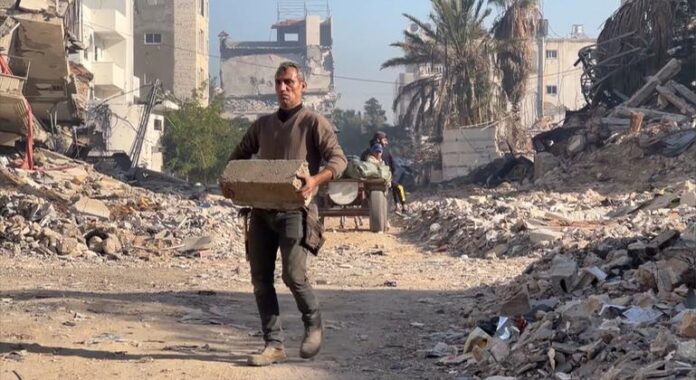
Between 7 October 2023 and 11 February 2025, the Gazan authorities reported that at least 48,219 Palestinians have reportedly been killed in Gaza and 111,665 have been injured. Some 1,250 people were killed in the Hamas-led attacks and more than 250 were taken hostage.

Source link

Red Sea: Council prolongs the mandate of Operation ASPIDES

0
Munich Security Conference: press remarks by High Representative/Vice-President Kaja Kallas upon arrival

The Council prolonged the mandate of the EU maritime security operation to safeguard freedom of navigation in relation to the Red sea crisis (EUNAVFOR ASPIDES) until 28 February 2026.

Source link

DR Congo: Shortage of humanitarian routes threatens aid operation, top UN official warns

0
DR Congo: Shortage of humanitarian routes threatens aid operation, top UN official warns

“The frontline is getting closer to Kavumu Airport,” warned Bruno Lemarquis on Wednesday.

Following the fall of regional capital Goma, in North Kivu, at the end of January, the Rwanda-backed M23 armed group is now making headway against Congelese Government forces towards Bukavu, the capital of South Kivu.

Kalehe, a major city in the province, fell around midday on Wednesday local time, the Humanitarian Coordinator reported. The city is only 20 miles away from Kavumu, which is home to the province’s main airport.

The commercial airfield – a 20 mile drive from Bukavu – is mainly being used for military operations by Kinshasa’s beleaguered regular forces.

“Until recently, it was our main lifeline for bringing personnel to South Kivu,” said Mr. Lemarquis.

But as with the Goma airport, which remains non-operational, that window has now closed.

A historically dire situation

Before the M23’s latest offensive at the beginning of the year, Mr. Lemarquis recalled that the humanitarian situation in South Kivu was already dire.

Roughly 1.65 million people, or just over 20 per cent of the province’s population, had been displaced for a wide range of reasons.

“There are other conflicts in the province, community tensions, tensions related to land,” he explained.

South Kivu is also prone to natural disasters, including landslides on the shores of Lake Kivu, which are responsible for many displacements.

“So, we had a major humanitarian operation running in South Kivu,” said Mr. Lemarquis.

The recent advances of the M23 rebels, whose incursion in South Kivu is the first since the withdrawal of the UN Stabilization Mission in the DRC (MONUSCO) from the province in June 2024, are compounding historic problems.

“This will only add complexity and needs,” the Human Coordinator said.

Children gather in Goma, in the eastern Democratic Republic of the Congo.

At least 170,000 new displacements

Mr. Lemarquis estimated that the recent clashes in the province had displaced at least 170,000, a figure that does not include estimates for the past two weeks.

The Humanitarian Coordinator also noted an influx of people moving towards Bukavu, where nearly 1.3 million people already reside.

“Depending on how the situation evolves, in the coming days, we can imagine that there will be an even larger influx of population towards the city of Bukavu, then out of the city, towards the South,” he explained.

Such an outcome, he added, would hinder vulnerable people’s access to health and social services.

Risks of epidemics

Mr. Lemarquis also voiced concern over the spread of infectious diseases as fighting continues in South Kivu, a province rife with cholera.

“When essential services are impaired, this can lead to epidemic outbreaks,” he warned.

This is especially worrisome, he added, because the province is currently the global epicentre of a new mpox strain, known as clade 1b, which is particularly prevalent around Kalehe, the city now controlled by M23.

A mother holds her young child after having visited a UN-supported medical clinic at an IDP camp in North Kivu.

A mother holds her young child after having visited a UN-supported medical clinic at an IDP camp in North Kivu.

No humanitarian access to the South

On a positive note, the Humanitarian Coordinator said that the road from Goma to Minova, the first South Kivu town conquered by the M23 in mid-January, is no longer closed.

“There were a few rather difficult days for our humanitarian colleagues because of the fighting,” he acknowledged. “But now access has been restored.”

Further south in the province, however, humanitarian access has been cut off.

“For quite some time, the road between Goma and Bukavu has not been accessible,” he said.

Alternative pathways, including via Lake Kivu, which borders the province and connects Goma in the north to Bukavu in the south, have also been cut off.

“There aren’t many alternative routes, the airport being the main access route,” he acknowledged.

Source link

UN rights office condemns continuing Israeli military operation in West Bank

0
UN rights office condemns continuing Israeli military operation in West Bank

Since the start of the offensive on 21 January, Israeli forces have killed at least 44 Palestinians, including five children and two women, in Jenin, Tulkarem and Tubas governorates, and four refugee camps in those areas, according to OHCHR.

Many of those killed were unarmed and posed no imminent threat, said the UN rights office, calling the killings “part of an expanding pattern of Israel’s unlawful use of force in the West Bank where there are no active hostilities.”

‘Unprecedented’ displacement

OHCHR also highlighted an unprecedented scale of mass displacement not seen in decades in the occupied West Bank.

It cited reports from displaced residents of a pattern where they were led out of their homes by Israeli security forces and drones under the threat of violence.

“They are then forced out of their towns with snipers positioned on rooftops around them and houses in their neighbourhoods used as posts by Israeli security forces,” the office said.

Testimonies collected by OHCHR describe Israeli forces threatening residents who were told they would never be allowed to return. One woman, who fled barefoot carrying her two young children, said she was denied permission to retrieve heart medication for her baby.

In Jenin refugee camp, bulldozed roads were photographed with new street signs reportedly now written in Hebrew.

“In this regard, we reiterate that any forcible transfer in or deportation of people from occupied territory is strictly prohibited and amounts to a crime under international law,” OHCHR stated.

Legal obligations

The office stressed that displaced Palestinians must be allowed to return to their homes and called for immediate, transparent investigations into the killings.

“Military commanders and other superiors may be held responsible for the crimes committed by their subordinates if they fail to take all necessary and reasonable measures to prevent or punish unlawful killings,” it stated.

OHCHR also reiterated Israel’s obligations under international law, including ending its unlawful presence in the Occupied Palestinian Territory as rapidly as possible and evacuating all West Bank settlements immediately.

“In the meantime, as the occupying power, Israel must ensure the protection of Palestinians, the provision of basic services and needs, and the respect of Palestinians’ full range of human rights,” the office said.

WFP aid trucks cross into Gaza via the Zikim and Kerem Shalom border crossings.

Humanitarian update

Meanwhile in Gaza, the UN World Food Programme (WFP) reported on Friday it had reached more than 860,000 men, women and children with food parcels, hot meals, bread and cash assistance since the start of the fragile ceasefire.

UN Spokesperson Stéphane Dujarric told journalists at a regular news briefing in New York that over 19,000 metric tonnes of WFP food have entered Gaza.

The agency has also distributed nutrition packs to some 85,000 people, including children under five, and pregnant and breastfeeding women, and provided more than 90,000 people with cash assistance in the past two weeks.

“Efforts are also underway to establish more food distribution points, especially in North Gaza, to reduce travel distances, transport costs and protection risks for families,” Mr. Dujarric said.

Fuel deliveries, schools reopening

In addition, the World Health Organization (WHO) distributed 100,000 litres of fuel to hospitals in Gaza City on Friday, having delivered about 5,000 litres of fuel to Al Awda Hospital, in North Gaza governorate the day before.

In southern Gaza, education partners in Rafah are preparing for the reopening of at least a dozen schools as displaced families return to their home areas, Mr. Dujarric said.

“As you know, schools across the Strip had been used as shelters for Palestinians displaced during 15 months of hostilities. In Khan Younis and Deir al Balah, partners are providing cleaning materials to restart learning activities,” he added.

Source link