Wednesday, September 30, 2026
Home Blog Page 583

Political solution to end war in Yemen is achievable, UN envoy says

0
Political solution to end war in Yemen is achievable, UN envoy says

Hans Grundberg briefed on latest political developments in the country, where Houthi rebels, also known as Ansar Allah, and Government forces, backed by a Saudi-led coalition, have been battling for power for more than a decade.

He spoke alongside UN Emergency Relief Coordinator Tom Fletcher who updated on the “perilous” humanitarian situation there and the need to protect aid workers. 

Respite in the region 

Mr. Grundberg highlighted recent events that have occurred in the region.

“We have witnessed a significant, albeit fragile, development in the Middle East with the ceasefire in Gaza,” he said.

“We have also seen a cessation of attacks by Ansar Allah on vessels in the Red Sea and targets in Israel. This tentative reduction in hostilities, along with the release of the crew of the Motor Vessel Galaxy Leader, is a welcome relief.”

He urged the international community to build on this opportunity for further de-escalation, while also acknowledging the magnitude of remaining challenges. 

Detentions threaten aid delivery 

He noted, however, that January saw a “fourth wave of arbitrary detentions” of UN staff by the Houthis, which was “a deeply troubling development.”  

The Houthis are holding dozens of personnel from the UN, national and international non-governmental organizations, civil society and diplomatic missions – some for years.

He said these detentions are not only a violation of fundamental human rights but also a direct threat to the UN’s ability to provide humanitarian assistance to millions. 

“Even more deplorable is the death, while detained by Ansar Allah, of a UN colleague working for the World Food Programme (WFP),” he said. 

He joined the UN Secretary-General in calling for an investigation into the death, and for anyone found responsible to be brought to justice. 

Military operations and hardships continue 

The Special Envoy noted that regrettably, military activity has continued in Yemen, with reports of movement of reinforcements and equipment towards the frontlines, as well as shelling, drone attacks and infiltration attempts by the Houthis on multiple frontlines.  

“I call on the parties to refrain from military posturing and retaliatory measures that could lead to further tension and risk plunging Yemen back into conflict,” he said. 

He also expressed deep concern over the rapidly deteriorating economic situation, affecting both Government- and Houthi-controlled areas. 

For example, the city of Aden, which is under Government control, went without electricity for three consecutive days last week, prompting people to take to the streets.  Moreover, the continued depreciation of the Yemeni Riyal has also sent prices soaring. 

“These hardships are symptoms of the failure to achieve a sustainable political resolution. Without the prospect of peace, there can be no prosperity,” he said.  

US terrorist designation 

Mr. Grundberg also addressed the recent move by the United States to re-designate the Houthis as a Foreign Terrorist Organization.  President Donald Trump signed an Executive Order on 22 January that is scheduled to take effect within 30 days.

He stressed that while clarifications are being sought, “it is important that our efforts to advance the peace process are protected.” 

Over the past month, the UN envoy has continued active engagement with all regional and international actors, most recently in Washington.  

“My message to all remains that only a political settlement of the conflict will support the Yemenis in their aspirations for lasting peace. It is achievable, it is possible, and it is pragmatic,” he insisted. 

Follow the roadmap 

He said the elements of the roadmap for peace already provide a framework for the way forward, and the parties committed to a nationwide ceasefire as the first step. This would in turn pave the way to a structured political process through inclusive negotiations under the auspices of the UN. 

Concluding his remarks, Mr. Grundberg was adamant that a sustainable resolution to the conflict is still possible, saying the parties must engage in good faith and take the necessary steps to turn commitments into reality. 

“I am aware that some think that they could get a better outcome through the resumption of full-scale military operations. I want to be clear: this would be a mistake for Yemen, and a mistake for the stability in the wider region,” he warned. 

Millions in need 

Mr. Fletcher, the UN’s top aid official, also highlighted the death of the WFP staff member in Yemen and the need to protect humanitarian workers. He said the latest humanitarian appeal for the country shows that 19.5 million people require support. 

“Millions are hungry and at acute risk of life-threatening illness. Children and women make up more than three-quarters of those in need,” he said. 

Last month, WFP reported that 64 percent of the population was unable to meet their minimum food needs, up three percentage points from November. He feared this will again increase due to lean season scarcity and rising food prices. 

Meanwhile, some 3.2 million children are not in school, while half of all under-fives are acutely malnourished. Seventy per cent of three and four-year-olds have not been fully vaccinated, and youngsters under five “are dying at a horrific rate, mainly from preventable or treatable conditions – in 2023, an average of five every hour. “ 

Temporary aid freeze in Sa’ada 

Mr. Fletcher said that despite significant risks, humanitarian operations are largely continuing, however the detention of more UN staff has led to some “tough decisions”.   

The UN has been forced to temporarily pause operations in Sa’ada governorate due to safety and security risks but is taking steps towards resuming once security guarantees have been obtained. 

“Globally, humanitarians are overstretched, underfunded and under attack,” he said. “We face this growing challenge in a spirit of cooperation and pragmatism, guided by the urgent needs of those we serve.” 

Appeal for support 

Mr. Fletcher said that “the situation in Yemen is perilous,” and asked Council members to help release UN and civil society staff, return UN operations to full capacity, and to avoid taking actions which affect access of civilians to essential services. 

“Political and security decisions should not punish affected communities by limiting the flow of essential commodities into Yemen,” he said.  

“This is a tough place for us to deliver humanitarian support. And I recognize that it is a tough place for you to get the political judgements right,” he added. “But we must be brave, principled, and unflinching in our effort to save lives.” 

Source link

Belarus: Violations remain ‘widespread and systematic’, says independent expert group

0
Belarus: Violations remain ‘widespread and systematic’, says independent expert group

The Group of Independent Experts on the Human Rights Situation in Belarus established in 2024, was tasked with investigating alleged violations since 2020 – when a disputed election saw President Alexander Lukashenko returned to power for a sixth term – and recommending steps toward accountability.

The group was established last year for a renewable period of a year. Like all independent experts appointed by the Human Rights Council, they serve on a voluntary basis, are not UN staff, receive no salary and are are independent of any government.

In their latest findings presented to the Council, the experts documented arbitrary arrests, torture, sexual violence and the persecution of political opponents.

The report details targeted abuses against LGBTQIA+ individuals, political activists and journalists, alongside sweeping legal changes aimed at eradicating all dissent.

The violations, the experts concluded, are part of a widespread and systematic attack against civilians critical of the Government.

Campaign of fear and repression

The experts’ findings state that Belarusian authorities systematically detain critics on politically motivated charges, often subjecting them to repeated imprisonment under inhumane conditions.

Arrests are frequently carried out using excessive force, together with threats and intimidation.

Detainees report being beaten, subjected to electric shocks, and even threatened with rape – not only against themselves but also against their family members.

The regime’s actions go beyond repression, with reasonable grounds to believe that some violations amount to “imprisonment and persecution on political grounds”, the report said.

Torture and sexual violence

Widespread torture and ill-treatment are documented, particularly within temporary detention facilities and penal colonies.

Men and women detained on political charges are routinely subjected to extreme conditions: some deprived of sleep, packed into overcrowded cells without basic hygiene and denied medical care.

Many detainees describe being forced to make “repentance videos” after suffering physical and psychological abuse.

The targeting of LGBTQIA+ individuals is particularly brutal, with security forces using homophobic slurs, beatings and sexual humiliation.

In one instance, a transgender woman was severely beaten, threatened with rape and forced to confess to crimes she did not commit, the experts report.

A crackdown beyond borders

Hundreds of opposition figures, activists and journalists have been charged in absentia for alleged crimes such as “discrediting” the State. Their properties have been seized and their families in Belarus have faced harassment and intimidation.

“The orchestrated campaign of violence and mistreatment was directed against Belarusians perceived as being critical of, or opposed to, the Government,” the experts noted.

Conclusions show that such persecution extends beyond Belarus’s borders, leaving those in exile vulnerable and their families at home under pressure.

Systematic persecution

The experts determined that Belarus’s actions amount to crimes against humanity, citing imprisonment, torture and persecution on political grounds as part of a widespread and systematic attack on civilians.

They stressed that accountability is critical, emphasising that “identifying and prosecuting perpetrators of human rights violations and crimes against humanity is key to ending Belarus’s culture of impunity and integral for the victims to receive justice.”

Source link

Europol investigation into illegal hazardous waste dumping leads to 13 arrests

0
Europol investigation into illegal hazardous waste dumping leads to 13 arrests

Thirteen people have been arrested for illegally disposing 35 000 tonnes of hazardous waste in Croatia. The environmental crime network is believed to have made €4 million by illegally importing hazardous waste from Italy, Slovenia and Germany to Croatia. Europol supported the investigations.

Source link

‘No time to lose’ in Gaza, as ceasefire offers fragile respite

0
‘No time to lose’ in Gaza, as ceasefire offers fragile respite

The UN is racing against time to expand humanitarian relief and prepare for the monumental task of rebuilding Gaza, as a fragile ceasefire holds but tensions loom over a potential resumption of fighting.

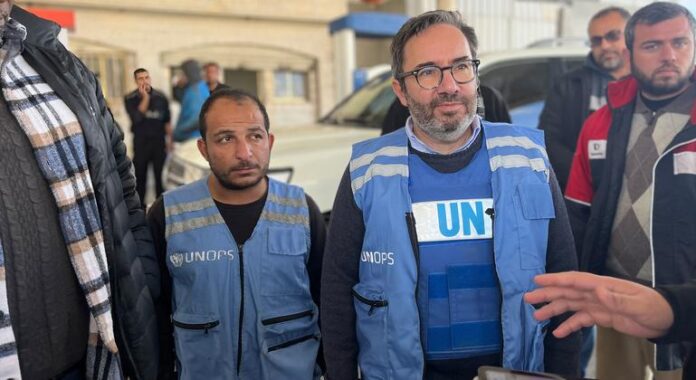
“There is no time to lose,” said the head of the office responsible for UN reconstruction efforts (UNOPS), Jorge Moreira da Silva, during a briefing in New York via videolink from the Middle East, following his visit to Gaza this week.

The devastation he witnessed was stark: “By one estimate, 40 million tons of debris and rubble were generated by the conflict, which will take years to remove.”

While the ceasefire has allowed for a scale-up in humanitarian operations, Mr. Moreira da Silva underscored that the pause in hostilities is far from enough.

“I reiterate the call for a permanent ceasefire and the release of all hostages without delay,” he stressed.

Fuel and life-saving services

UNOPS, which plays a pivotal role in Gaza’s humanitarian logistics and in many other crises where the UN is providing relief across the world, has dramatically increased fuel deliveries since the ceasefire began.

Currently, 1.2 million litres are being supplied daily to sustain critical services such as hospitals, telecommunications equipment and bakeries.

Visiting the European Hospital in the main southern city of Khan Younis close to the Egyptian border, Mr. Moreira da Silva heard firsthand accounts from doctors working under unimaginable conditions.

There have been “surgeries without anaesthetic, post-surgery infections due to lack of antibiotics, infants dying due to the lack of electricity powering the incubators” and urgent cancer surgeries postponed for over a year, he recounted, describing the extreme pressures on Gaza’s health system.

Prior to the war, UNOPS had installed hybrid solar systems at the hospital to provide a sustainable energy supply. But the systems have now been rendered inoperable – another casualty of the conflict.

“As we look to recovery and reconstruction, this is a reminder about the crucial need to invest in renewable energy,” he said.

Clearing the rubble

Beyond fuel provision, UNOPS is engaged in crucial debris removal and mine action efforts to address the growing risk of unexploded ordnance

The scale of the destruction poses a logistical and financial challenge likely to persist for years.

“We are determined to stay and deliver for the people of Gaza,” Mr. Moreira da Silva said, emphasising that humanitarian access remains critical.

“Rapid, unhindered, and safe passage for aid is non-negotiable,” he emphasised.

Uncertain road ahead

The spectre of renewed violence and the end of the fragile ceasefire, casts a shadow over recovery plans.

The leadership of Hamas said on Thursday that they would stick to the hostage release timetable as originally agreed, after earlier accusing Israel of violating the terms of the ceasefire.  

“We need to focus all efforts on avoiding a return to war, which would be an absolute tragedy,” said Mr. Moreira da Silva.

The stakes are high, not only for Gaza’s immediate humanitarian relief but also for any future reconstruction effort. 

Source link

Read-out of the meeting between the President of the European Council António Costa, the President of the European Commission Ursula von der Leyen and the President of Ukraine Volodymir Zelenskyy

0
Read-out of the meeting between the President of the European Council António Costa, the President of the European Commission Ursula von der Leyen and the President of Ukraine Volodymir Zelenskyy

On Friday 14 February, in Munich, the President of the European Council António Costa and the President of the European Commission Ursula von der Leyen had a meeting with the President of Ukraine Volodymir Zelenskyy.

Source link

Syria: Thousands of displaced head home, but many refugees still wary

0
‘A Syrian-led future’: Security Council highlights priorities ahead

The development comes as a recent survey of Syrian refugees in the region reveals that some 75 per cent of respondents have no plans to go back anytime soon.

OCHA said movements out of displacement camps in Syria remain limited, with some 80,000 people departing from sites in the northwest since December and roughly 300 others leaving the Areesha camp in the northeast this past Tuesday.

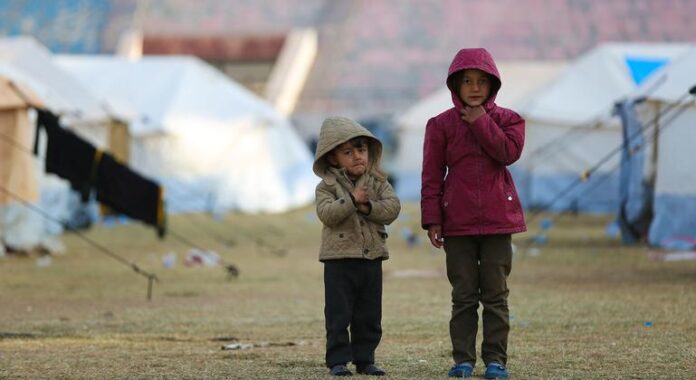
Nearly two million people remain displaced in the northwest, and many are living in overcrowded sites and fragile tents.  Among them are more than 615,000 who remain newly displaced across the country since fleeing their homes after 27 November.

The date marked the start of a major offensive by opposition fighters against the Syrian Army and forces loyal to the Assad regime, which was overthrown some 10 days later.

Winter weather support

The UN and partners continue to provide assistance as conditions and funding allow, including winter aid to northern Syria, where the weather is particularly harsh at this time of the year.

Partners have carried out emergency repairs of roads and sewage systems that were affected by past flooding in the northwest, while nine markets are currently being rehabilitated near displacement camps. 

Since December, more than 260,000 children in Idleb and northern Aleppo have been supported with heaters, winter clothes and other aid, OCHA said.  Winter kits were also distributed to 500 children in Qamishli, in Al-Hasakeh governorate.

Illnesses and infections on the rise

During the same period, health partners have deployed mobile medical teams, provided mental health support, and reinforced facilities with heating and insulation, reaching 800,000 people in the northwest.

They warn, however, of a significant rise in influenza-like illnesses and severe acute respiratory infections, which are causing further strain to the underfunded health sector. More than 100 health facilities in the northwest are out of funds since the start of the year.

Humanitarians also sounded the alarm over the shortfall in funding for their operations to support 6.7 million Syrians through March.  Less than 10 per cent of the $1.2 billion needed has been received to date.

Refugees return home

Meanwhile, more than 270,000 Syrian refugees have returned home since early December, according to the UN refugee agency, UNHCR.

A recent UNHCR survey of Syrian refugees across the region found that 27 per cent of respondents intend to return home within the next 12 months, compared to just 1.7 per cent prior to the fall of the Assad regime.

The results show, however, that roughly three-quarters of Syrian refugees have no plans to go home in the next year and are instead waiting to see how the situation evolves.

Currently 5.5 million Syrian refugees are living in Türkiye, Lebanon, Jordan, Iraq and Egypt.

Factors affecting return

The reasons why Syrian refugees are reluctant to return range from the lack of housing or access to their properties, concern over the security situation, the disruption to basic services, and economic challenges including a lack of jobs.

UNHCR and partners are providing returnees and others in need with basic household items, repairs to damaged homes, emergency cash assistance, support to replace lost identity documents and psychological counselling, among other services.

The agency is appealing for greater support from the international community to meet the immense needs. 

Source link

Press release – European Parliament President Metsola visits Israel, Gaza and West Bank

0
Read-out of the meeting between the President of the European Council António Costa, the President of the European Commission Ursula von der Leyen and the President of Ukraine Volodymir Zelenskyy

During her official visit to Israel and the occupied Palestinian Territories, EP President Metsola was the first European leader to enter Gaza in more than a decade. Source : © European Union, 2025 – EP

Source link

Guterres calls for probe into death of WFP staff member detained in Yemen

0
Guterres calls for probe into death of WFP staff member detained in Yemen

“Heartbroken and outraged by the tragic loss of WFP team member, Ahmed, who lost his life while arbitrarily detained in Yemen,” Executive Director Cindy McCain said on Tuesday in a post on the social media platform X.  

She described him as “a devoted humanitarian and father of two”, who “played a crucial role in our mission to deliver lifesaving food assistance.”

Dozens in detention

Ahmed was among seven national staff detained by local authorities in northern Yemen since 23 January. 

The Houthis, also known as Ansar Allah, are also holding dozens of personnel from the UN, national and international NGOs, civil society and diplomatic missions – some have been detained for several years.

UN Secretary-General António Guterres condemned the death of the WFP staff member and expressed solidarity with all detained colleagues and their families.

A ‘deplorable tragedy’

“The circumstances surrounding this deplorable tragedy remain unclear, and the United Nations is urgently seeking explanations from the Houthi de facto authorities,” he said in a statement on Tuesday.

“I call for an immediate, transparent and thorough investigation and for those responsible to be held accountable.”

Mr. Guterres said the continued arbitrary detention of the other personnel is “unacceptable”.  He renewed his call for their immediate and unconditional release. 

“The United Nations continues to follow this situation closely and will continue to take appropriate measures to ensure the safety and security of our staff in their efforts to deliver for the people of Yemen,” he said.

Humanitarian freeze amid immense needs

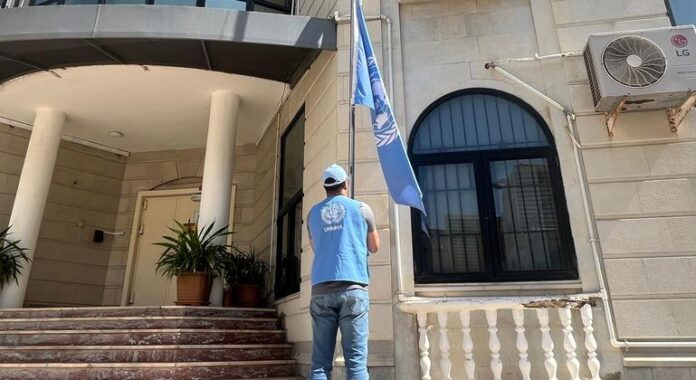
In response to the latest Houthi detentions, the Secretary-General on Monday instructed all UN agencies, funds and programmes to halt operations in Sa’ada governorate in northwest Yemen.

“This extraordinary and temporary measure seeks to balance the imperative to stay and deliver with the need to have the safety and security of the UN personnel and its partners guaranteed,” his Office said in a note to correspondents.

A decade of conflict between the Houthis and Yemeni government forces, who are backed by a Saudi-led coalition, has left some 18. 2 million people – more than half the population – in need of humanitarian assistance. 

WFP supports millions through its programmes, which include delivering essential food to conflict-affected families, feeding schoolchildren, and providing nutritional support to women and children, including in camps for internally displaced people.

Source link

Most Europeans have positive view of AI, survey shows

0
Most Europeans have positive view of AI, survey shows

Most people in Europe think that digital technologies, including AI, have a positive impact on their jobs, the economy, society, and on quality of life, a new survey shows. Over 60% of Europeans positively view robots and AI at work. 84% think that AI needs careful management to protect privacy.

Source link

Commission survey shows most Europeans support use of artificial intelligence in the workplace

0
Commission survey shows most Europeans support use of artificial intelligence in the workplace

Most people in Europe think that digital technologies, including artificial intelligence (AI), have a positive impact on their jobs, the economy, society, and on quality of life. This is what reveals a new Eurobarometer survey, published today. 

More than 60% of Europeans positively view robots and AI at work and over 70% believe they improve productivity. While a majority supports using robots and AI to make decisions at work, 84% of Europeans think that AI requires careful management to protect privacy and ensure transparency in the workplace. 

Background

Today’s results of the survey align with one of the key objectives of the EU’s Competitiveness Compass, to integrate digital technologies and AI into workplaces to boost innovation and productivity. The EU has allocated €2 billion from the European Social Fund Plus (ESF+) and €23 billion from the Recovery and Resilience Fund (RRF) to Member States to support the development of digital skills. The Digital Europe Programme has also invested €580 million to advance digital skills between 2021-2027. 

Source link