
On Tuesday, the Chair of the Ukrainian Verkhovna Rada, Ruslan Stefanchuk, addressed a formal sitting of the European Parliament in Strasbourg.Committee on Foreign Affairs Source : © European Union, 2025 – EP
Israeli military operation displaces 40,000 in the West Bank
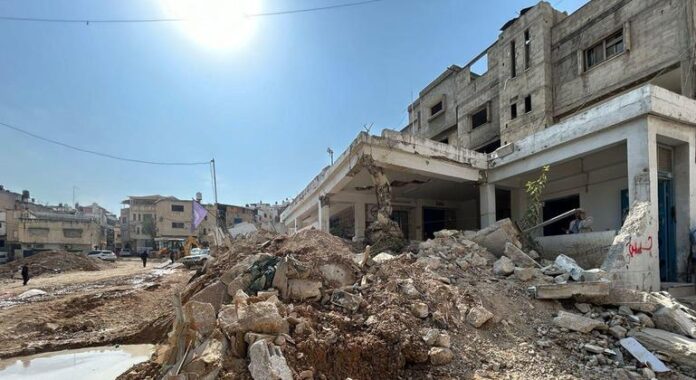
Several refugee camps are nearly empty after Israeli forces launched Operation Iron Wall on 21 January, making it the longest operation in the West Bank since the second intifada, according to the agency.
The operation started in Jenin camp and then expanded to Tulkarm, Nur Shams, and El Far’a camps, displacing 40,000 Palestine refugees.
UNRWA said thousands of families have been forcibly displaced since Israel began carrying out large-scale operations in the occupied West Bank in mid-2023.
Cycle of displacement
“Repeated and destructive operations have rendered the northern refugee camps uninhabitable, trapping residents in cyclical displacement,” the agency stressed.
Last year more than 60 per cent of displacement was a result of Israel Defense Forces operations.
UNRWA said forced displacement in the occupied West Bank is the result of an increasingly dangerous and coercive environment.
“The use of air strikes, armoured bulldozers, controlled detonations, and advanced weaponry by the Israeli Forces has become commonplace – a spillover of the war in Gaza,” the agency noted.
Palestinian militant activity
Meanwhile, armed Palestinians are also increasingly active in the northern West Bank, deploying improvised explosive devices inside refugee camps, including near UNRWA facilities and civilian infrastructure.
The militants have engaged in violent clashes with both Israeli and Palestinian forces, UNRWA said. Furthermore, from December 2024 onwards, Palestinian forces operations further exacerbated displacement from Jenin camp.
New laws in effect
UNRWA reiterated that civilians and civilian infrastructure must be protected at all times and that collective punishment is never acceptable.
“Jenin Camp stands empty today, evoking memories of the second intifada. This scene stands to be repeated in other camps,” the agency said.
UNRWA stated that it no longer has any contact with the Israeli authorities following the implementation of two laws on 30 January, thus making it impossible to raise concerns about civilian suffering or the urgent need for humanitarian aid delivery.
The situation “puts at grave risk the lives of Palestine Refugees and the UNRWA staff that serve them.”
The laws ban UNRWA from operating in Israeli territory and prohibit Israeli officials from having any contact with the agency.
Separately, UN humanitarian affairs office, OCHA, said ongoing operations by Israeli forces in Jenin, Tulkarm and Tubas continue to cause civilian casualties, with at least 40 people reportedly killed since 21 January.
The UN and partners continue to support Palestinians affected by the ongoing operation in Jenin, which continues to drive displacement. OCHA said the World Food Programme (WFP) and partners have reached nearly 1,200 households with cash assistance.
UN rights office urges humane treatment of Israeli hostages and Palestinian detainees

“Images of emaciated Israeli hostages and Palestinian detainees released as part of the first phase of the Gaza ceasefire agreement have been deeply distressing,” Spokesperson Thameen Al-Kheetan said in a statement.
He added that the pictures of Israeli hostages released this past weekend show signs of ill-treatment and severe malnourishment, reflecting the dire conditions they were subjected to in Gaza.
“We are also deeply concerned by the public parading of hostages released by Hamas in Gaza, including statements apparently made under duress during release,” continued Mr. Al-Kheetan.
Release all hostages and detainees
Meanwhile, Palestinians released from Israeli detention have revealed similar treatment under severe conditions, described by OHCHR as distressing and cause for serious concern.
“Israel and Hamas must ensure humane treatment, including freedom from any form of torture or abuse, for all those held under their power,” declared Mr. Al-Kheetan.
The spokesperson reminded all parties to the conflict that torture and other forms of ill-treatment of protected persons are war crimes. and those found guilty must receive sentences commensurate to the severity of their conduct.
“We reiterate that the taking of hostages is a war crime,” he said.
“Hamas must immediately and unconditionally release all hostages, and Israel must immediately and unconditionally release all those arbitrarily detained.”
Two mass graves of migrants uncovered in Libya

Nineteen bodies were discovered in Jakharrah, around 400 km south of the coastal city of Benghazi, while at least 30 more were found in a mass grave in the Alkufra desert in the southeast. It is believed the second grave may contain as many as 70 bodies.
It is not yet known how the people died nor their nationalities, although IOM confirmed that some had been found with gunshot wounds.
“The loss of these lives is yet another tragic reminder of the dangers faced by migrants embarking on perilous journeys,” said Nicoletta Giordano, IOM Libya Chief of Mission.
“Far too many migrants along these journeys endure severe exploitation, violence and abuse, underscoring the need to prioritize human rights and protect those at risk.”
The graves were both discovered following a police raid reportedly on a human trafficking site, during which hundreds of migrants were rescued from traffickers.
The route across the Libyan desert to the shores of the Mediterranean is often used by traffickers to smuggle people to Europe.
A boat transporting migrants 34 nautic miles far from Libyan coasts. (file).
Libyan security forces continue operations to capture the people responsible for the deaths of the migrants and according to news reports one Libyan and two foreign nationals have been arrested.
IOM urged the Libyan authorities “to ensure a dignified recovery, identification, and transfer of the remains of the deceased migrants, while notifying and assisting their families”.
It is not the first time a mass grave has been uncovered in Libya. In March 2024, the bodies of 65 migrants were found in the southwest of the country.
According to IOM’s Missing Migrants Project, out of the 965 recorded deaths and disappearances in Libya in 2024, more than 22 per cent occurred on land routes.
IOM said: “This highlights the often-overlooked risks migrants face on land routes, where fatalities frequently go underreported,” adding that “strengthening data collection, search and rescue efforts, and migrant protection mechanisms along these routes is crucial to preventing further loss of life”.
The migration agency has urged all governments and authorities along migrant smuggling routes to strengthen regional collaboration to safeguard and protect migrants, irrespective of their status.
World News in Brief: Aid activities suspended in Yemeni governorate, Gaza humanitarian update, UN welcomes summit on DR Congo crisis
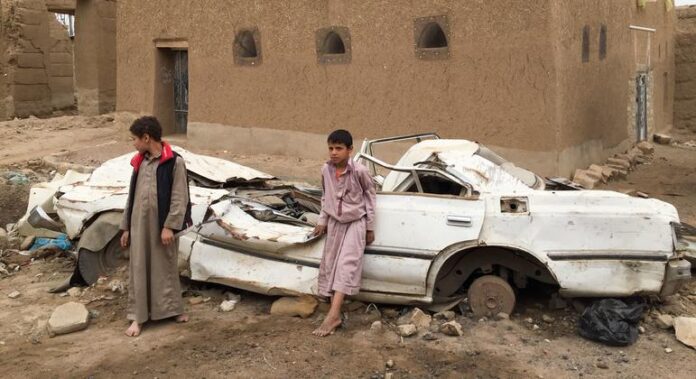
The decision follows the recent detention by the Houthi de facto authorities of eight additional UN personnel, including six working in Sa’ada, which has impacted operations.
The Houthis, also known as Ansar Allah, have been holding dozens of staff from the UN, international organizations and diplomatic missions for more than a year.
“This extraordinary and temporary measure seeks to balance the imperative to stay and deliver with the need to have the safety and security of the UN personnel and its partners guaranteed,” said UN Deputy Spokesperson Farhan Haq, speaking during the daily media briefing from New York.
He said the pause aims to give time to the de facto authorities and the UN “to arrange the release of arbitrarily detained UN personnel and ensure that the necessary conditions are in place to deliver critical humanitarian support guided by the principles of impartiality, neutrality, independence and humanity.”
The UN underlined its full commitment to assist the millions of people in need across Yemen, where Houthi rebels and Government forces, backed by a Saudi-led coalition, have been fighting for more than a decade.
People displaced by the war are slowly returning to their homes across Gaza.
Humanitarians continue to return to newly accessible areas of Gaza
More than 1.5 million people in Gaza have received food parcels since the ceasefire between Israel and Hamas began on 19 January, the UN humanitarian affairs office, OCHA, said on Monday.
The UN and partners continue to observe movement across the Netzarim corridor that separates the north and the south of the enclave as people return to their neighbourhoods.
They also continue to re-establish their presence in newly accessible areas across the Strip.
Food, water and healthcare
The World Food Programme (WFP) has distributed food parcels, hot meals and cash to more than 860,000 people in Gaza, OCHA said, and partners are providing more meals as community kitchens open in new areas.
Repair work continues on water wells across the enclave. However, the widespread destruction of infrastructure and shortages of spare parts, generators and solar panels are affecting efforts to increase water production.
Nearly 60 health partners provide primary and secondary health services across the Gaza Strip, ensuring access to essential care.
The UN Population Fund (UNFPA) is distributing sexual and reproductive health supplies expected to benefit more than 65,000 people over the next three weeks.
UNFPA has also supported another health partner which has opened three temporary primary healthcare centres in Gaza and a temporary medical point in Jabalya in the north.
OCHA reported that recent winter storms destroyed at least five child-friendly spaces in Khan Younis and the Middle Area in Gaza.
The storms also destroyed the Jabalya women and girls’ safe space, the largest such site in the north, serving nearly 500 women and girls each month.
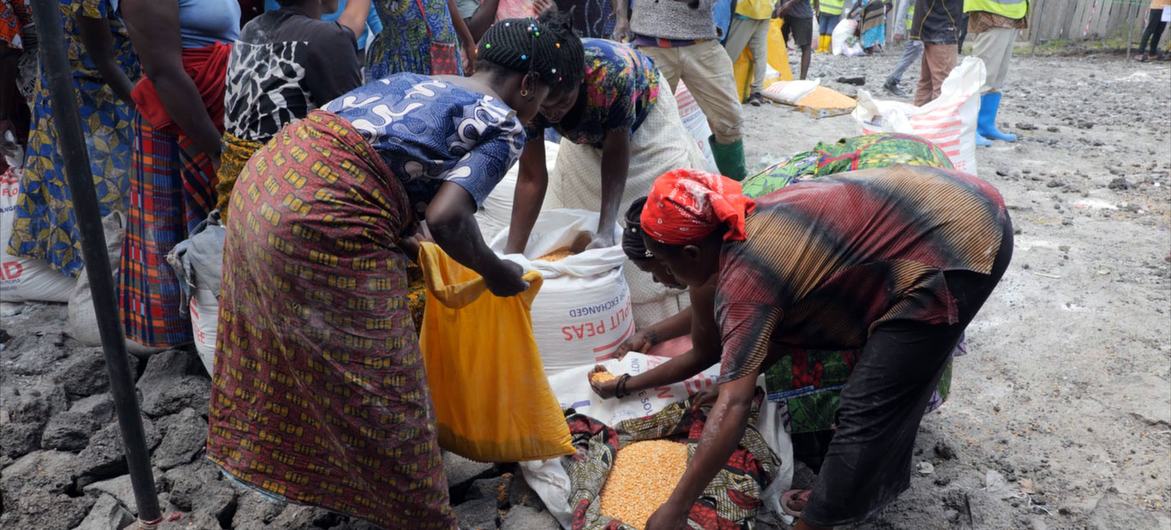
Women in Goma in the eastern DR Congo collect food provider by the UN and its partners.
UN welcomes Tanzania summit on eastern DRC crisis
The UN has welcomed a recent meeting of African leaders to address the crisis in eastern Democratic Republic of the Congo (DRC).
The joint summit by the Southern African bloc, SADC, and the East African Community (EAC) was held in Tanzania on Saturday. Participants reaffirmed the respect for the sovereignty and territorial integrity of the DRC.
Fighting escalated in late January when M23 rebels, who are backed by Rwanda, seized control of parts of North Kivu province, including the regional capital Goma.
Deputy UN Spokesperson Farhan Haq said the Organization remains committed to supporting the immediate measures announced, including an immediate ceasefire, the urgent delivery of humanitarian aid, and efforts to ensure the security of Goma and its key infrastructure.
‘We all have someone missing’: Families of the thousands of Syrians ‘disappeared’ by Assad regime share stories of loss

It has been two months since Bashar al-Assad, the former president of Syria, was forced to flee the country, as rebel forces – now installed as the interim government – advanced on Damascus, putting an end to 50 years of autocratic rule and nearly14 years of civil war. The country’s de facto rulers face monumental political and economic challenges, as well as a chronic humanitarian crisis (see below), and a legacy of human rights abuses committed by the former regime.
Acknowledging the atrocities, identifying the missing and finding justice for those affected has been identified as an important element in Syria’s recovery, and preventing a return to war. On 10 February, a team from the Independent Institution on Missing Persons in Syria (IIMP), a body set up by the UN, completed its first visit to the country, in cooperation with the de facto rulers.
As well as meeting representatives of the authorities and partner groups, including NGOs, the team spoke to dozens of families in Derayya and Tadamon, places marked by devastation, destruction, and profound suffering, as well as the infamous Sednaya prison, and heard about their struggles to find their loved ones. Throughout the visit, the team was repeatedly told: “Everyone in Syria knows someone who is missing. We all have someone missing.”
In the coming weeks, the IIMP will present a project to the authorities for discussion with both officials and families, to help in the collective efforts to discover the fate and whereabouts of the missing and to help open a path to truth.
Millions of Syrians remain reliant on aid
Before the fall of Assad, the UN estimated that over 16 million Syrians needed humanitarian aid, citing “rapid economic deterioration” and a lack of livelihood. On Monday, the UN Office for the Coordination of Humanitarian Affairs (OCHA) said that, during the previous week, 19 trucks crossed into northwest Syria carrying nearly 300 tonnes of food for 90,000 people, as well as medical supplies and education kits to reach 450,000 people.
The UN children’s agency, UNICEF has been drawing attention to the effect that conflict, displacement and economic instability continue to have on many families in Syria, as well as the harsh winter conditions. The agency is active in the country and is currently distributing winter clothing to children in rural areas.
Press release – President Metsola: “Örebro shooting was a senseless act of violence”

President Metsola opened the 10-13 February session with a minute’s silence for the victims of last week’s shooting in Örebro – the worst in Sweden’s history. Source : © European Union, 2025 – EP
Gaza crisis: Amid winter storms, humanitarians appeal for full aid access
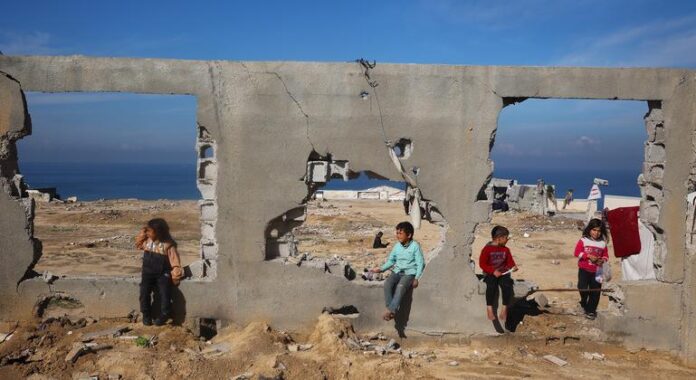
“The health system is ruined. Malnutrition is rising. The risk of famine persists,” said Dr Hanan Balkhy, the UN World Health Organization (WHO)’s Regional Director for the Eastern Mediterranean. “We are ready to scale up our response – but we urgently need systematic and sustained access to the population across Gaza, and we need an end to restrictions on the entry of essential supplies.”
Three weeks since the ceasefire began between Hamas and Israel that has allowed further hostage and prisoner swaps, the UN Children’s Fund (UNICEF) issued a new warning on Monday about life-threatening conditions across the enclave. Some 60 per cent of buildings lie in ruins after more than 15 months of constant Israeli bombardment.
Perishing cold
“There’s a winter storm ongoing, it’s incredibly cold,” UNICEF Communications Specialist Rosalia Bollen told UN News. “I have no clue how people can sleep at night in their makeshift tents. Lots of people who return to the north found their homes in rubble. They’ve put up some sort of improvised dwelling on top of their rubble, but it’s very, very cold.”
Humanitarian teams continue to assess the impact of winter storms on shelters in different locations of Gaza. In northern Gaza, partners are also preparing to distribute 1,500 tents to returnees in the governorates of Gaza and North Gaza.
Although thousands of aid trucks have entered Gaza since the ceasefire began on 19 January – the World Food Programme (WFP) alone said that it had sent more than 15,000 tons of food into the Gaza Strip, reaching more than 525,000 people with food parcels, hot meals and cash – overall needs remain enormous.
“We’re doing all we can,” UNICEF’s Ms. Bollen insisted. “We’ve actually been able to scale up assistance considerably as the numbers are showing and we don’t hold on to items; as soon as we can, we do all we can to immediately push items out to families. I know that’s the case not just for UNICEF, but for others as well. But you know the needs are just skyrocketing.”
The UNICEF worker added: “We humanitarians aren’t magicians. We don’t have a magic wand that can help the suffering overnight.”
Sheltering under sacks
According to a situation update from the UN aid coordination office, OCHA, despite an increase in shelter support for vulnerable Gazans, nearly one million displaced Palestinians live in “substandard tents or makeshift shelters, with families resorting to sewing old rice sacks together for basic cover”.
Many more Gazans live in crowded shelters in unsafe conditions, according to the Protection Cluster – a network of nongovernmental organizations, international organizations and UN agencies who work together in emergency settings.
For Gazans continuing to return to their homes in the north past the newly reopened Netzarim corridor that separated the north from the south, many find themselves confronted by a lack of basic services, including clean water.
Latest damage assessments from the UN satellite service, UNOSAT, indicated that an estimated 69 per cent of all structures in Gaza have been impacted and more than 245,000 housing units.
“The governorates of North Gaza and Rafah have experienced the highest rise in damage compared to the 6 September 2024 analysis, with around 3,138 new structures damaged in North Gaza and around 3,054 in Rafah,” UNOSAT said in its last update based on preliminary analysis. “Within North Gaza, Jabaliya municipality had the highest number of newly damaged structures, totalling 1,339.”
MERS-CoV worldwide overview

Since the previous update on 8 January 2025, and as of 5 February 2025, no new MERSCoV cases have been reported by WHO or national health authorities.
Since the beginning of 2025, and as of 5 February 2025, no MERS-CoV cases have been reported with date of onset in 2025.
Since April 2012, and as of 5 February 2025, a total of 2 626 cases of MERS-CoV, including 953 deaths, have been reported by health authorities worldwide.
