Wednesday, September 30, 2026
Home Blog Page 585

Humanitarians uphold commitment to support civilians in eastern DR Congo

0
Humanitarians uphold commitment to support civilians in eastern DR Congo

Bruno Lemarquis, Deputy Special Representative and Humanitarian Coordinator for the DRC, updated journalists on latest developments and obstacles to aid delivery, which include loss of critical supplies to looting and the impact of the decision by the United States to suspend billions in foreign aid.

The DRC was the largest recipient of US humanitarian assistance in the world in 2024, and 70 per cent of the $1.3 billion in funding received that year came from Washington.

A wider problem

Mr. Lemarquis said the situation in the east remains extremely volatile, with escalating armed clashes, mass displacement and increasing insecurity in both North Kivu and South Kivu provinces.

Since January, the M23 have been on an unprecedented advance across the volatile mineral-rich region. 

The rebels captured the main city, Goma, on 27 January, leaving some 2,900 people dead and many more injured. They are continuing a march towards Bukavu, capital of South Kivu province.

“But there are more than the M23 in the DRC,” said Mr. Lemarquis, speaking from the capital, Kinshasa.  “For example, this morning we learned that at least 52 civilians were reportedly killed in Ituri by the armed group called CODECO.”

Clashes and consequences

He said the M23 and Rwandan forces are advancing towards the Kavumu Airport which is located close to Bukavu, home to roughly 1.3 million people.

“Clashes are ongoing, including today, and they’re likely to continue, and the M23 may use alternative routes to progress towards the town of Bukavu in the coming days, with again massive consequences on the civilian population,” he warned.

The M23, which is part of a political-military coalition called Alliance Fleuve Congo (AFC), is largely in control of Goma and they have appointed de facto authorities including a governor and mayor.  

The situation in the city “remains tense and far from normal” due to the ongoing occupation. Although security has improved in some areas, concerns persist. 

‘Mob justice’ and other threats

Mr. Lemarquis said the past few days have seen “recourse to mob justice in a context of proliferation of light weapons and ammunition, and the looting of court houses.” This presents a further challenge to “reinstating the rule of law in a zone with a tragic legacy of gross humanitarian gross human rights violations and impunity,” he added.

“Furthermore, several human rights defenders, in particular those working on issues of sexual and gender-based violence, as well as journalists, report persistent threats and incidents of forced disappearance and summary execution targeting them,” he continued.

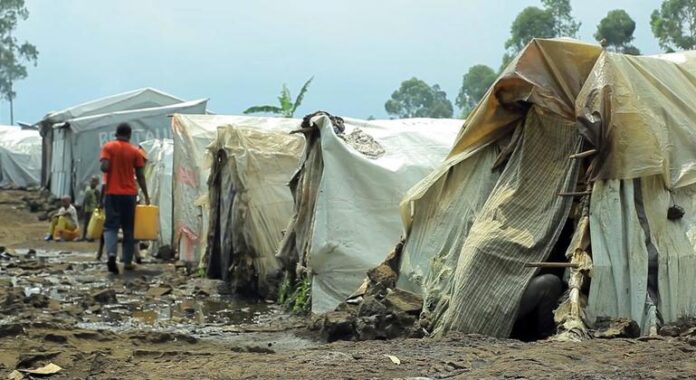
© UNICEF/Jospin Benekire

A displaced family sit in front of their makeshift shelter in Goma, North Kivu province, DR Congo.

Lack of services

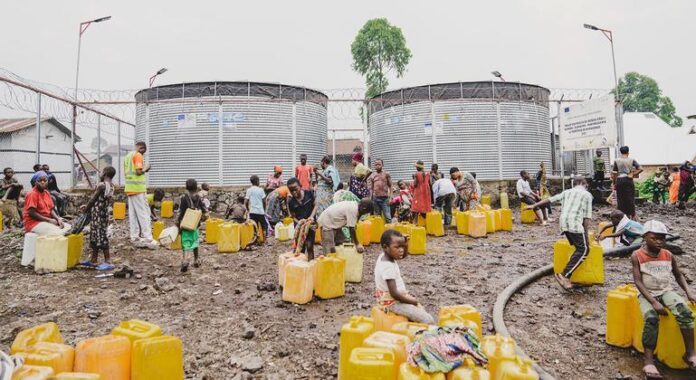
Meanwhile, many people in Goma are still facing difficult humanitarian conditions. Essential services, particularly water and electricity, are not yet fully operational.  As a result, many are using water directly from Lake Kivu, thus increasing the risk of contracting waterborne diseases. 

Mr. Lemarquis noted, however, that things have improved slightly as efforts are underway to restore electricity and to re-establish the water supply.  School activities have partially resumed after a two-week suspension due to the fighting, though many teachers remain uncertain about their status and pay under the new de facto authorities.

Public services also remain partially functional in Goma, with a limited number of civil servants having returned to work because of the uncertainty, but hospitals are still overwhelmed.

“Mortuaries are saturated, and medical teams have to cope with an unprecedented number of war wounded, with a shortage of medicine and medical supplies,” he said.

“Risks of epidemics are high in the city, in particular cholera and mpox. Food prices have risen, and more and more people need food assistance every day.”

Commitment to stay

Against this complex backdrop, humanitarian partners remain on the ground working to prevent and alleviate suffering, he said. They are also moving to strengthen response now that the situation has stabilized, and several colleagues who were evacuated or relocated will be brought back.

However, some key challenges remain. Mr. Lemarquis said many facilities belonging to the UN and international aid agencies were looted during the height of the fighting in Goma, and millions of dollars in supplies were lost.

Getting aid to Goma is another major obstacle as the airport there remains closed and non-operational.

“Without this airport we cannot evacuate the seriously injured, transport the necessary medical supplies or bring in humanitarian reinforcement,” he said. “All parties must act now to work together to re-open the airport and allow humanitarian flights to resume.”

A ‘new reality’

Humanitarians are also affected by the “new reality in Goma” as they navigate customs and border-related issues, while their final challenge concerns the Trump administration’s decision to temporarily suspend foreign aid.  

“This is a major source of concern with several UN agencies and international NGOs active on the ground having seen their operations at best severely impact, if not halted,” he said.

“Our humanitarian response is the most dependent in the world on US assistance. We were 70 per cent funded by US funding, so this is having major impact.”

US aid cuts

In response to a journalist’s question, Mr. Lemarquis explained that humanitarians required $2.5 billion for their operations in 2024 and garnered $1.3 billion – the highest amount ever received in the DRC for humanitarian response. Of the total, $910 million came from the US alone. 

“The ultra-dependence on US funding means a lot of programmes had to shut down on everything we are doing. So, it’s emergency health, it’s emergency shelter…it’s coordination capacity,” he said. 

“The only exception so far, but we hope there will be more exceptions, was emergency food assistance.”

Appeal for international support

Yet “despite these challenges, we aim to stay and deliver,” said Mr. Lemarquis. 

On behalf of the humanitarian community, he reiterated the call for “all the parties to end hostilities and to return to the political process.”

He also urged the international community “to intensify its support for the humanitarian response in this complicated area.” 

Source link

Bangladesh protests probe reveals top leaders led brutal repression

0
Bangladesh protests probe reveals top leaders led brutal repression

In addition to those killed by the former government’s security and intelligence services alongside Awami League party associates, the OHCHR report into the alleged crimes indicated that thousands were injured, including one youngster who was shot in the hand at point-blank range for throwing stones.

“There are reasonable grounds to believe that officials of the former government, its security and intelligence apparatus, together with violent elements associated with the former ruling party, committed serious and systematic human rights violations,” the High Commissioner for Human Rights said.

Speaking in Geneva, Mr. Türk highlighted that some of the gravest violations detailed in the report may constitute international crimes that could be heard by the International Criminal Court (ICC), as Bangladesh is a State party to the Rome Statute which created the tribunal in The Hague. The ICC’s foundational Statute gives it jurisdiction over genocide, crimes against humanity, war crimes and the crime of aggression (following an amendment in 2010).

Read our ICC explainer here.

Alleged crimes in Bangladesh against the student-led protest included “hundreds of extrajudicial killings, extensive arbitrary arrest and detention and torture, and ill treatment, including of children, as well as gender based violence”, the UN rights chief said.

Iron grip on power

Furthermore, these violations “were carried out with the knowledge, coordination and direction of the former political leadership and senior security officials, with a specific goal of suppressing the protests and keep the former government’s grip on power”.

According to the OHCHR report, as many as 12 to 13 per cent of those killed were children. Bangladesh Police also reported that 44 of its officers were killed between 1 July and 15 August 2024.

Last summer’s protests that led Prime Minister Sheikh Hasina to step down after 15 years in power were triggered by the High Court’s decision to reinstate a deeply unpopular quota system in public service jobs. But broader grievances were already entrenched, arising from “destructive and corrupt politics and governance” that had entrenched inequalities, the UN human rights office report maintained.

“I went to one of the hospitals in in Bangladesh when I visited, and I could talk to some of the survivors and some of them will be disabled for their lives. Especially young people…some of them were children,” Mr. Türk told journalists in Geneva, recounting his visit to Dhaka in September.

State killings

“The brutal response was a calculated and well-coordinated strategy by the former Government to hold onto power in the face of mass opposition,” insisted UN Human Rights Chief Volker Turk.

“The testimonies and evidence we gathered paint a disturbing picture of rampant State violence and targeted killings, that are amongst the most serious violations of human rights, and which may also constitute international crimes. Accountability and justice are essential for national healing and for the future of Bangladesh,” he added.

The UN human rights office probe mission started work in Bangladesh on 16 of September 2024 with a team that included a forensic physician, a weapons expert, a gender expert and an open-source analyst. The investigators visited protest hotspots including universities and hospitals. Their work was complemented by more than 900 witness testimonies.


Source link

EU invests €200 billion in AI

0
EU invests €200 billion in AI

The EU has launched a new initiative to boost AI in Europe, InvestAI. This will mobilise €200 billion for investment in the sector, including in AI gigafactories. A large AI infrastructure will allow open, collaborative development of the most complex AI models and make Europe an AI continent.

Source link

New rules for more sustainable and competitive packaging economy

0
New rules for more sustainable and competitive packaging economy

Today, the Packaging and Packaging Waste Regulation enters into force with new measures to further tackle the environmental challenges caused by excessive packaging. It will significantly cut greenhouse gas emissions, water use and environmental costs in the packaging industry.

In parallel, the regulation will create opportunities for recycling and sustainability sectors. It is an important step towards a more competitive, sustainable and circular economy for the EU.

The new measures aim to develop a single market for waste, secondary and reusable materials; promote recycling; and reduce dependency on primary resources. They include promoting reuse and refill as alternatives to single-use packaging and improving consumer information. Packaging will be more sustainable and enable consumers to reuse and sort their packaging waste more effectively, with solutions customised to the specific needs of Member States and businesses. The regulation will thus enhance resource efficiency and boost the circular use of materials.

By offering new business opportunities, the regulation will generate jobs and drive innovation in packaging solutions. It will also increase efficiency in the recycling sector. Additionally, restrictions on certain hazardous substances will protect consumer health and the environment. 

The Commission will now focus on the implementation of the new regulation.

Source link

Press release – EP TODAY, Wednesday, 12 February

0
Press release – EP TODAY, Wednesday, 12 February

. Source : © European Union, 2025 – EP

Source link

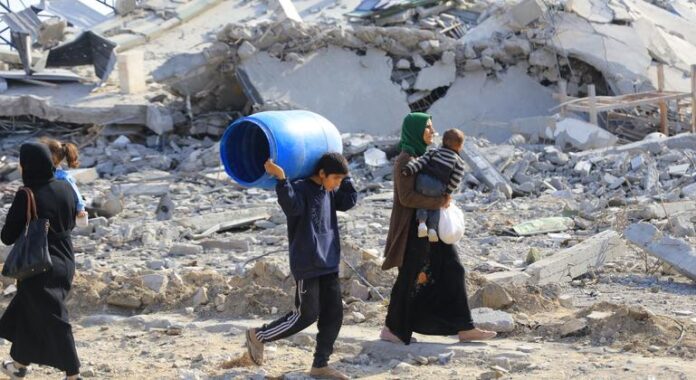
Gaza: Return to war must be avoided at all costs, insists UN chief

0
Gaza: Return to war must be avoided at all costs, insists UN chief

“We must avoid at all costs the resumption of hostilities in Gaza that would lead to an immense tragedy,” said the UN chief, in a statement relayed to journalists by UN Geneva spokesperson Rolando Gomez.

“I appeal to Hamas to proceed with the planned liberation of hostages next Saturday. Both sides must fully abide by their commitments in the ceasefire agreement and resume serious negotiations in Doha for the second phase.”

The development comes amid reports that Hamas suspended the scheduled release of hostages from Gaza on Saturday, on the grounds that Palestinians continue to be killed in the war-torn enclave and that too little aid is entering the Strip.

Israel’s Prime Minister Benjamin Netanyahu said later on Tuesday that the ceasefire would end if Hamas militants failed to release those hostages still being held captive inside Gaza.

‘Tremendous concern’

Taking questions from journalists at UN Headquarters during the regular daily briefing, deputy spokesperson Farhan Haq stressed that “serious negotiations” needed to resume in Doha for phase two.

He said the Secretary-General had been in contact with senior Qatari officials, including the Prime Minister, “trying to see what support we can also provide.” 

“It’s a tremendous concern if the ceasefire does not last. You saw the suffering that had happened from October 2023 up until just a few weeks ago, and we do not want to return to that,” said Mr.Haq. 

“All efforts need to be made to make sure that this ceasefire, which has been precious to the people of the region and indeed of the wider Middle East, that [the] ceasefire is maintained.”

UNRWA operations continue

The UN agency for Palestine refugees, UNRWA, said on Tuesday that its operations continue uninterrupted in Gaza and the occupied West Bank including East Jerusalem.

“Our clinics across the occupied West Bank including East Jerusalem are open while the humanitarian operation in Gaza continues. We are committed to staying and delivering,” UNRWA said in an online post.

The UN aid coordination office, OCHA, meanwhile, highlighted that a significant aid boost into Gaza has been possible “under the conditions generated by this [ceasefire] deal” that began on 19 January.

Speaking in Geneva, OCHA spokesperson Jens Laerke said that the UN had delivered food, medical, shelter supplies and more in the last 21 days “which have enabled us to provide a range of critical services to people in need across Gaza and initiate repairs”.

Responding to questions from journalists that UN aid teams had not been able to bring in certain materials which could help with the reconstruction of shattered medical centres and more, Mr. Laerke insisted that “the full visibility of the pipeline and the ceasefire deal and the compliance indicators, should be available to the guarantors of the ceasefire deal, which does not include the United Nations, but Egypt, Qatar and the US”.


Surge in aid

According to the latest humanitarian update from OCHA, more than 1.5 million people in Gaza have received food parcels since the ceasefire began.

The World Food Programme (WFP) has distributed food parcels, hot meals and cash to more than 860,000 people in Gaza, OCHA said, and partners are providing more meals as community kitchens open in new areas. 

Repair work continues on water wells across the enclave. However, widespread destruction of infrastructure and shortages of spare parts, generators and solar panels have impacted efforts to increase water production.      

Today, nearly 60 health partners provide primary and secondary health services across the Gaza Strip, ensuring access to essential care.

The UN reproductive health agency UNFPA is distributing supplies expected to benefit more than 65,000 people over the next three weeks. 

UNFPA has also supported another health partner which has opened three temporary primary healthcare centres in Gaza and a temporary medical point in Jabalya in the north.

OCHA reported that recent winter storms destroyed at least five child-friendly spaces in Khan Younis and the Middle Area in Gaza.

“The needs are enormous,” Mr. Gomez told journalists. “The ceasefire is in place and of course that doesn’t mean that there aren’t enormous needs and they remain so…This is where our priorities lie.” 

Early recovery and reconstruction

The war in Gaza has devastated more than 70 per cent of the enclave’s infrastructure. According to the Executive Director of UNOPS, the United Nations Office for Project Services, it is “key to start preparing for early recovery and reconstruction” – a task that will require a huge amount of cooperation on the part of the international community.

Speaking at the beginning of a seven-day trip to the Middle East, Jorge Moreira da Silva told UN News in an extensive interview that it is an urgent but complex task to start the process of removing debris and rubble in Gaza.

Listen to the full interview on SoundCloud. 

Source link

Statement by High Representative/Vice-President Kallas and Commissioner for Enlargement  Kos on the parliamentary elections

0
Press release – EP TODAY, Wednesday, 12 February

Statement by High Representative/Vice-President Kallas and Commissioner for Enlargement  Kos on the parliamentary elections

Source link

Short-range drones: The deadliest threat to civilians in Ukraine

0
Short-range drones: The deadliest threat to civilians in Ukraine

With increasing reports of these drones striking civilians in cars, on buses and on public streets, UN monitors have raised serious concerns about potential violations of international humanitarian law.

According to HRMMU’s latest monthly update on the protection of civilians, at least 139 were killed and 738 injured in Ukraine last month. Attacks using short-range drones accounted for almost 30 per cent of these incidents.

“Short-range drones now pose one of the deadliest threats to civilians in frontline areas,” said Danielle Bell, Head of HRMMU.

Terror in the skies

The mission reports that 95 per cent of casualties from short-range drones in January occurred in territory controlled by Ukraine, with the remaining five per cent in areas occupied by Russia.

Many of the attacks involved first-person-view drones, that is, drones equipped with real time cameras, allowing operators to identify and track their targets with precision.

While such technology should, in theory, enable drone operators to distinguish between military and civilian targets, the UN’s findings suggest otherwise.

“Our data shows a clear and disturbing pattern of short-range drones being used in ways that put civilians at grave risk,” Ms. Bell noted.

Deadly incidents on the frontline

The new year brought no respite in frontline regions but rather an escalation and even expansion of the fighting.

Casualties due to short-range drones were responsible for 70 per cent of civilian deaths in the Kherson region, which suffered the highest number of casualties.

One of the most shocking incidents took place on 6 January, when a drone targeted a public transit bus in Kherson City during rush hour. The attack killed a man and a woman and injured eight others.

HRMMU also recorded an increase in drone-related casualties in other frontline regions, including Kharkiv, Sumy, Dnipropetrovsk, Mykolaiv, Donetsk and Zaporizhzhia.

First-hand account of strikes

Survivors have described the moments leading up to these attacks with harrowing detail.

A civilian from Mykolaiv recounted how a small drone circled above his head before diving directly at him while he was working in his home’s garden.

“I realised that I did not have time to hide. I dropped to the ground and covered my head with my hands,” he told HRMMU.

“The blast wave tore off all my clothes. I somehow instinctively tried to protect my eyes. This saved my eyesight, because after the drone explosion, the backs of my palms were covered with small metal fragments, which surgeons later removed. My wedding ring was so pressed into my finger that they had to saw it off to remove it from my finger,” he continued.

A disturbing trend

HRMMU’s data shows a sharp increase in civilian casualties from short-range drones throughout 2024, with a particularly alarming spike in the last six months.

“The on-board cameras should allow operators to distinguish with a higher degree of certainty between civilians and military objectives”, Ms. Bell said, “yet civilians continue to be killed in alarming numbers”.

As Ukraine’s conflict continues, UN monitors have reiterated calls for all parties to take immediate measures to safeguard civilians, in line with international humanitarian principles.

Another scourge facing civilians across Ukraine is the vast amount of explosive remnants of war which are accumulating. Here’s what the UN is doing to help save farms from being no-go zones:

Source link

DR Congo crisis: Thousands of displaced in Goma forced to flee again

0
DR Congo crisis: Thousands of displaced in Goma forced to flee again

Last month, M23 rebels captured the city – the largest in the region and capital of North Kivu province. Nearly 3,000 people have reportedly been killed and 2,880 injured.

OCHA Spokesperson Jens Laerke said more than 110,000 displaced people have left sites in Goma and have started to move to villages in the Masisi, Rutshuru and Nyiragongo territories.

UN teams carried out humanitarian assessments in Rutshuru last week and will continue assessments this week in return areas to inform the response.

Ultimatum to leave

He said humanitarian partners remain concerned by the 72-hour ultimatum given by M23 representatives two days ago urging displaced people living in sites and collective centres in Goma to leave and return to their villages.

Mr. Laerke noted, however, that the M23 issued a statement on Monday, which he quoted. It explained that the group “fully supports and encourages voluntary returns, but does not compel anyone to return without firm security guarantees.” 

“We reiterate that all returns had to be voluntary and take place under safe, informed and dignified conditions in accordance with international humanitarian law,” he said.

Displacement sites dismantled

Meanwhile, humanitarian partners are also alarmed by the ongoing but unplanned dismantling of sites for internally displaced people.

“This situation leads to the loss of humanitarian infrastructure at the sites, including border facilities, health centres and cholera treatment centers, resulting in significant losses of humanitarian investments and reduced response capacities,” he said.

More to follow… 

Source link

Together for a better internet

0
Together for a better internet


Safer Internet Day promotes safer and more responsible use of online technology, especially for children and young people. 

This year, it takes place on 11 February and calls on stakeholders around the globe to take concrete steps to make the internet safer and more inclusive for all. Celebrations and awareness activities will take place throughout February and everyone is invited to join the movement. 

In the EU, 97% of young people use the internet daily. The EU is committed to ensuring everyone is safe online. As minors are among the most vulnerable groups, the EU has put a specific focus on protecting them through various initiatives: 

  • Digital Services Act: to combat cyberbullying, illegal content, disinformation, and others. It mandates that online platforms implement stronger safeguards for minors, including parental controls, age verification, and limits on targeted advertising. 
  • Safer Internet Centre network: to offer awareness campaigns, helplines, hotlines, and youth participation services. They equip children, parents, and educators with tools and knowledge to recognise online threats and report harmful content. 
  • Better Internet for Kids: a strategy to create safer digital experiences for children. It protects them from harmful and illegal content, creates an age-appropriate digital environment, equips them with the necessary digital skills to empower them and supports their participation in shaping internet policies. 

Safer Internet Day started as an EU initiative in 2004 and has since grown into a global movement, celebrated in over 180 countries each year. By working together, policymakers, industry representatives, civil society organisations, educators, and young people themselves help create a safer digital world for future generations. 

For more information 

Safer Internet Day 

The Digital Services Act 

Safer Internet Centres 

Better Internet for Kids 

Source link