Thursday, March 26, 2026
Home Blog Page 926

Pope secretly allows € 1 million to be paid for release of Colombian nun

0

Cardinal Angelo Beccu’s unexpected revelation could have serious consequences for the security of the Vatican and the Catholic Church

Pope Francis has allowed up to 1m euros to be spent on the release of a Colombian nun kidnapped by al Qaeda-linked extremists in Mali. The cardinal announced this yesterday, revealing the secret papal approval so far to hire a British security company to find the nun and help save her, the Associated Press reported.

Cardinal Angelo Beccu’s unexpected revelation could have serious consequences for the security of the Vatican and the Catholic Church, as he provided evidence that the pope was apparently willing to pay a ransom to Islamist extremists for the release of a nun who was eventually released last year. .

Redemption payments are rarely or never confirmed, precisely to dissuade future kidnappers, and it is not known exactly how much money the Vatican has reached extremists.

Bechu was one of the pope’s top advisers and a second-ranking clergyman in the Vatican’s secretariat of state. Prosecutors have accused a woman who is co-accused with him of using about half of the amount to acquire luxury items.

The cardinal did not testify before the Vatican tribunal for nearly two years for reasons of state and papal secrecy, but yesterday he spoke freely in his defense. This came after the pope released him from the requirement of confidentiality and Bechu gave the long-awaited testimony so far in the one-year trial.

Bechu is one of 10 defendants in a financial fraud case in the Vatican. It began with an investment of 350m euros in a luxury London property, but has gradually expanded to include other criminal acts. Prosecutors have accused defendants of a number of crimes involving the alleged draining of millions of euros from the Holy See in the form of fees, commissions and bad investments.

Bechu, who is the only cardinal in the dock, is accused of embezzlement, abuse of office and training of witnesses. Yesterday, he testified on charges of his links to a self-proclaimed Italian intelligence specialist, Cecilia Maronia, who is also accused of embezzlement.

Maronia had told Italian media that she had helped free Catholic hostages in Africa on behalf of the Holy See. Vatican prosecutors accuse her of embezzling half a million euros, citing bank statements from her Slovenian holding company. They show that 9 bank transfers were made from the Vatican for unspecified humanitarian purposes and payments from its account for luxury women’s goods and expensive hotels.

Bechu testified that he sought help from Maronia as an external consultant after the abduction in February 2017 of Sister Gloria Cecilia Narvaez in Mali. She was abducted by al Qaeda in the Islamic Maghreb, which financed its subversive activities by kidnapping Western citizens. While the nun was in captivity, she was periodically shown in videos asking the Vatican for help.

The cardinal also said that Maronia advised him to involve the British security company Inkerman to ensure the release of the Colombian nun.

Sister Narvaez was released in October 2021 after more than five years in captivity. Shortly afterwards, she met with the pope at the Vatican.

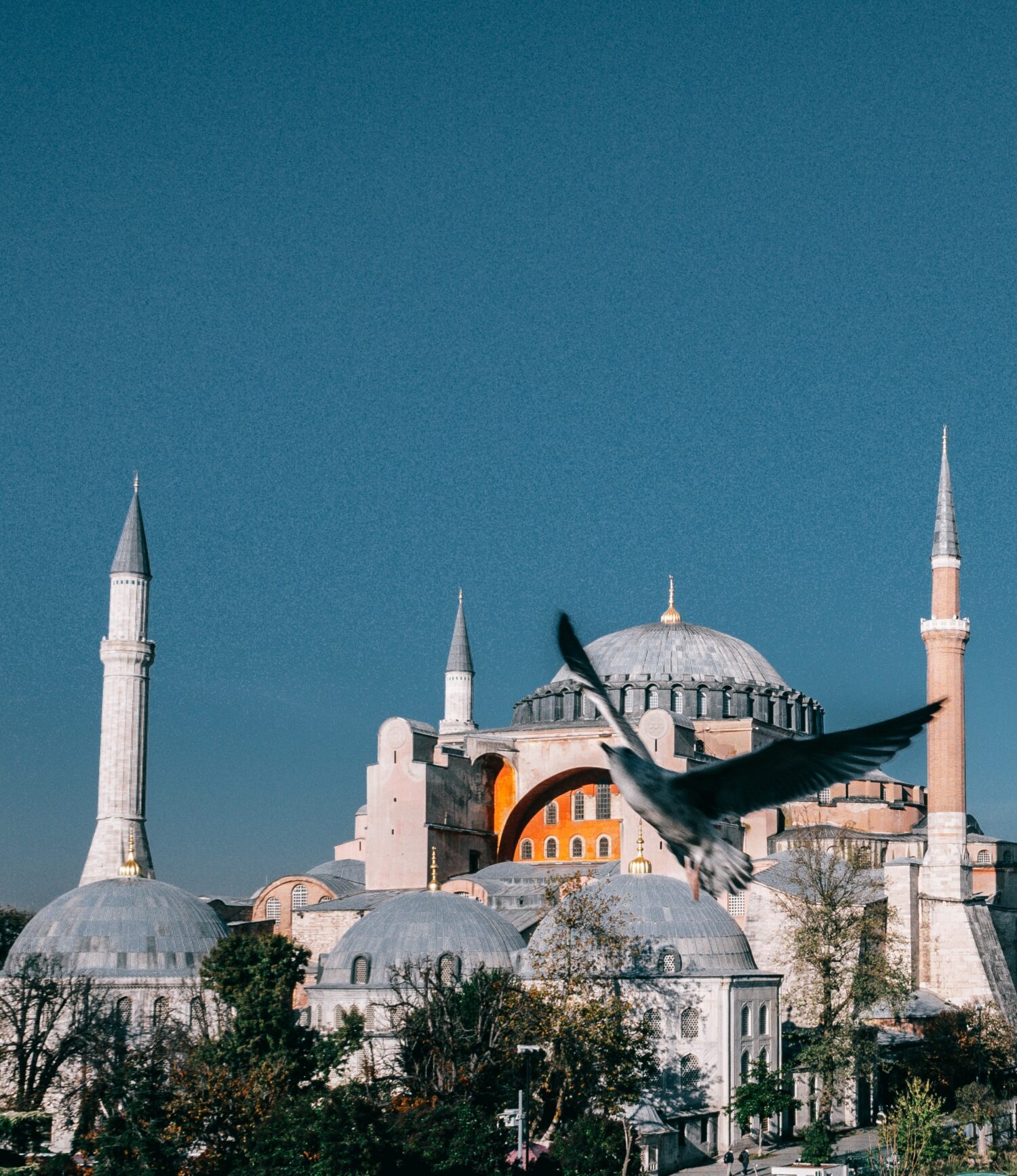
The Ecumenical Patriarchate recognized the Macedonian Church as the Ohrid Archbishopric

0

The Ecumenical Patriarchate has announced that it is accepting the Macedonian Church into Eucharistic communion

The Macedonian Orthodox Church (MOC) was surprisingly recognized by the Ecumenical Patriarchate as the Ohrid Archbishopric.

A statement from Istanbul said yesterday that the term “Macedonia” and any other derivatives of it were excluded and that the church was recognized only by the name “Ohrid”, BNR reports.

After today’s meeting, the Holy and Holy Synod of the Ecumenical Patriarchate announced that it accepts in Eucharistic communion the Macedonian Church “the hierarchy, the clergy and the people of this Church under the omophorion of Archbishop Stefan” and thus “the Mother Church heals the wound of schism and schism. and wine “on the wound of the Orthodox brothers there.”

The Church of Serbia must settle administrative issues with the Church in the Republic of Northern Macedonia, according to a statement from the Ecumenical Patriarchate.

This is a knife in the back of the Bulgarian Orthodox Church, for which the Ohrid Archbishopric is part of the historical and spiritual space, as well as the oldest Bulgarian church institution, theologians commented. Years ago, the MOC demanded that the Bulgarian Orthodox Church be declared their mother church, but as soon as a commission was formed at the Holy Synod of the BOC on the issue, bishops from northern Macedonia began seeking direct assistance from the Ecumenical Patriarchate.

The pandemic of deaths of Russian managers continues

0

A former Lukoil boss has been found dead

Alexander Subotin was found in a room used for voodoo rituals

A former manager of the Russian oil company Lukoil has been found dead on May 8 in the town of Mytishchi near Moscow. The cause of death is believed to be a stroke, TASS reported.

The owner of the property where the businessman’s body was found is Alexei Pindyurin – also known as “the shaman of Magua”. The former Lukoil manager has reportedly visited the shaman several times to take advantage of his non-traditional treatment services. This time Subotin went to him to help him with a hangover.

Pindyurin says the businessman “came to him in a state of severe alcohol and drug intoxication”. Subotin’s body was found in a room “used for Jamaican voodoo rituals”.

Alexander Subotin is a former member of the board of Lukoil Trading House and owner of Nova Transport Company, and is a brother of Valeri Subotin, a former vice president of oil supply and sales at Lukoil.

This is another news about the death of a Russian businessman. Since the beginning of 2022, various employees of the gas companies Novatek and Gazprom have been found dead. In each case, the main version of the investigators is suicide.

In April, it became clear about the death of former Novatek manager Sergei Protosenya, as well as former Gazprombank vice president Vladislav Avaev. Earlier, other executives were found dead in Russia, including Gazprom Invest’s transport chief Leonid Shulman and Alexander Tyulyakov, deputy general director of Gazprom’s corporate security center.

Difficult to repeat today. Archaeologists stunned by engineering discovery in Petra

0
In places where water should have flowed, scientists found broken terracotta pipes

As scientists note, the main reason why Petra flourished was the ability of the semi-nomadic Semitic people of the Nabataeans to manage a scarce water resource. Petra is a famous archaeological site located in the desert in the southwestern part of the Jordan and surrounded by rocky desert canyons and mountains.

Once a bustling center of politics, culture and economy, it was one of, if not the region’s most important ancient waypoints where merchants stopped during their travels.

The area has been inhabited since at least 7000 BC, and the remains of a bygone era are scattered across its dusty plains. And when the Nabataeans, a semi-nomadic Semitic people, moved to Petra in the 4th century, the city reached its full flowering. But what strikes researchers the most is the city’s plumbing and drainage system.

“”Petra thrived on the Nabataeans’ ability to manage the storage and irrigation system. It was an incredible marvel of engineering, a complex network of cisterns, dams and canals using water from desert springs and 10 cm of annual rainfall to maintain a year-round water supply,” the scientists said.

Petra is located in a climatically unfavorable place. Carved into a narrow canyon called El Siq, the desert landscape shrouds buildings and temperatures often reach 42°C or more with no water source nearby. But Petra is believed to have had a population of 30,000 in its heyday, despite the fact that local water resources were only sufficient for 2,000 to 3,000 people.

As geologist Thomas Paradise of the University of Arkansas noted, in the 21st century it would be quite difficult for us to create a city that would be so sustainable.

“The fact that they were able to change the landscape to suit their needs is a testament to the resilience of the Nabataeans and their ingenuity,” the scientists added.

The system created by the Nabataeans begins at the top of the hills, where dozens of reservoirs dotted around the urban landscape capture and store every drop of winter rain.

At the highest point in the valley, a cistern was placed that could collect water from the entire area of​​ the peak, flowing into Petra through a huge interlacing of channels. In those places where water was supposed to flow, scientists found broken terracotta pipes. They are very similar to the same terracotta pipes that we use all over the planet two thousand years later.

A study of the water supply system showed that it provided Peter with 45 million liters of water per day – enough to meet all the domestic and agricultural needs of the city.

The peony festival began in Israel: how to visit

0

Peony picking season has started in Israel. Millions of Israelis watch the blooming of these impeccably beautiful and magically fragrant flowers every year, waiting with bated breath for the start of the new season. After all, it is at this time that there is an opportunity to walk in the boundless peony fields and collect the desired fragrant bouquet.

A peony growing company run by Tamir Edri from the village of Shani (Livna), located in the southern part of the country, invites everyone to the peony festival for walks and picking fragrant flowers.

Tamira Edri’s company has long been known in many parts of the world: they present their amazing products in the Netherlands at the World Flower Exchange. And now residents and guests of Israel will also be able to appreciate and purchase branded peonies.

Flowers in the fields of Edri can be picked daily, including Friday and Saturday – from 9:00 to 18:00. In addition to picking flowers, here you can simply enjoy walking or capture wonderful shots against the backdrop of pink, red and white peonies.

Not everyone knows, but the fields of Tamir Edri are located in an incredibly picturesque place, from which such landscapes open that are instantly breathtaking. So if you are looking for a place for a picnic or want to barbecue in nature, consider this option. Here you will have a great time in your company and get a lot of pleasure from the picturesque views.

If you don’t have the opportunity to go out into nature, but you love peonies, you can easily order them on the website and get them delivered to your home: details here.

Entrance to the field: 10 shekels per person, each plucked flower – 8 shekels.

The fields are located in the village of Shani (Livna), in front of the entrance.

G7 and EU express “grave concern” after appointment of Hong Kong leader

0
Photo by Yuriy Rzhemovskiy on Unsplash

The G7 and the European Union expressed their “grave concern” on Monday 9 May after the appointment as head of Hong Kong for the next five years of the former British colony’s security chief, who had overseen the crackdown on the pro-democracy movement and the severe political takeover that followed.

In a statement, the heads of diplomacy of the G7 (Canada, France, Germany, Italy, Japan, the United Kingdom and the United States) and the EU said the process and the resulting appointment was a “radical departure from the goal of universal suffrage and further erodes the ability of Hong Kongers to be legitimately represented.

“Electoral Committee”

The only candidate, John Lee 64 years old, was nominated on Sunday by a small committee of 1,461 personalities representing the political and economic elite, all of them supporters of the Chinese regime. “We are deeply concerned by this continuing erosion of Hong Kong’s political and civil rights and autonomy,” the G7 and EU heads of diplomacy added, calling the process that led to John Lee’s appointment “part of a continuing attack on political pluralism and fundamental freedoms. They urge the new Chief Executive to “respect the rights and freedoms protected in Hong Kong” and to ensure that the judicial system “upholds the rule of law.

The appointment of John Lee, sanctioned by the United States for his role in the crackdown on pro-democracy protests in 2019, had already been condemned by the European Union.

“The selection process” of this former police officer in charge of the city’s security, “is a new step in the dismantling of the principle ‘one country, two systems’. The Chinese and Hong Kong authorities must respect their national and international commitments,” Borrell said on his Twitter account.

John Lee will take office on July 1 and has promised to strengthen national security and accelerate the integration of Hong Kong with China.

Getting emergency medical supplies to where they are needed most

0
a man and a woman in front of a Who truck taking inventory of the contents

Interview with Olexander Babanin on the logistics of WHO support to Ukraine

Olexander Babanin is Logistics and Operations Officer for WHO, and is responsible for organizing the transportation of essential medical supplies and equipment from storage facilities to locations across the world. In this interview, Olexander explains how WHO decides which supplies are needed, how they are distributed and how they might be used, in the particular context of Ukraine.

Why does Ukraine need emergency medical supplies?

The war in Ukraine has not only badly damaged or destroyed many health facilities, but it has disrupted supply chains of medical supplies to affected areas. Domestic production of supplies has been curtailed by bombings. Supplies are needed, not just to treat those injured in the conflict, but to care for many trapped in the country without access to medication, including those with chronic conditions such as hypertension and diabetes.

Where are WHO’s emergency medical supplies coming from?

Most supplies come from WHO’s central logistics hub, located in Dubai’s International Humanitarian City. The hub was established in 2016 to aid global preparedness and response to emergencies, and allows vital medical supplies and equipment to be stored and rapidly dispatched in response to health emergencies all over the world. During the COVID-19 pandemic, the hub grew rapidly to manage 85% of WHO’s medical commodity response. WHO is also receiving individual shipments of specific supplies for Ukraine from vendors all over the world. These arrive in Warsaw, Poland via air and road and are then driven across the border into Ukraine.

What particular kind of supplies are being sent to Ukraine?

WHO is working with partners to deliver hundreds of tonnes of life-saving equipment and medication to Ukraine. WHO emergency supplies include standard medical kits; oxygen and oxygen generators; transfusion kits; electrical generators; cold chain elements (e.g. fridges); defibrillators (for heart attacks); monitors; ventilators; ambulances; and personal protective equipment, including chemical protection suits.

WHO is also supplying Ukraine with hundreds of trauma and emergency surgery kits (TESKs) that can be used for performing operations on up to 50 patients, as well as interagency emergency health kits (IEHKs)

Why are the TESKs so important and what do they consist of?

Trauma kits help local surgeons, clinicians and nursing staff carry out life- and limb-saving procedures. They are particularly needed during conflict situations, when the quality of care and rapid treatment of wounds is crucial for significantly reducing the chance of death and lifelong disabilities. In war zones, the environment in which this care is delivered, and the complexity of wounds that require treatment can be challenging, but the versatility of trauma kits means they can be used even in the most difficult of circumstances.

Within these kits, therefore, we include:

  • drugs and medicines, including morphine, antibiotics and anti-tetanus treatment;
  • disinfectants and gloves;
  • anaesthetics;
  • dressings, plaster-cast material and splints;
  • general and specialist surgical instruments to conduct a range of operations including bone surgery, skin grafts and caesarean sections.

How are the IEHKs different?

The IEHKs provide essential medicines and medical devices to fill immediate medical gaps for up to 10 000 people for approximately 3 months, including treatments for cardiovascular and pulmonary diseases and diabetes.

They contain:

  • drugs and medicines, including antibiotics, eye ointments, vitamins, painkillers, insulin and drugs to relieve allergic reactions;
  • medical devices and equipment, such as catheters, forceps, stethoscopes, thermometers and blood pressure monitors;
  • general supplies, including aprons, bandages, cannulas, tourniquets and syringes.

How do these kits and others supplies get to where they are needed?

WHO/Europe’s Operational Supply and Logistics (OSL) team, together with headquarters’ OSL team, organize convoys of needed supplies from WHO stock in Dubai and from other distribution centres via Poland to Ukraine.

The WHO Country Office in Ukraine receives and stores supplies upon arrival and organizes distribution according to a plan agreed with the Ministry of Health.

How are in-country needs assessed and who is receiving WHO supplies?

The Ukrainian Ministry of Health constantly updates the Country Office on evolving needs, and liaises to distribute supplies to health departments at oblast level as soon as they arrive.

The supplies are then distributed to every corner of the country, reaching both acutely and chronically ill people, those injured in the ongoing war and those needing care for a range of chronic conditions.

G7 commits to stop phasing in Russian oil imports

G7 Leaders’ Statement
G7 Official family portrait

G7 Leaders’ Statement

Seventy-seven years later, President Putin and his regime now chose to invade Ukraine in an unprovoked war of aggression against a sovereign country. His actions bring shame on Russia and the historic sacrifices of its people. Through its invasion of and actions in Ukraine since 2014, Russia has violated the international rules-based order, particularly the UN Charter, conceived after the Second World War to spare successive generations from the scourge of war.

Today, we were honoured to be joined by Ukraine’s President Volodymyr Zelenskyy. We assured him of our full solidarity and support for Ukraine’s courageous defence of its sovereignty and territorial integrity, and its fight for a peaceful, prosperous and democratic future within its internationally recognised borders, with the liberties and freedoms that so many of us enjoy today.

Today, on 8 May, we, the Leaders of the Group of Seven (G7), alongside Ukraine and the wider global community, commemorate the end of the Second World War in Europe and the liberation from fascism and the National Socialist reign of terror, which caused immeasurable destruction, unspeakable horrors and human suffering. We mourn the millions of victims and offer our respect, especially to all those who paid the ultimate price to defeat the National Socialist regime, including the western Allies and the Soviet Union.

President Zelenskyy underlined the strong resolve of Ukraine to protect its sovereignty and territorial integrity. He stated that Ukraine’s ultimate aim is to ensure full withdrawal of Russia’s military forces and equipment from the entire territory of Ukraine and to secure its ability to protect itself in the future and thanked G7 members for their support. In this regard, Ukraine emphasised that it relies on its international partners, in particular on G7 members, in providing necessary assistance in the domain of defense capabilities, as well as with a view to ensuring a swift and effective recovery of Ukraine’s economy and to securing its economic and energy security. Ukraine has entered into discussions with international partners on security mechanisms for a viable post-war peace settlement. Ukraine remains committed to working closely with G7 members to support Ukraine’s macroeconomic stability in the face of the challenges posed by the full-scaled Russian invasion, massive destruction of critical infrastructure and disruption of traditional shipping routes for Ukrainian exports. President Zelenskyy noted his country’s commitment to uphold our common democratic values and principles, including respect for human rights and the rule of law.

Today, we, the G7, reassured President Zelenskyy of our continued readiness to undertake further commitments to help Ukraine secure its free and democratic future, such that Ukraine can defend itself now and deter future acts of aggression. To this end, we will pursue our ongoing military and defence assistance to the Ukrainian Armed Forces, continue supporting Ukraine in defending its networks against cyber incidents, and expand our cooperation, including on information security. We will continue to support Ukraine in increasing its economic and energy security.

Together with the international community, we, the G7, have provided and pledged additional support since the start of the war exceeding USD 24 billion for 2022 and beyond, in both financial and material means. In the coming weeks, we will step up our collective short-term financial support to help Ukraine close financing gaps and deliver basic services to its people, while also developing options – working with the Ukrainian authorities and international financial institutions – to support long-term recovery and reconstruction. In this regard, we welcome the establishment of the International Monetary Fund’s Multi-Donor Administered Account for Ukraine and the European Union announcement to develop a Ukraine Solidarity Trust Fund. We support the World Bank Group’s support package to Ukraine and the European Bank for Reconstruction and Development’s Resilience Package.

We call on all partners to join our support for the Ukrainian people and for refugees, and to help Ukraine to rebuild its future.

We reiterate our condemnation of Russia’s unprovoked, unjustifiable and illegal military aggression against Ukraine and the indiscriminate attacks against civilians and civilian infrastructure, which has resulted in terrible humanitarian catastrophe in the heart of Europe. We are appalled by the large-scale loss of human life, assault on human rights, and destruction that Russia’s actions have inflicted on Ukraine.

Under no circumstances can civilians and those not taking an active part in the hostilities be legitimate targets. We will spare no effort to hold President Putin and the architects and accomplices of this aggression, including the Lukashenko regime in Belarus, accountable for their actions in accordance with international law. To this end, we will continue to work together, along with our allies and partners around the world. We reaffirm our support for all efforts to ensure full accountability. We welcome and support the ongoing work to investigate and gather evidence on this, including by the Prosecutor of the International Criminal Court, the independent investigation commission mandated by the United Nations Human Rights Council and the Organization for Security and Co-operation in Europe’s mission of experts.

We further condemn Russia’s attempts to replace democratically elected Ukrainian local authorities with illegitimate ones. We will not recognise these acts in violation of Ukraine’s sovereignty and territorial integrity.

We will continue to counter the Russian strategy of disinformation, which deliberately manipulates the global – including the Russian – public in the hope of shrouding the Russian regime’s culpability for this war.

Our unprecedented package of coordinated sanctions has already significantly hindered Russia’s war of aggression by limiting access to financial channels and ability to pursue their objectives. These restrictive measures are already having a significant impact on all Russian economic sectors – financial, trade, defence, technology, and energy – and will intensify pressure on Russia over time. We will continue to impose severe and immediate economic costs on President Putin’s regime for this unjustifiable war. We collectively commit to taking the following measures, consistent with our respective legal authorities and processes:

  • First, we commit to phase out our dependency on Russian energy, including by phasing out or banning the import of Russian oil. We will ensure that we do so in a timely and orderly fashion, and in ways that provide time for the world to secure alternative supplies. As we do so, we will work together and with our partners to ensure stable and sustainable global energy supplies and affordable prices for consumers, including by accelerating reduction of our overall reliance on fossil fuels and our transition to clean energy in accordance with our climate objectives.
  • Second, we will take measures to prohibit or otherwise prevent the provision of key services on which Russia depends. This will reinforce Russia’s isolation across all sectors of its economy.
  • Third, we will continue to take action against Russian banks connected to the global economy and systemically critical to the Russian financial system. We have already severely impaired Russia’s ability to finance its war of aggression by targeting its Central Bank and its largest financial institutions.
  • Fourth, we will continue our efforts to fight off the Russian regime’s attempts to spread its propaganda. Respectable private companies should not provide revenue to the Russian regime or to its affiliates feeding the Russian war machine.
  • Fifth, we will continue and elevate our campaign against the financial elites and family members, who support President Putin in his war effort and squander the resources of the Russian people. Consistent with our national authorities, we will impose sanctions on additional individuals.

We continue to work with our international partners and invite them to stand with us and to follow suit with similar actions, including to prevent sanctions evasion, circumvention and backfilling.

President Putin’s war is causing global economic disruptions, impacting the security of global energy supply, fertiliser and food provision, and the functioning of global supply chains in general. The most vulnerable countries are affected most severely. Together with partners globally, we are stepping up our efforts to counter these adverse and harmful impacts of this war.

President Putin’s war against Ukraine is placing global food security under severe strain. Together with the United Nations, we call on Russia to end its blockade and all other activities that further impede Ukrainian food production and exports, in line with its international commitments. Failure to do so will be seen as an attack on feeding the world. We will step up efforts to help Ukraine to keep producing in view of the next harvest season and exporting, including by alternative routes.

In support of the United Nations Global Crises Response Group, we will address the causes and consequences of the global food crisis through a Global Alliance for Food Security, as our joint initiative to ensure momentum and coordination, and other efforts. We will closely cooperate with international partners and organisations beyond the G7, and, with the aim of transforming political commitments into concrete actions as planned by various international initiatives such as the Food and Agriculture Resilience Mission (FARM) and key regional outreach initiatives, including towards African and Mediterranean countries. We reiterate that our sanctions packages are carefully targeted so as not to impede the delivery of humanitarian assistance or the trade of agricultural products and reaffirm our commitment to avoid food export restrictions which impact the most vulnerable.

The G7 and Ukraine stand united in this difficult time and in their quest to ensure Ukraine’s democratic, prosperous future. We remain united in our resolve that President Putin must not win his war against Ukraine. We owe it to the memory of all those who fought for freedom in the Second World War, to continue fighting for it today, for the people of Ukraine, Europe and the global community.

Ukraine: UN chief condemns school attack; welcomes new evacuees from Mariupol

0
Ukraine: UN chief condemns school attack; welcomes new evacuees from Mariupol
Secretary-General António Guterres said on Sunday that he was appalled by an attack on a school in Bilohorivka, eastern Ukraine, where many people were sheltering from the ongoing fighting.   

Bilohorivka is close to the Government-held city of Severodonetsk, where heavy fighting was reported in the suburbs on Saturday.

“This attack is yet another reminder that in this war, as in so many other conflicts, it is civilians that pay the highest price,” Spokesperson Stéphane Dujarric said in a statement on behalf of the UN chief.

According to news sources, President Volodymyr Zelensky said that around 60 people were killed after a bomb hit the school. 

Supporting those ‘shattered by war’

One Ukrainian newspaper said that Bilohorivka had become a hot spot during fighting last week.

After Saturday’s attack, the UN chief again reiterated that civilians and civilian infrastructure “must always” be spared in times of war.

“This war must end, and peace must be established in line with the Charter of the United Nations and international law,” the statement continued, assuring that the UN and its humanitarian partners in Ukraine “will continue supporting those whose lives have been shattered by war”.

Another school destroyed after heavy shelling. This one in Kharkiv, northeast Ukraine.
© UNICEF/Kristina Pashkina Another school destroyed after heavy shelling. This one in Kharkiv, northeast Ukraine.

‘Blatant disregard for life’

At the same time, the head of the UN Children’s Fund (UNICEF), Catherine Russell tweeted out her strong condemnation.

“We do not yet know how many children might have been killed or injured in the reported bombing, but we fear this attack has just added to the hundreds of children who have already lost their lives in this war,” she said.

She echoed others in underscoring that schools must never be attacked or used for military purposes.

“Targeting civilians and civilian objects…is a violation of international humanitarian law,” she said, describing this latest attack as “blatant disregard for civilian lives”.

Mariupol evacuees

Mr. Guterres issued a second statement welcoming the arrival on Sunday of a new group of more than 170 civilians into Zaporizhzhia from the Azovstal steelworks and other areas of Mariupol.

The successful evacuation operation was coordinated by the UN and the International Committee of the Red Cross (ICRC).

“My thoughts are with them and all the people in Ukraine who are suffering in this war,” said the UN chief.

Determination applauded

He went on to thank everyone involved in the “complex operation”, including the leaders in Kyiv and Moscow who ensured the necessary humanitarian pauses.

“I applaud the determination and courage of the UN and ICRC teams on the ground,” he said.

This latest safe passage operation brings the number of civilians who have been safely evacuated from the Azovstal steelworks and other areas of Mariupol to over 600.

“I urge the parties to the conflict to spare no effort to secure safe passage for all those wishing to leave, in any direction they choose, and for aid to reach people in need,” the Secretary-General concluded.

Testimony of spirit

Meanwhile, the head of the World Health Organization (WHO), Tedros Adhanom Ghebreyesus, told journalists at a press conference in Kyiv yesterday that for the last two days he has been “deeply moved” by what he has seen and heard inside the country.

“My time here has affected me very personally. As someone…who grew up in a warzone myself, I understand only too well how the people of Ukraine feel – the worry for family and friends, the fear, the sense of loss and so on,” he said.

No stranger to the devastation of war, he lauded the “extraordinary resilience” of the Ukrainians.

“They have not given up [but] kept going, repairing essential services to stop the destruction [from] making a deeper hole in their lives,” said Tedros.

An injured girl rests in a medical ward in Kyiv, Ukraine, after her car was shelled.
© WHO/Anastasia Vlasova – An injured girl rests in a medical ward in Kyiv, Ukraine, after her car was shelled.

Creative modes of assistance

Since the war began in February, WHO has verified 200 attacks on health care in Ukraine.

The WHO chief spelled out that “these attacks must stop. Healthcare is never a target”.

He spoke of the bravery, humour and kindness that he witnessed amidst the suffering, along with stories of the “spontaneous, often ingenious ways” people have found to help and protect one another.

“Some of those I am talking about are our own WHO staff, who, although they have lost their homes, fear for their families, deal with daily uncertainty, and have kept working to support the health needs of the people of Ukraine,” Tedros said.

Most needed medicine: Peace

While the WHO team in Ukraine continues to work tirelessly to support the country and will do everything possible to back the Government in treating the injured, maintaining health services, and repairing the health system.

However, he pointed to “one medicine that WHO cannot deliver, and which Ukraine needs more than any other, and that is peace”.

“So, we continue to call on the Russian Federation to stop this war,” concluded the senior UN official.

Madonna invites the Pope to a meeting

0

Pop singer Madonna would like to talk to Pope Francis about “some important things”. The queen of pop tweets inviting the pope to meet her, although her last confession, she said, was a long time ago. “Hello, Pontiff Francis. I am a good Catholic. I swear! It has been several decades since I last confessed. “Would it be possible for us to meet one day to discuss some important things?” She wrote on Twitter. In her 40-year career, Madonna is equally famous for her hits and clashes with the Catholic Church. Throughout her career, Madonna has proudly been at odds over her understanding of topics such as sex, same-sex love, and Christian symbolism. Pope Francis has not yet responded to Madonna’s invitation to a meeting.

Express.co.uk reminds, the star’s 1989 music video Like A Prayer featured burning crosses as well as an erotic depitction of Jesus.

A year later, Madonna featured gyrating nuns on her Blond Ambition tour and faced backlash from the church.

Pope John Paul II called it “one of the most satanic shows in the history of humanity”, The Guardian reported.

In 2006, Madonna came under fire once again after performing a mock crucifixion on a Roman stage.