Wednesday, September 30, 2026
Home Blog Page 1165

Rule of law: MEPs travel to Poland to assess respect of EU values

0
EU_and_Poland_flags

An EP delegation will travel to Warsaw next week to look into the rule of law situation in Poland, in the framework of the ongoing Article 7 procedure.

Ten MEPs from the Civil Liberties and Constitutional Affairs committees will be in Poland from Monday 21 to Wednesday 23 February.

During their visit, in addition to long-standing concerns related to the rule of law, MEPs will look into institutional questions arising from the Polish Constitutional Court’s recent decision that national constitutional law takes primacy over the EU Treaties.

The delegation has requested to meet with Polish President Andrzej Duda and Prime Minister Mateusz Morawiecki, Deputy Prime Minister Jarosław Kaczyński and the Justice Minister Zbigniew Ziobro. They have also scheduled exchanges of views with representatives of political parties both in the Sejm and the Senate, as well as with the National Council for the Judiciary.

As the independence of the judiciary is one of the main concerns regarding rule of law in the country, MEPs will also have meetings with professional associations of judges, prosecutors and lawyers, individual judges and prosecutors affected by disciplinary or criminal proceedings, and former members of the Supreme Court and the Constitutional Tribunal.

In order to gather civil society’s views about the state of democracy and the respect of fundamental rights and minorities, they will meet a wide array of NGOs working in the field of rule of law, justice, women’s rights, migration, and LGBTI rights. Finally, and in view of alleged risks to media freedom, they will hear from several media representatives. They will also look into the latest revelations over the use of the Pegasus spyware.

Members of the delegation 

Committee on Civil Liberties, Justice and Home Affairs:

  • Juan Fernando López Aguilar (S&D, ES)
  • Konstantinos Arvanitis (The Left, EL)
  • Lukas Mandl (EPP, AT)
  • Terry Reintke (Greens/EFA, DE)
  • Róża Thun und Hohenstein (Renew, PL)
  • Beata Kempa (ECR, PL)

Committee on Constitutional Affairs:

  • Othmar Karas (EPP, AT)
  • Gabriel Bischoff (S&D, DE)
  • Gerolf Annemans (ID, BE)
  • Daniel Freund (Greens/EFA, DE).

You can check here a detailed programme of the delegation.

Press conference in Warsaw

At the end of their visit, there will be a press conference with the co-chairs in the European Parliament Liaison Office in Warsaw, and remotely, on Wednesday 23 February at 14.15. Details on how to attend will be communicated closer to the date.

Background

In view of possible democratic backsliding in Poland and in particular due to the threat to judicial independence, the European Commission initiated in December 2017 an Article 7 procedure to address a possible risk of breach of EU common values. The Parliament has ever since repeatedly asked the Council to act and in September 2020 warned about the continuous deterioration of the situation in the country, pointing to “overwhelming evidence” of those breaches.

Following the October 2021 ruling by the Polish Constitutional, the Polish government’s challenge of the established primacy of EU law was added to Parliament’s long list of concerns. These include the powers to revise the constitution taken on by the Polish parliament since 2015, expedited legislative procedures and electoral law changes; the broad changes to the country’s judiciary, including appointments and disciplinary procedures; the situation of freedom of expression, media freedom and pluralism; and the criminalisation of sexual education and the de facto ban on abortion.

The global mRNA technology transfer hub

0
On the podium the participants of the 6th Eu-African union summit

Statement by President von der Leyen at the joint press conference on the global mRNA technology transfer hub

Thank you very much.

Indeed, I think that this is a symbol today for the new partnership we have embarked on. And we have been, indeed, talking a lot about producing mRNA vaccines in Africa. But I think that this goes far beyond. This is mRNA technology designed in Africa, led by Africa, and owned by Africa, with the support of Team Europe. And indeed, we are so deeply convinced of the potential you, dear Cyril, were just describing, that, from the very first moment on, we have backed this initiative without any hesitation, and teamed up with you and the WHO to set up this technology transfer hub. I think that the emphasis has to be on ‘technology transfer’.

We invest EUR 40 million, as the Commission, with Germany, France and Belgium, because we are deeply convinced that it is the right way to go. And indeed, I consider this not only as a major step forward in the fight against the pandemic but also as a major step forward in Africa’s strategic sovereignty when it comes to vaccines. We all know the state of play today. Today, of all the vaccines administered in Africa, 1% is produced in Africa – of all the vaccines. And rightly so, the goal is in 2040 to have reached a level of 60% of vaccines produced in Africa, that are administered in Africa. And this is the precondition.

And here, indeed, I think, dear Cyril, that it is important that, as you said, we limit with this technology transfer the profitability of the IP owners, that is the companies – that was the point you were blaming – while protecting a very precious good. And this is the intellectual property, what scientists have developed. And here, I think that we can find a bridge.

The goal is really to make sure that the technology is transferred, and dismantled, and shown in full scope. And for that, we think that compulsory licencing with limited, deeply cut profits might be a bridge. I see, too, that at the technology transfer hub, at the moment being, we are not there yet because I heard very well that, you, Dr Tedros, my friend, said: ‘publicly available information’. This is not enough. There needs to be the in-depth information about a technology. So we have a common goal. I think that we are able to manage to create the regulatory frame that is necessary to really make it happen that the strategic sovereignty of Africa concerning vaccines is being developed and given.

There is a second point that is outstanding with this hub and spoke model, that is that it is not only about science, it is a lot about skills, it is about high-quality jobs. And indeed, it was mentioned, it is about the regulatory environment for the whole of Africa, that the African Union, for example, is now developing with the African Medicines Agency and the African CDC. You see the complexity of the project. You see the groundbreaking initiative, a completely new approach towards an attitude where the sovereignty of science is given and is protected, while Africa has full access and full ownership – this is so important – of the technology and then the goods that come from that. So many thanks for that. It is a perfect example of what we are able to do when we join forces.

Thank you.

Plenary highlights: EU-Russia, rule of law, fighting cancer

0
Plenary highlights: EU-Russia, rule of law, fighting cancer | News | European Parliament
The military threat posed by Russia, respect for the rule of law in the EU and the fight against cancer were key topics during February’s plenary session.

Russia’s military threat against Ukraine

In a plenary debate with European Council president Charles Michel, Commission president Ursula von der Leyen and EU foreign policy chief Josep Borrell, MEPs said the Russian military build-up around Ukraine posed a threat to peace in Europe and called for a united response from the EU. Political group leaders also released a statement in support of Ukraine.

Later on Wednesday, Parliament approved a €1.2 billion macro-financial loan to help Ukraine meet its financial needs.

Rule of law

MEPs welcomed on Wednesday afternoon the ruling of the European Court of Justice, which upheld the validity of EU rules providing that member states in breach of the rule of law can face suspension of EU payments. Now that the legal challenges by Hungary and Poland have been dismissed, MEPs expect the European Commission to act quickly to apply the rules and protect the EU budget.

Fight against cancer

MEPs adopted recommendations on Wednesday, prepared by the special committee on beating cancer, which aim to improve prevention, treatment and research of the disease and strengthen the role of the EU in this field. Cancer is the second leading cause of death in the EU.

Euro anniversary

A ceremony on Monday marked the 20th anniversary of the release of euro notes and coins into circulation. “The euro is about European integration, unity, stability, identity, solidarity,” said Parliament President Roberta Metsola. The ceremony was followed by a discussion with Christine Lagarde, the president of the European Central Bank, on the state of the EU economy and the bank’s policy.

New rules for toy safety

MEPs proposed on Wednesday an update of toy safety rules to make sure that toys sold on the EU market, including toys imported from other countries, are safe and sustainable. Parliament wants improvements in market surveillance by member states and stricter requirements for the use of chemical substances in toys.

Pegasus spyware

The reported use of the information-harvesting Pegasus software by EU governments to spy on journalists, politicians and others was discussed in a plenary debate on Tuesday. MEPs argued that Parliament should set up an inquiry committee to look into the matter.

Colombia

Speaking in front of the Parliament on Tuesday, Colombian President Iván Duque welcomed the EU’s support for the peace process in his country and called for closer cooperation between Europe and Latin America.

Road charges

Under updated rules approved by Parliament on Thursday, member states should phase out vignettes for lorries travelling on Trans-European Network roads by 2030. Countries will have the choice to either apply no charges at all or shift to a distance-based scheme that takes into account the actual road use by vehicles and is therefore more environment-friendly.

Carcinogens at work

MEPs adopted stricter worker protection rules on Thursday that require limiting exposure at the workplace to substances that might cause cancer, mutations or fertility problems.

Offshore renewables

In a report approved on Tuesday, MEPs set out recommendations on how to deploy offshore renewable energy sources more quickly in order to meet EU emission reduction targets. They argued that offshore wind farms could be beneficial to marine biodiversity if built sustainably and called for shorter procedures to get permits.

Centers for people at risk in Bulgaria are closing due to high electricity bills

0

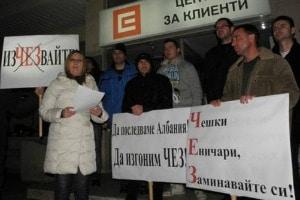
The Bulgarian Ombudsman Diana Kovacheva sent a letter to the Deputy Prime Minister and Minister of Finance Asen Vassilev, the Minister of Social Affairs Georgi Gokov and the Chairman of the Parliamentary Committee on Labor, Social and Demographic Policy Iskren Arabadjiev, warning that more than 24 NGOs providing social services assistance because they cannot cover their costs for electricity, natural gas and salaries. This was announced by the press center of the public defender.

Thus, in practice, the normal functioning of this type of service is threatened and there is a real risk of deteriorating support for thousands of vulnerable people.

Kovacheva emphasizes that the organizations are worried because the approved Standards for the activities delegated by the state with natural and value indicators in 2021, as well as the implemented projects under the Operational Programs, do not provide for an increase in electricity and natural gas prices turn out to be extremely insufficient for the normal functioning of social services. And the received compensations of BGN 110 per megawatt-hour were granted only for October and November last year, but not for the following months.

Another problem with the financing of the activities is the lack of funds set aside to cover the costs and increase the salaries from January 1, 2022 of those working in the social sphere, as provided by the Ordinance on the standards for remuneration of employees provision of social services financed from the state budget.

“The current standards do not provide the necessary funds, and the high prices of electricity and natural gas do not allow for redistribution of funds in other areas, including the updating of salaries,” said Diana Kovacheva. She adds that there is a real risk that a significant number of employees will leave the system or file lawsuits against service providers for non-compliance with their legal obligations.

“Users of social services over the age of 18, whose charges for January 2022 will already be calculated on the basis of new electricity and natural gas prices, will also be seriously affected. This means that there will be an increase in fees with between 30% and 40%, which will be an unbearable burden for vulnerable people, such as people with disabilities and low-income older people, “the ombudsman said.

That is why Kovacheva insists on urgent actions to ensure the normal functioning of social services and guarantee the rights of both users and those working in the system.

Beijing’s bubble Games open: winter sport returns to the Olympic city of 2008, without the world watching in person

0
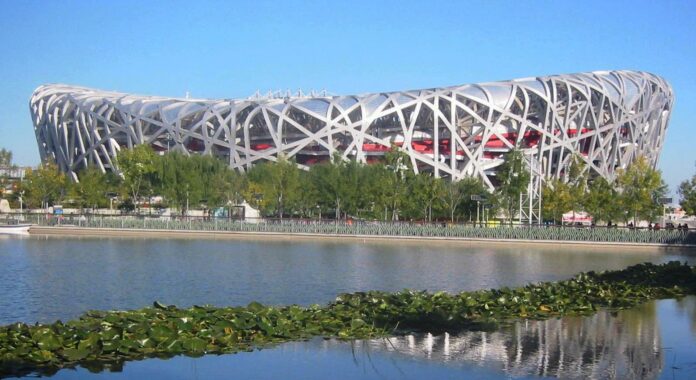
Beijing National Stadium, the Bird's Nest

BEIJING — Fourteen years after the Summer Games that announced China to the world, the Bird’s Nest stadium lit up again on Friday night. The 2022 Winter Olympics are open, making Beijing the first city to host both editions — though the two occasions could hardly feel more different.

Where 2008 was a carnival of soft power before 91,000 spectators, these Games are sealed inside an anti-Covid “closed loop”. Athletes, officials and journalists move between venues and hotels without contact with the rest of the city; everyone is tested daily; tickets were never sold to the general public. The spectators in the stands are invited guests.

The politics are sealed in too. Several countries, including the United States, Britain, Canada and Australia, have announced a diplomatic boycott over China’s human rights record — their athletes compete, their officials stay away. China has dismissed the gesture as a provocation and warned against politicising the Games.

On the ice and snow, the sporting questions are familiar ones: can Norway dominate the medals again, how will the skiers of the Alps handle artificial snow, and whether the host’s investment in winter sport since 2015 will translate into home medals.

For the next sixteen days, around 2,900 athletes will compete across three zones. The International Olympic Committee, criticised for awarding the Games here, insists sport and politics can be kept apart. The empty seats will argue otherwise.


Media-Society.com is a press network association based in Spain, founded in 2020. More at www.media-society.com.

‘Spider-Man: No Way Home’ saves the box office Christmas: a pandemic-era opening like the old days

0
Grauman's Chinese Theatre in Hollywood

LOS ANGELES — For nearly two years, the question hanging over the film industry has been whether audiences would ever come back the way they used to. This weekend, they did. “Spider-Man: No Way Home” opened to queues, sell-outs and record-breaking advance sales, delivering the biggest box office launch of the pandemic era by an enormous margin.

The film, the third Spider-Man outing starring Tom Holland, has benefited from the worst-kept secret in Hollywood: that it unites characters and villains from two decades of Spider-Man films. Fans responded by treating its release like the event cinema of 2019, with midnight screenings packed despite surging Covid cases in many cities.

The industry needed it. Cinemas have spent the pandemic on life support — closed for months, then starved of product as studios delayed blockbusters or sent them to streaming. Several chains have restructured debts; thousands of screens worldwide may never reopen.

The Sony Pictures release is also a test of the industry’s emerging doctrine: that the biggest films can still command exclusive theatrical windows, while mid-budget drama migrates to streaming. Every large opening this year has been a franchise spectacle aimed at young audiences; adult drama has struggled to sell tickets at all.

What the weekend cannot answer is what happens when the web-slinger goes home. January’s calendar is thin, the Omicron variant is filling hospitals, and one superhero — however acrobatic — cannot carry an industry alone. But for one weekend at least, cinemas remembered what they were for.


Media-Society.com is a press network association based in Spain, founded in 2020. More at www.media-society.com.

Stockholm Ministerial: Lavrov and Blinken meet as 100,000 Russian troops mass near Ukraine

0
Stockholm Ministerial: Lavrov and Blinken meet as 100,000 Russian troops mass near Ukraine
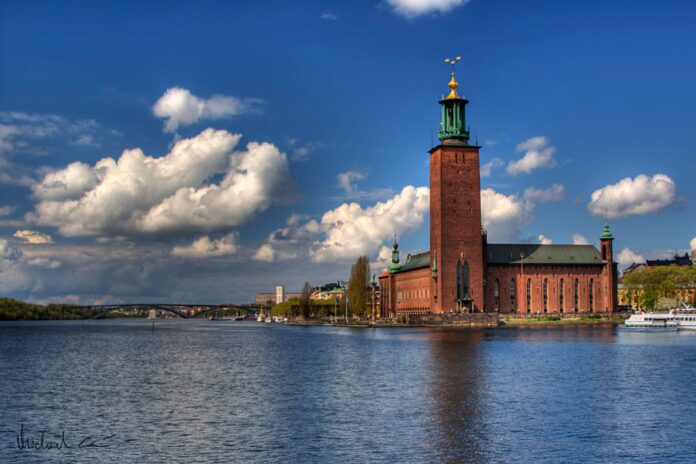
Stockholm City Hall, venue of the 2021 OSCE Ministerial Council.

Stockholm — Foreign ministers of the OSCE’s 57 participating states gathered in Stockholm this week with one subject overshadowing everything else: the Russian military build-up along Ukraine’s borders, and whether Europe’s largest security organisation can still do the job it was built for.

The meeting, on 2 and 3 December under Sweden’s chairmanship, brought Russian Foreign Minister Sergey Lavrov and US Secretary of State Antony Blinken into the same room — their first encounter since Washington began warning publicly that some 100,000 Russian troops with heavy equipment are positioned within reach of Ukraine. Both men held bilateral talks on the margins, and both left with their positions unchanged.

Blinken warned of ‘severe consequences’ if Russia invades; Lavrov accused NATO of pulling Ukraine into its orbit and demanded legally binding guarantees against the alliance’s expansion. In the hall, minister after minister lined up behind Kyiv’s sovereignty and the principle that borders in Europe cannot be changed by force — the principle on which the organisation’s founding document, the 1975 Helsinki Final Act, rests.

Sweden’s chair, Foreign Minister Ann Linde, had hoped the ministerial would agree a new European security dialogue and revive arms control discussions hollowed out by the collapse of Cold War treaties. Consensus on a declaration proved impossible, as it has at most ministerials for a decade, though Sweden salvaged agreement on a handful of practical measures and kept the dialogue proposal alive.

Ukraine’s foreign minister, Dmytro Kuleba, used his speech to call for deterrence and sanctions packages to be prepared now, not after a possible invasion — a request some delegations privately considered premature. Few in Stockholm, diplomats said, believed war was inevitable; fewer still were willing to rule it out.

The OSCE’s most tangible asset in the crisis is already on the ground: its Special Monitoring Mission, several hundred unarmed observers reporting daily on the ceasefire violations in eastern Ukraine. As ministers flew home from Stockholm, the question hanging over the Hofburg in Vienna was whether that mission is about to become the only channel left.


Media-Society.com is a press network association based in Spain, founded in 2020. More at www.media-society.com.

At the frozen edge of the EU, the OSCE looks for a role in the Belarus-Poland border crisis

0
At the frozen edge of the EU, the OSCE looks for a role in the Belarus-Poland border crisis
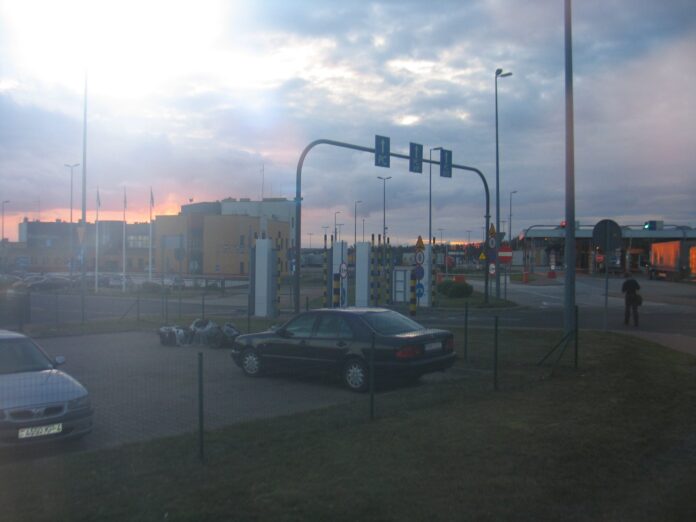
The Kuźnica border crossing between Poland and Belarus.

Vienna — Thousands of migrants remain trapped in freezing conditions on the Belarusian-Polish border this weekend, as the OSCE comes under pressure to find a role in a crisis that sits squarely in its territory and largely outside its tools.

The standoff at the Kuźnica crossing and nearby forest strips, where people — many of them from Iraq, Syria and Afghanistan — are caught between Belarusian forces pushing them west and Polish forces pushing them back, has become the most dangerous humanitarian emergency on the European Union’s external frontier this year. Several deaths have been reported on both sides; temperatures are falling toward minus figures at night.

The EU and NATO accuse Alexander Lukashenko’s government of manufacturing the crisis by funnelling migrants to the border in retaliation for sanctions — a charge Minsk denies. Poland has declared a state of emergency in the border zone, barring journalists and most aid workers, and has sent thousands of soldiers. Belarus, for its part, has staged limited aid deliveries and threatened to cut gas transit to Europe.

The OSCE’s secretary general, Helga Maria Schmid, has offered the organisation’s good offices and called for humanitarian access and the protection of migrants’ rights under international law. The organisation has a mission in neither country anymore — its office in Minsk was closed in 2011, and Poland hosts no field presence — leaving it dependent on member states for even basic information from the zone.

Diplomats in Vienna acknowledge the bind. The border is exactly the kind of hard-security-humanitarian hybrid the OSCE exists for, yet the organisation can act only by consensus of states that include both Belarus and Poland, and both prefer other forums: Warsaw leans on NATO, Minsk on Moscow.

What the crisis has already demonstrated is the cost of the OSCE’s shrunken footprint. A decade ago its monitors and liaison offices tracked frontier tensions across the region. This week, on one of Europe’s most militarised borders, the best it could offer was a statement — and a reminder that the people in the forest are running out of time for formats and mandates to be debated.


Media-Society.com is a press network association based in Spain, founded in 2020. More at www.media-society.com.

Damon Galgut wins the Booker Prize: ‘The Promise’ brings a third shortlisting its reward

0
Novelist Damon Galgut in 2013

LONDON — Third time, as the saying goes, and for Damon Galgut it proved charmed. The South African novelist won the Booker Prize on Wednesday night for “The Promise”, after being shortlisted in 2003 and 2010. It is his ninth novel, and his country says it is the work he was always building towards.

The book traces a white South African family, the Swarts, across four decades through four funerals — each chapter a death — anchored by a promise made and repeatedly broken: that the family’s Black domestic worker, Salome, will be given the small house she has lived in all her life. The unkept promise becomes the moral X-ray of the nation itself, from late apartheid to the disappointments of the present.

Written in a restless, camera-like narration that drifts between characters without warning, “The Promise” was the critics’ favourite of the shortlist. The judges, chaired by historian Maya Jasanoff, called it a spectacular demonstration of the novel’s possibilities.

Galgut, 57, wrote the book in a state of dismay about South Africa’s direction, and the win arrives at a bleak moment for his country: pandemic damage, riots in July, rolling blackouts. In his speech he noted that the year’s theme seemed to be death — his novel opens at a funeral — but that the prize’s renewal was cause for hope.

He is the third South African winner, after Nadine Gordimer and J.M. Coetzee — the latter now with company as the only South African Booker laureates of the democratic era.


Media-Society.com is a press network association based in Spain, founded in 2020. More at www.media-society.com.

Abdulrazak Gurnah wins the Nobel Prize in Literature: the Academy honours the novelist of the refugee experience

0
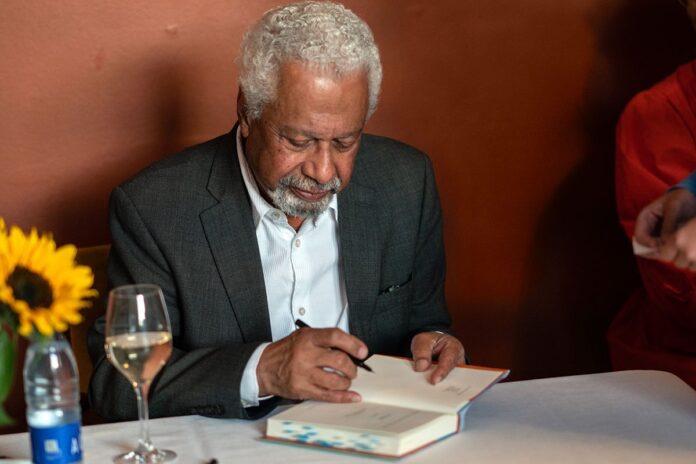
Novelist Abdulrazak Gurnah

STOCKHOLM — The Nobel Prize in Literature 2021 has been awarded to Abdulrazak Gurnah, the Zanzibar-born, Britain-based novelist, for what the Swedish Academy called his uncompromising and compassionate penetration of the effects of colonialism and the fate of the refugee in the gulf between cultures and continents.

Gurnah, 72, arrived in Britain as a refugee in 1968, fleeing the violence that followed Zanzibar’s revolution. He wrote ten novels — including “Paradise”, shortlisted for the Booker in 1994, and “Afterlives”, published last year — while teaching English literature at the University of Kent, from which he retired as professor emeritus.

He was, by Nobel standards, a surprise: a writer of modest sales and high critical regard, best known inside the literary world. Within hours of the announcement, his backlist was being reprinted and rights were selling around the world — the familiar Nobel effect, this time benefiting an author who had never had a bestseller.

The award carries particular weight in a year when Europe’s argument over refugees has hardened. The Academy’s citation reads almost as a rebuke to that politics: Gurnah’s novels follow people displaced by empire, war and commerce across the Indian Ocean, insisting on the interior lives of those the headlines reduce to numbers.

Gurnah is the first Black African writer to win the prize since Wole Soyinka in 1986, and one of the few laureates of any kind to have begun life as a refugee. His Nobel lecture, when it comes, will be awaited with unusual interest.


Media-Society.com is a press network association based in Spain, founded in 2020. More at www.media-society.com.