Wednesday, April 22, 2026
Home Blog Page 281

Statement of the Co-chairs of the Coalition of the Willing: 13 August 2025

0
Statement of the Co-chairs of the Coalition of the Willing: 13 August 2025

President Macron, Prime Minister Starmer and Chancellor Merz co-chaired a virtual meeting of a grouping of ‘Coalition of the Willing’ Leaders, with the participation of President Zelenskyy and Vice-President Vance, ahead of President Trump’s meeting with President Putin in Alaska.

Source link

The dead of malnutrition mark “last in the war against children” in Gaza: Unirwa Chef

0

These young deaths are “the last of the war against children and childhood in Gaza”, Philippe Lazzarini, head of the UN Palestine refugee agency UNRWAsaid in A tweet Wednesday.

The toll also includes some 40,000 boys and girls reported killed or injured due to bombing and air strike, at least 17,000 unaccompanied and separate children, and a million deeply traumatized young people who do not receive education.

“Children are children,” he said.

“” No one should be silent in the death of children, or is brutally deprived of a future, wherever these children areincluding in Gaza. »»

A dark meeting

Thousands of sick children in Gaza need urgent medical evacuation, according to the United Nations Coordination Office Ochha.

Olga Cherevko, agency spokesperson, recalled the moment when she recognized a young girl requiring treatment in a Gaza hospital after an interval of one year, suffering once more malnutrition.

“I remembered his long eyelashes,” said the veteran humanitarian UN NewsDescribing Janah, seven, whom she met at the hospital adapted to the patients of Gaza City on Tuesday.

“The first time I met her was at IMC Field hospital in southern Gaza in April 2024. At the time, she was seriously malnocked and had treatment. And she gradually became better and was finally released and returned home. »»

Janah, seven, is treated at the hospital adapted to the patients of Gaza City.

Evacuation saves lives

However, Janah was now back to the hospital “because malnutrition has worsened and The condition that it has also is not properly diagnosed and cannot be properly diagnosed. »»

The girl is on a list of people to evacuate medically for treatment outside Gaza. The most recent evacuations took place last week when the World Health Organization (WHO)) supported The transfer of 15 seriously sick children in Jordan, but more than 14,800 people are still waiting.

Ms. Cherevko stressed the importance of ensuring that evacuations continue to save as many lives as possible.

More help required

She also pointed out that for children and adults suffering from pre -existing conditions, their situation gets worse with malnutrition.

“It would not be so if they had good nutrition, because these conditions existed before the famine crisis and they do not become as sick as they are now,” she said.

“This is why it is imperative to make sure that we have appropriate conditions on the ground for adequate volumes of supplies to enter-everything, from food to medicine via nutrition in a shelter,” she continued.

“And these lines of life must be really activated so that we can provide this help to people in need.”

Die of hunger

His call comes as the Gaza health authorities reported on Wednesday that eight people, three of whom have died due to malnutrition and famine in the past 24 hours.

“Such reports have become a daily event, reflecting the deepening of the humanitarian crisis and the urgent need for sustained assistance”, Ocha said in its last update.

Who also gave recycling training at the Rantissi children’s hospital in Gaza City on Wednesday, focusing on the management of hospitalized malnutrition patients.

Rantissi is one of the five nutritional stabilization centers of the enclave and the course was aimed at helping staff members stay up to date with new information.

The OCHA noted that “the recent increase in cases of malnutrition in children required the creation and scale of these centers”.

Since January, more than 340 children have been admitted for treatment of malnutrition. As of August 5, 49 deaths by malnutrition validated by malnutrition were reported, with 39 children under the age of five.

Trauma and mental health problems

In other developments, the data collected by the UN and partners of more than 900 Gaza households in July indicated continuous trauma resulting in mental health problems, including anxiety and depression.

The care staff is also traumatized and partners working in the protection sector have started to provide mental health and psychosocial support to their staff.

Meanwhile, the UN efforts to help the Gaza strip continue.

The teams collected food and fuel from Kerem Shalom and Zikim border crossings on Tuesday and other missions are still in progress.

The goods are entering but money is low

UN spokesperson Stéphane Dujarric said The entry of goods has improved the market situation in terms of price and availability.

For example, a bag of sugar on average 40 shekels, around $ 12, per bag, after having culminated at around 600 shekels, equivalent to around $ 175.

“However, serious shortages in cash prevent families from being able to buy food, to be able to buy water and to be able to buy medication,” he told journalists in New York.

Humanitarians have repeatedly stressed that the quantity of aid and goods that can be brought to Gaza does not meet the minimum requirements of the population.

They continue to request a ceasefire and so that the help flows are on the scale.

Originally published at Almouwatin.com

“ Only hunger and bombs ” for besieged civilians in Sudan El Fasher

0

At least 57 civilians were killed in the attack, which included the travel camp of Abu Shouk on the outskirts of the city and the United Nations Human Rights Office, OhchrAlso follows the allegations of summary executions.

“It is with dismay that we again witness an unimaginable horror inflicted on civilians in El Fasher, who endured more than a year of siege, persistent attacks and disastrous humanitarian conditions,” said Türk.

Serial attacks

“Such repeated attacks against civilians, which raise serious concerns under international humanitarian law, are completely unacceptable and must stop.”

Between January and June, the RSF – which has been fighting against the military government for the control of Sudan for more than two years – attacked the Abu Shouk camp at least 16 times, killing at least 212 and leaving 111 other injured.

“Once again, I raise the alarm of the serious risk of ethnically motivated persecution while the RSF tries to take control of the camp of El Fasher and Abu Shouk,” said Türk, reiterating his call to protect civilians and urging humanitarian breaks in the besieged areas to reach those who need it.

Human rights violations in Zamzam

The United Nations human rights officials recently interviewed survivors of the RSF devastating assault on the Zamzam camp, 15 kilometers south of El Fasher, where famine was confirmed in August 2024.

The testimonies corroborated the previous documentation of serious human rights violations against civilians during a particularly deadly attack against the Zamzam camp in April 2025, in particular murders, generalized rape and gang rape, disappearances and torture imposed.

“I urge third parties to use all their influence to put an end to these violations,” said Türk. “Responsibility is crucial to break this cycle of persistent and blatant violations.”

Deepen hunger

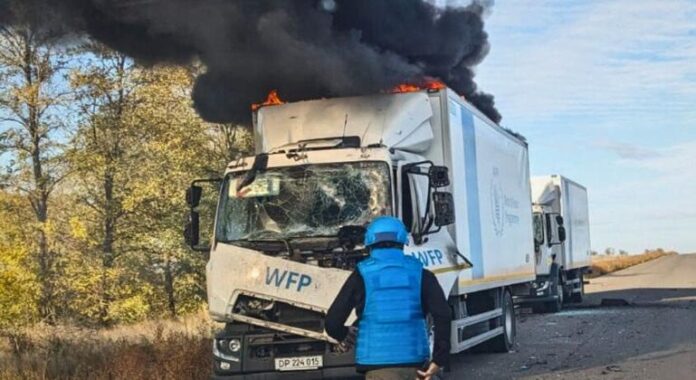
A year after the famine was confirmed for the first time in Zamzam, hundreds of thousands are still trapped in El Fasher, cut off from World Food Program (Wfp) Assistance and face deepen hunger.

The commercial roads and the supply lines entering El Fasher are blocked, which leads to a flambé of prices and the cessation of operations of most community kitchens.

Some residents would have survived animal fodder and food waste.

“Everyone in El Fasher faces a daily struggle to survive,” said Eric Perceison, regional Director of PAM for East and Southern Africa.

“Without immediate and sustained access”, for the humanitarian workers, has added Losesse: “Lives will be lost. »»

The Sudan conflict, which started in April 2023, created the world’s largest hunger crisis: around 25 million people – half of the country’s population – face acute hunger and 3.5 million women and children are confronted with malnutrition.

From El Fasher to Tawila

Many victims of the attack on the Zamzam camp and those who suffer from hunger in El Fasher fled to the Tawila camp, 75 kilometers.

“Hunger forced us to leave,” said Sondos, eight, who told WFP that she had fled with her family after weeks to survive Millet.

There was “only hunger and bombs,” she said, with bus shells in the city.

Another Tawila resident, Mohamed, 47, traveled from Zamzam to El Fasher before going to Tawila.

People died thirsty along the way, he said. “Many of them begged water. Each person must have only one sip, just enough to reach their stomach. ”

But even when people go to Tawila, the camp’s makeshift tents offer little protection against the rainy season that barely starts.

WFP assistance

For around 400,000 residents of the Tawila camp, WFP rations of high energy cookies, sorghum, vegetable oil and salt are often their only subsistence.

These are just some of the four million Sudanese people WFP supports monthly.

This assistance has helped reduce catastrophic hunger in certain parts of the central and Western Darfur. However, these gains are fragile: “WFP is ready with trucks full of food aid to send to El Fasher”, explains Corinne Fleischer, director of the supply chain and PAM delivery. “We need an emergency guaranteed to be safe.”

The RSF has not yet agreed in a break in the fighting to allow humanitarian goods to enter the city.

Originally published at Almouwatin.com

How nuclear technology can help fight seafood fraud

0

Poissons poorly labeled with hidden additives, deceptive practices threaten the means of subsistence, food security and confidence in what ends on our plates.

Now, a new international initiative supported by the United Nations uses advanced nuclear science to protect people and make sure that the seafood they count are safe, authentic and traceable.

Fish company

The consumption of per capita seafood has doubled since the 1960s and should double by 2050, seafood fraud becoming an increasing global concern.

Seafood fraud goes from the substitution of high value species with cheaper alternatives to the use of unauthorized or not declared additives. It can occur at any stage of the supply chain, especially since surveillance and traceability become more difficult due to the increasingly complex supply chains.

To make sure that seafood fraud does not slip through the net, national and international food control systems need robust and adjusted analytical methods

Nuclear technology

A joint project between the organization of food and agriculture (Fao) and the International Atomic Energy Agency (Aiea) should use nuclear technology to counter seafood fraud.

Thanks to its FAO / IAEA spouse center for nuclear techniques in food and agriculture, IEA is launching a coordinated five -year research project to help countries strengthen food control systems to detect and prevent seafood fraud.

The IAEA will use nuclear and related techniques to strengthen scientific capacity, ensure the authenticity of products and improve resilience and transparency in seafood supply chains.

“This AIAA project offers Member States a precious opportunity to collaborate in the fight against fraud and the deactivation of the seafood supply chain using solid tools based on nuclear science,” said Debashish Mazumder of the Australian organization of science and nuclear technology, a key partner in AIEA on sustainable development problems.

Underestimated in truth with atoms

The IAEA security and food control laboratory helps countries apply nuclear and related analysis techniques to facilitate safe and authentic seafood trade, offering powerful tools for fraud detection.

One of the most effective methods for countering seafood fraud is the stable analysis of isotopic ratios of light elements such as oxygen, which allows scientists to identify the geographical origin of fish and to check whether it has been wildly taken by reflecting the environmental and ecological conditions in the biological tissues of the fish.

Used to authenticate seafood, nuclear technology serves as a powerful tool to combat seafood fraud, improve consumer protection, increase confidence in food control systems and support Fisherfolk to engage in sustainable management of aquatic resources.

Originally published at Almouwatin.com

Syria: UNICEF calls for sure access to children in Sweida as required

0

Burning sectarian clashes broke out in the South governorate, also known as AS-Sweida, in July and early August and children and families continue to feel the impact.

At least 22 children were reportedly killed and 21 others injured in violence, which caused significant damage to civil infrastructure. More than 190,000 people, mainly women and children, were forced to flee their homes.

The essential services have also been disrupted. At least five health centers have been struck, two doctors killed, while the ambulances were obstructed or attacked.

“A welcome stage”

Unicef The deputy representative of Syria, Zeinab Adam, described the situation as “tragic and deeply alarming”.

“Given the continuous needs of children and families affected, The increased efforts of the interim authorities to facilitate access to those who needed it were a welcome step” She said.

UNICEF was part of the first UN inter-aging convoy to Sweida which arrived at the end of July.

Adam said that the agency “delivered rescue supplies and had a rapid assessment on the ground to ensure a faster and stronger response to the growing crisis”. said.

Food and medicine shortages

The fighting caused critical damage to vital infrastructure, water, electricity and fuel. In addition, food, medicine and other essential elements remain rare due to continuous insecurity and access constraints.

In response, UNICEF has deployed 14 mobile health and nutrition teams. The teams have also provided vital health and nutrition supplies to more than 4,000 children and women, as well as drinking water and fuel for water pumping stations benefiting more than 30,000 people.

Call to access

“” To ensure an effective response, it is essential that humanitarian actors and commercial products have unhindered access To the most affected communities, ”said Adam.

“This will allow the immediate supply of basic social services, including food, water and other essential supplies, to those who need urgent.”

She added that “the facilitation of this access is not only vital for vital interventions, but also to restore a minimum level of stability and protection in these communities”.

Meanwhile, UNICEF remains on the ground in Sweida and will continue to plead for children there and through Syria.

Originally published at Almouwatin.com

Safety on and off the field: closing of children’s trafficking in sport

0

“Sport gives me a feeling of belonging as a girl. When I play, it affirms my right to play sports and exposes me to greater opportunities, “she said.

This is what sport should represent for young people around the world. However, a new campaign supported by the International Organization for Migration (Iom) strives to counter a darker side of the industry of several billion dollars – by ending children’s trafficking through sports.

‘Gateway to exploitation’

“” Sport should be a source of joy and success, not a gateway to the exploitation. However, traffickers attack the ambitions of young athletes, using false promises to attract them to abuse and deception, “said Ugochi Daniels, the Iom Deputy Director General of Operations.

Out of around 50 million people worldwide who are subject In abuse of traffic, 38% of them are children. And among these children victims, 11% are treated with false promises.

In the sport industry, it takes many forms, including joining false sports academies or by signing what seems to be professional contracts.

For many young people like Saido, sport can be a path of disadvantaged history. Saido, for example, dreams of seeing more Somali women and refugees playing in international professional leagues.

“I want to see a basketball academy full of Somali girls and other girls from different communities here in Kakuma. I want to see Somali girls playing basketball at WNBA, “said Saido, referring to the best women’s league in the United States.

But these dreams and their disadvantaged history, according to the campaign, can also make them particularly vulnerable to the false promises of traffickers.

Do not ignore the risks

Work alongside mission 89 – an organization which fights against the exploitation of young athletes – IOM calls stakeholders within the sports industry of $ 1.2 Billion of dollars to strengthen the protective mechanisms.

This includes the reform of recruitment strategies contrary to ethics which can be exploited by traffickers and offer education to the entire industry on the harm and risks of trafficking.

In addition to these tangible changes, the campaign also calls on industry leaders to sign commitments that do not declare zero tolerance of the scourge.

“” While we continue to celebrate the power of sport, we cannot ignore the risks encountered by young athletesSaid Lerina Bright, founder and executive director of mission 89.

“This campaign consists in ensuring that each child who dreams in sport is safe, supported and never exploited.”

Originally published at Almouwatin.com

EMA closed on 15 August for Assumption Day

0
EMA closed on 15 August for Assumption Day

The European Medicines Agency’s (EMA) office is closed from 18:00 on Thursday 14 August 2025 to 08:30 on Monday 18 August 2025.

Outside of working hours and on public holidays, it is possible to call the product emergency hotline on +31(0)88 781 7600.

Please note that this is an emergency number and should only be used in the event of a potentially serious problem with a centrally authorised medicine.

Source link

Celebrate youth: “When young people take the lead, everyone wins”

0

But after a decade of armed conflicts and in the midst of a serious economic depression, imports of educational toys have become far too expensive for many classrooms in Yemen.

Shadia and Fatima, two young entrepreneurs in Yemen, identified This gap after participating in a training course managed by the United Nations Development Program (Predict). They decided to create a business led by young people called Dorri which would create sensory learning tools from wood and fabric of local origin.

Alone, Dorri will not bring peace to Yemen, and he will not alone solve the fact that more than a third of young people in Yemen are unemployed. But, according to one of the directors whose kindergarten has received toys, Dorri represents the creative potential of Year’s youth.

“When young people take the lead, everyone wins – children, families, schools and entire communities,” said the director.

Young people in peace consolidation

August 12 is the International Youth DayA day that highlights the full role that 1.9 billion young people play worldwide in the creation of a sustainable future.

This year, the day is particularly important according to Felipe Paullier, the UN General deputy secretary For young cases, because it coincides with other notable dates, including the 10th anniversary of a Security advice Resolution affirming the vital role that young people play in the progress of peace.

“Young people are leading to the objective of local campaigns to world peace efforts, strengthening confidence between cultures and creating a lasting impact,” said Paulier.

Create prosperous livelihoods

By 2050, people who are currently under 25 will represent more than 90% of the world workforce, which makes their training and education vital for the economy and a prosperous peace.

However, in contexts plagued by conflicts or in communities that face a trip, this training and this education can be almost impossible to achieve.

Elijah, a Sudanese refugee who is now 27 years old, arrived in a refugee camp in Kenya in 2015 after having fled violence in his country of origin. Education turned out to be impossible for him – while he was trying to go to school for a few years, he finally abandoned because he could not afford the costs of tuition.

But the training was very feasible: in his informal establishment – who specializes in electronic reparation – he has already formed 15 young people like him. He always hopes to do more.

“My dream is to open the largest electronic repair center in Kakuma which will serve the community and will also autonomize young people without a source of livelihoods to take care of themselves,” said Elijah.

An intergenerational approach

Mr. Paullier stressed that the empowerment of young people at a local level must involve more than simple support initiatives like Elijah – rather, real empowerment lies in “real confidence”.

“The significant participation of young people means to engage young people as equal partners.

In Myanmar, this type of intergenerational knowledge exchange has taken on a unique form – the theater. Conflicts in progress in this country have reversed many means of subsistence and created mature conditions for sexist violence.

A group of 18 young people from the state of my has trained a performance group which is coupled with an educational initiative. Together, they write, direct and display parts for neighboring communities of all ages who discuss themes such as domestic violence.

During a performance on current domestic violence, an elderly woman in the front row turned to her neighbor.

“It’s also my story,” she said.

Thanks to these performances, young people have created a forum for an intergenerational conversation: “We are not only artists-we are community educators, and this stage is our change platform,” said Min Cho, one of the artists.

Sudanese refugees in the public transport center not managed in Renk, South Sudan.

Danger of tokenism

Despite the resolution of the Security Council, young people tend to remain excluded from decisions to develop policies. Or if they are included, their participation is sometimes “tokenist. “”

Areej Hussein, the founder of a basic feminist organization in Sudan, experienced the frustration of having her plea simply a symbol for people in power.

“Women and girls are not only victims of the war – we are peace manufacturers … enough to use women as slogans. It’s time to really listen to their leadership, “she said.

Ms. Hussein worked to change this in Sudan by mobilizing women from all walks of life and allowing them to tell their stories.

And she is not alone – many young people work around the world to change this. But for each of them, their approach to affecting the real change is slightly different.

For Shadia and Fatima, it was touch toys. Elijah inspires refugees… and for Yie Tone, the answer was theater. “We may not have the power to change politicians, but we have the power on this scene to change our communities to a safe and equal society,” said Tone.

Originally published at Almouwatin.com

Anthropic’s Claude AI Now Does Longer Prompts, ‘Digests’ 750,000 Words at a Time

0


Claude Sonnet 4 just gained the ability to process prompts containing up to 1 million tokens through Anthropic’s

Source link

SRB launches public consultation on its updated approach on separability and transferability: towards more efficiency and effectiveness

0
Statement of the Co-chairs of the Coalition of the Willing: 13 August 2025

The SRB updated its operational guidance on separability to align it with the

Source link