
For patients with inflammatory bowel disease, antibiotics can be a double-edged sword. The broad-spectrum drugs often prescribed for
AI maps how a new antibiotic targets gut bacteria
European firms show resilience, invest in Green transition, and match US companies in adopting AI technologies, new EIB survey shows

- EU companies stay committed to the green transition, with 92% pursuing measures to reduce emissions and lower energy bills.
- International trade customs and tariffs are concerning firms, especially in the US.
- Share of EU businesses using generative AI is 37% versus 36% in US, latest EIB investment survey shows.
European businesses are firmly staying the course, investing in the green and digital transitions, and showing resilience in the face of a volatile global landscape, according to the latest annual European Investment Bank Investment Survey (EIBIS).
The survey, which covers more than 12,000 EU firms and over 800 US companies polled between April-July 2025, shows that more than nine in 10 EU companies – 92% – are investing directly in measures to cut emissions of greenhouse gases that cause climate change. The EIB Group released the results today in Washington, DC during the annual meetings of the International Monetary Fund and the World Bank Group.
Geopolitical and trade tensions are slowing investment on both sides of the Atlantic, with US tariffs having a stronger impact on American firms, according to the 2025 EIBIS. Investment by EU companies is showing resilience, with 86% continuing to invest – albeit more cautiously than in past years as a result of greater political, regulatory and economic uncertainties.
“While uncertainty weighs heavily on firms, they are so far weathering the shock,” said EIB’s Chief Economist Debora Revoltella. “There is a clear commitment to invest in digitalisation and green initiatives, which are crucial for maintaining competitiveness in the evolving global market. The focus on the green transition is evident, with a considerable portion of investment directed towards sustainable practices.”
Generative AI deployment in the EU
Companies in Europe are adopting advanced forms of artificial intelligence (AI) at broadly the same pace as their US counterparts, according to the survey. The share of firms in the European Union deploying generative AI is 37% compared with 36% of businesses in the US.
European companies can further exploit the benefits of AI by using it in a broader range of activities. European firms lag their US counterparts in deploying AI in the areas of customer service, internal processes, marketing and human resources, according to the survey. In addition, 81% of US businesses that use AI do so in more than two activities compared with 55% of European companies.
Investment challenges and opportunities
The 2025 EIBIS also shows that investment challenges in Europe remain. For example, 83% of EU firms cited uncertainty and 79% of them identified a shortage of skilled labour as major investment barriers. In addition, energy costs are an impediment for 75% of European businesses – signalling the importance of accelerating the deployment of renewable energy, as a driver of EU competitiveness.
Looking ahead, EU firms continue to prioritise replacement investments over capacity expansion, with 26% planning to expand operations in the next three years, versus 37% of U.S. firms with similar intentions.
The share of finance-constrained firms has slightly decreased as compared to past years. Policy support, in the form of grants or finance on favourable conditions, reaches some 16% of European firms that invest. Notably, 61% of policy support in the EU is targeted to specific policy objectives (41% supporting the green transition, 29% for innovation).
Companies on both side of the Atlantic are increasingly worried about recent changes in customs and tariffs, with 77% of US firms perceiving them as a major obstacle (vs 48% in the EU).
Upside potential is associated with increased efforts in terms of European integration and simplification. More specifically 62% of European firms perceive the internal EU market as fragmented, while the cost of bureaucracy is estimated at some 2% of turnover for Small and Medium-Sized companies (SMEs).
Further details from the 2025 EIB Investment Survey are available here.
Background information
The European Investment Bank (ElB) is the long-term lending institution of the European Union, owned by its Member States. Built around eight core priorities, it finances investments that pursue EU policy objectives by bolstering climate action and the environment, digitalisation and technological innovation, security and defence, cohesion, agriculture and bioeconomy, social infrastructure, the capital markets union, and a stronger Europe in a more peaceful and prosperous world.
The EIB Group, which also includes the European Investment Fund, signed nearly €89 billion in new financing for over 900 high-impact projects in 2024, boosting Europe’s competitiveness and security.
Around half of EIB financing in the European Union goes to cohesion regions, where per capita income is below the EU average, while almost 60% of annual EIB Group investments support climate action and environmental sustainability.
About the report
The EIB Group Survey on Investment, which has been carried out since 2016, is a unique annual survey of some 12,000 firms. Data for the latest edition was collected in mid-2025 from companies in all EU Member States. The survey also includes a sample of businesses in the United States. The survey collects data on company characteristics and performance, past investment activities and future plans, sources of finance, financing hurdles and other business challenges such as climate change, digitalisation and international trade.
UN releases $11 million for Gaza aid as ceasefire, hostage release brings ‘fragile hope’

The allocation, announced Monday by Emergency Relief Coordinator Tom Fletcher, will support the immediate scale-up of aid operations in the Gaza Strip, including food, water, health care and shelter for civilians affected by two years of conflict.
This follows a $9 million allocation last week to ensure fuel supplies to hospitals and essential services, bringing the recent total DEER Gaza funding to $20 million.
The announcement comes as the ceasefire brokered by the United States, Qatar and Egypt continues to hold, alongside the release of Israeli hostages and Palestinian detainees, offering what the UN secretary-general described as “a fragile hope of calm after months of devastation.”
Urgent scaling is needed
The UN and its partners are rapidly scaling up operations across Gaza as access improves, providing lifesaving aid to areas that have been cut off for months. However, a massive increase in funding is needed in the face of overwhelming needs.
Mr Fletcher warned that without further contributions to CERF, essential aid could not continue to reach the people who need it.
Speaking from Sharm el-Sheikh in Egypt, on the eve of a summit on Gaza, he said the UN’s stepped-up humanitarian aid was underway in what he called “a moment of precarious hope” for many.
“This is a moment of opportunity, but also a moment that requires determined patience, creativity and sustained generosity,” he said.
According to the United Nations Office for the Coordination of Humanitarian Affairs (OCHA), UN teams have now secured Israeli approval for 190,000 tonnes of aid, cooking gas entering Gaza for the first time since March and more food, tents and medical supplies arriving daily.
Originally published at Almouwatin.com
World news in brief: Record famine in Haiti, repeated attacks in El Fasher in Sudan condemned, important milestone in the medical field in the Maldives
THE alert follows the release of the latest analysis of the Integrated Food Security Classification (IPC), which reveals that a record number of people in the Caribbean country are experiencing acute levels of hunger.
“Half of Haiti suffers from hunger”, PAM said executive director Cindy McCain in a tweet.
“While 5.7 million people face severe hunger, child malnutrition has doubled in just two years,” she added.
Today, 14 percent of children under five are malnourished, up from 7 percent, with some regions recording even higher rates.
$139 million needed
The UN agency stressed that armed violence, economic decline, persistent inflation and low agricultural production are fueling Haiti’s deepening crisis.
“The WFP has reached a record number of 2.2 million Haitians, but it is not enough. We urgently need resources to support families in need,” said Ms. McCain.
Over the next 12 months, the agency will need $139 million to help Haiti’s most vulnerable people, as the crisis remains severely underfunded.
Sudan: UN condemns repeated attacks against civilians in El Fasher
At least 57 civilians were killed Friday and Saturday by drone attacks in El Fasher, Sudan.
At a press briefing on Monday, UN spokesperson Farhan Haq echoed statement by the country’s humanitarian coordinator, Denise Brown, in which she “condemned in the strongest possible terms the repeated and deliberate attacks on civilians in the besieged town of El-Fasher.”
In her statement, Ms. Brown stressed that “hospitals, shelters and places of refuge must not be targeted” and reiterated her call for “respect for international humanitarian law and an immediate end to attacks against civilians and civilian infrastructure.”
The attacks were reportedly carried out by the Rapid Support Forces (RSF), one of the parties to the conflict in Sudan, and hit a place where displaced people had sought refuge.
Haq added that in recent days, the UN has seen reports from local community leaders of new civilian casualties in an alleged drone strike in an area controlled by the RSF.
“We and our humanitarian partners remain committed to supporting the people of El Fasher and all those affected by the conflict in Sudan, but the humanitarian community needs safe and unhindered access,” he said. said.
“Civilians must be protected and, above all, the Sudanese people need the violence to stop. »
Maldives is the first country to end mother-to-child transmission of HIV, syphilis and hepatitis B
The Maldives has become the first country to end mother-to-child transmission of HIV, syphilis and hepatitis B, according to the World Health Organization (WHO) announced Monday, hailing the development as a historic public health achievement.
The island nation, located in the Indian Ocean, has already eliminated mother-to-child transmission of HIV and syphilis and this HIV milestone is proof of its commitment to providing healthcare for all, the UN agency said.
“The Maldives has shown that with strong political will and sustained investment in maternal and child health, it is possible to eliminate mother-to-child transmission of these deadly diseases and the suffering they cause,” said Tedros Adhanom Ghebreyesus, WHO Director-General.
Mother-to-child transmission leads to infections that affect millions of people worldwide.
In Southeast Asia alone, more than 8,000 infants will be born with congenital syphilis in 2024, the WHO said.
Around 25,000 HIV-positive pregnant women have required treatment to prevent transmission to their babies, while hepatitis B continues to affect more than 42 million people in the region.
WHO said it would support the Maldives in its efforts to advance maternal, child and adolescent health.
Originally published at Almouwatin.com
The “food heroes” who cultivate global change
Ahead of World Food Daycelebrated each year on October 16, their stories reflect a global movement toward healthier and more equitable agri-food systems.
Learn more about FAOIt is #FoodHeroes working together for better food and a better future.
“From the zucchini harvest I got 50 kg. I sold half of it to pay for my children’s schooling and I used the other half to improve our diet at home.”
In Mizilo, in southeastern Madagascar, Rasoaniaviana Clarette has become a transformative leader. Once a housewife, she now runs a women-led farm school that fights child malnutrition through climate-resilient agriculture. She and 24 women adopted modern techniques to grow nutritious crops like moringa and pumpkin, increasing yields, diversifying diets and strengthening food security. His leadership inspires hope and resilience in a region long plagued by hunger and poor nutrition.
“Before, nothing grew here because there was no water, but we dug a well, installed irrigation, and now the land is fertile again. »
In the Batken region of Kyrgyzstan, Mederbek Mirzayev is relaunching the cultivation of vines on abandoned Soviet-era agricultural land. In 2025, he mobilized villagers to plant grapes and apricots. Despite initial skepticism, the cooperative now cultivates two hectares and plans to expand. Their success inspires others to reclaim unused land, strengthening organic farming and community resilience in a region once considered unfarmable.
“The camel is one of the most beautiful animals we have. In the age of nomadic travel, they were used to carry heavy loads and endured thirst and hardships that other animals could not endure.”
In the arid village of Boutidouma, Mauritania, camel milk, known as laban, is a nutritional lifesaver. Fatima Mohammed Zayed Al-Muslimin, mother of five children and founder of the Tidouma cooperative, revolutionized local dairy production. Since 2019, training has enabled milk processing that extends shelf life from one to 21 days, reducing waste and improving market access. The cooperative empowers rural women, diversifies diets and strengthens food security. She now dreams of becoming a large-scale dairy factory.
“I had no experience in farming, just a dream. Now, on Sundays, while most people are relaxing, I adjust the pH levels and recalibrate the sensors!”
On the Caribbean island archipelago of Saint Kitts and Nevis, Richard Paris is reshaping local agriculture with “Paris’ Leafy Greens,” a hydroponic lettuce company supplying fresh produce. A former architect and hotel manager, Paris built the islands’ first large-scale hydroponic greenhouse in 2019. His crisp, sustainable lettuce quickly gained popularity. After the training, he increased yields by 40 percent using smart sensors. Now expanding with a second greenhouse, Paris aims to reduce imports and build a sustainable agricultural legacy.
“Chefs can be catalysts for change. By celebrating seasonality, respecting producers and designing for zero waste, they can help build resilient food systems and inspire diners to do the same.”
Michelin-starred chef Cristina Bowerman, based in Rome, Italy, is a leading figure in sustainable gastronomy. It combines culinary innovation and advocacy to combat food loss and waste. Through initiatives such as “Adopt a Farmer” and the Chef’s Manifesto, it promotes responsible sourcing and zero waste cooking. She also mentors future chefs and advocates for food as a tool for climate action, nutrition and dignity in global agri-food systems.
Originally published at Almouwatin.com
“We resist simply by existing on the ground”: Ramallah mayor talks about life under occupation

For Mr. Kassis, housing is not a privilege, it is a question of survival. “We resist,” he said, “by simply existing on the ground. The occupation is not just the tank and the soldier. It restricts not only your movements, but also your thoughts, your plans, your aspirations and your vision.”
Basic services also bear the brunt of the occupation. “Our wells are located in Area C of the West Bank, where security is controlled by Israel. This is where Israeli settlements are located and settlers are attacking these water sources, threatening the supply which is already the lowest in the world per capita. At the same time, settlers are taking advantage of the swimming pools.”
To adapt, Ramallah has invested in wastewater treatment and irrigation projects, using recycled water to green the city. “When you see green, you see hope. And when you see hope, you run after hope.”
A recently installed gate in the Jenin refugee camp in the West Bank.
Cultivate resilience
The cost of occupation is measured not only in obstacles and shortages, but also in lives lost. According to the United Nations Office for the Coordination of Humanitarian Affairs (OCHA), nearly 1,000 Palestinians have been killed in the West Bank since October 2023, including more than 200 children.
For families, the burden is heavy. “We are a young company,” explains Kassis. “More than 65 percent of Ramallah’s population is under 40 years old. Half are teenagers or children. Their parents, he says, want them to live freely and experience life, but they fear harassment and arbitrary detention.
“There are thousands of prisoners. Every day, people are detained without a court order and kept in prison for six months, which can be renewed. The idea is to kill our spirit.” Nevertheless, he insists, resilience continues: “Look at Gaza. Look at the children who are smiling. For me, that’s resilience. These people, they choose life despite everything.”
As mayor, he believes that resilience must be maintained at the grassroots: through education, green spaces and pride in the territory. “We built it through years of hard work and education so that children would cherish life, cherish the beauty of the city, love the land, belong to the land. These are things that we do, that are part of our DNA in the municipality.”
Roadblocks separating the entrance to Ramallah from the northern West Bank.
A way forward
The UN has long supported a two-state solution as a framework for resolving the Israeli-Palestinian conflict: an independent Palestinian state living side by side with Israel in peace and security. Key issues that remain to be resolved include borders, settlements, the status of Jerusalem, refugees and security arrangements.
Until this vision is realized, Kassis says, Ramallah residents will continue to hold out hope: one house, one family, one tree at a time.
Originally published at Almouwatin.com
DR Congo: UN envoy evokes “real hope” for ceasefire and peace in the east

Although progress has been made through peace initiatives, such as the Washington Agreement signed on June 27 between the DRC and Rwanda, and the Doha Declaration of Principles signed on July 19 between the Congo River Alliance/M23 and the Congolese government mediated by Qatar, additional efforts are still needed to achieve lasting peace.
“Even though these African and international peace efforts are laudable and promising, they have not yet kept their promises: the agreed ceasefire is not respected,” he said.
For decades, armed groups have been raging in eastern DRC. However, the situation has deteriorated sharply since January 2025, when M23 rebels, supported by Rwanda, took control of key towns in the Kivu provinces. Rwanda has denied providing military support to the rebels.
Since the start of the year, more than 1.6 million people have been newly displaced, with more than 68% attributed to the ongoing conflict, according to the United Nations Office for the Coordination of Humanitarian Affairs (OCHA).
UN calls for immediate ceasefire
Xia commended the United States and Qatar for their tireless efforts to facilitate peace negotiations and expressed hope that talks would resume soon, leading to the adoption of a lasting peace agreement.
“The humanitarian issue remains catastrophic,” he stressed, calling on all parties to work hand in hand to prioritize an “immediate and unconditional ceasefire.”
In the same spirit, France called for the adoption of Security Council resolution 2773 (2025), which reaffirms the sovereignty of the DRC and calls for an immediate end to hostilities by the M23 rebel group.
“Resolution 2773 must be fully implemented, particularly with regard to the withdrawal of Rwandan forces from Congolese territory and the cessation of their support for the M23,” urged French Ambassador Jérôme Bonnafont.
Sustainable peace, Xia stressed, requires addressing the root and structural causes of conflict.
In this effort, the 2013 Addis Ababa Framework Agreement, designed to address chronic instability in the DRC, continues to serve as a key instrument to guide processes of dialogue, reconciliation and reform.
Originally published at Almouwatin.com
UN releases $11 million for Gaza aid as ceasefire, hostage release bring ‘fragile hope’
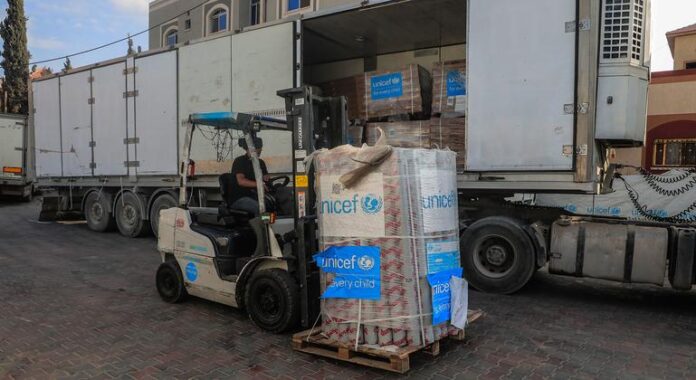
The allocation, announced on Monday by Emergency Relief Coordinator Tom Fletcher, will support the immediate scale-up of aid operations across the Gaza Strip, including food, water, healthcare and shelter for civilians affected by two years of conflict.
It follows a $9 million allocation last week to secure fuel supplies for hospitals and essential services, bringing total recent CERF funding for Gaza to $20 million.
The announcement comes as a ceasefire brokered by the United States, Qatar and Egypt continues to hold, alongside the release of Israeli hostages and Palestinian detainees, offering what the UN Secretary-General described as “the fragile hope of calm after months of devastation.”
Urgent scale up needed
The UN and its partners are rapidly scaling up operations across Gaza as access improves, delivering life-saving assistance in areas that had been cut off for months. However, a massive scale up in funding is needed in the face of overwhelming needs.
Mr. Fletcher warned that without fresh contributions to CERF, critical aid cannot keep flowing to people who need it.
Speaking from Sharm el-Sheikh in Egypt, ahead of a summit on Gaza, he said the UN humanitarian scale-up is underway amid what he called “a moment of precarious hope” for so many.
“It is a moment of opportunity, but also a moment that calls for determined patience, creativity and sustained generosity,” he said.
According to the UN Office for the Coordination of Humanitarian Affairs (OCHA), UN teams have now secured Israeli approval for 190,000 metric tonnes of aid, with cooking gas entering Gaza for the first time since March and more food, tents and medical supplies moving in daily.
Political crisis, corruption fuel violence in South Sudan, UN says
The South Sudan Human Rights Commission issued the warning following a mission to the African Union (AU) headquarters in Addis Ababa, the Ethiopian capital.
South Sudan gained independence from Sudan in July 2011, but deadly fighting broke out in late 2013 between troops loyal to President Salva Kiir and forces loyal to his rival, Riek Machar.
While a peace deal ended the war and a unity government was established, tensions erupted earlier this year after the arrest of Mr. Machar, the first vice president and main opposition leader.
Peace progress has stalled
The Commission said South Sudan’s political leaders have deliberately blocked progress towards peace, despite a decade of efforts by the AU and regional actors.
Armed clashes are now occurring on a scale unprecedented since the cessation of hostilities in 2017, and civilians are bearing the brunt of human rights and displacement violations.
Furthermore, “the vacuum of justice and accountability continues to fuel political intransigence, impunity, conflict and corruption.”
A recent Commission report highlighted how corruption and misappropriation of public resources remain a key driver of conflict.
Failure of leadership
Barney Afako, who led the mission, said the current political crisis, growing fighting and “systemic and unchecked corruption” reflected a failure of leadership.
“Unless there is immediate, sustained and coordinated political engagement from the region, South Sudan risks sliding back into full-scale conflict with unimaginable consequences for the human rights of its people and the region as a whole.» he said.
“South Sudanese are looking to the African Union and the region to save them from an avoidable fate,” he added.
Search for justice
In discussions with AU officials, the Commission highlighted the urgent need to put in place the transitional justice mechanisms provided for in the peace agreement, including the hybrid court.
“More than ever, justice is essential in South Sudan,“, said Yasmin Sooka, President of the Commission. “Promises made to victims years ago have still not been kept.»
She said the hybrid court must ensure accountability for past crimes while strengthening judicial institutions.
Growing clashes
The Commission noted that South Sudanese are once again on the run due to renewed armed clashes. Around 300,000 people have fled the country this year alone, while regional countries host more than 2.5 million South Sudanese refugees.
Meanwhile, some two million people are displaced in South Sudan, which is also hosting some 560,000 refugees who fled war in neighboring Sudan.
“The increase in armed clashes, massive displacements and the breakdown of the peace agreement signed seven years ago demonstrate that South Sudan cannot rebuild itself without stability and justice,” declared Commissioner Carlos Castresana Fernández.
Stressing the need for “credible and independent mechanisms for justice and accountability,” he said: “The AU and its regional partners must act now – not only to prevent another war, but also to lay the foundations for a just peace, based on the rule of law.»
About the Commission
The South Sudan Human Rights Commission was established by the UN Human Rights Council in March 2016.
The three commissioners are not UN staff and are not paid for their work. They are supported by a secretariat based in Juba, the capital of South Sudan.
Floods affect thousands of people
Meanwhile, the UN and partners continue to provide food, water and other life-saving assistance to people affected by heavy flooding in South Sudan caused by heavy rains and rising waters along the Nile.
The number of people affected has increased from 380,000 three weeks ago to nearly 890,000, and most are in Jonglei and Unity states, according to the United Nations Office for the Coordination of Humanitarian Affairs (OCHA) reported Monday.
Nearly a third of those affected have been displaced and are seeking refuge on higher ground.
“The floods have caused significant damage to homes, crops, schools, health facilities, roads and other critical infrastructure, further complicating humanitarian access,” OCHA said, noting that some flooded areas in the south are now only accessible by canoe.
Humanitarians continue to provide assistance, including shelter, food and nutrition support, cash assistance, health, water and sanitation services, and sandbags and other flood-fighting materials.
OCHA has warned that above-average rainfall is expected across most of South Sudan, increasing the risk of flooding.
The situation is evolving against a backdrop of declining support for humanitarian efforts in the country. A $1.7 billion plan to help some 5.4 million people this year is only 30 percent funded, or $504 million, a drop of more than 40 percent from the same time last year.
Originally published at Almouwatin.com
Political crisis and corruption fuelling violence in South Sudan, UN rights body says

The Commission on Human Rights in South Sudan issued the warning at the conclusion of a mission to the Africa Union (AU) headquarters in Ethiopia’s capital, Addis Ababa.
South Sudan gained independence from Sudan in July 2011, but deadly fighting broke out in late 2013 between troops loyal to President Salva Kiir and forces loyal to his rival, Riek Machar.
While a peace agreement ended the war, and a unity government was established, tensions erupted earlier this year following the arrest of Mr. Machar, the First Vice President and main opposition leader.
Peace progress stalled
The Commission said that South Sudan’s political leaders have deliberately stalled progress towards peace, despite a decade of efforts by the AU and regional actors.
Armed clashes are now occurring on a scale not seen since the cessation of hostilities in 2017, and civilians are bearing the brunt of human rights violations and displacements.
Furthermore, the “justice and accountability vacuum continues to fuel political intransigence, impunity, conflict and corruption.”
A recent Commission report highlighted how corruption and the diversion of public resources remain a key driver of conflict.
Leadership failure
Barney Afako, who led the mission, said that the ongoing political crisis, the increasing fighting and “unchecked, systemic corruption” reflected a failure of leadership.
“Unless there is immediate, sustained and coordinated political engagement by the region, South Sudan risks sliding back into full-scale conflict with unimaginable human rights consequences for its people and the wider region,” he said.
“South Sudanese are looking to the African Union and the region to rescue them from a preventable fate,” he added.
Search for justice
In talks with AU officials, the Commission emphasized the urgent need to establish transitional justice mechanisms outlined in the peace agreement, notably the Hybrid Court.
“More than ever, justice is essential for South Sudan,” said Yasmin Sooka, Chair of the Commission. “The promises made to victims years ago remain unmet.”
She said the Hybrid Court must deliver accountability for past crimes while also strengthening justice institutions.
Mounting clashes
The Commission noted that South Sudanese are on the run again due to renewed armed clashes. Roughly 300,000 people have fled the country this year alone, while regional countries are hosting more than 2.5 million South Sudanese refugees.
Meanwhile, some two million people are displaced within South Sudan, which is also hosting some 560,000 refugees who have fled the war in neighbouring Sudan.
“The mounting armed clashes, mass displacement and fracturing of a peace agreement signed seven years ago demonstrate that South Sudan cannot rebuild without stability and justice,” said Commissioner Carlos Castresana Fernández.
Stressing the need for “credible and independent mechanisms for justice and accountability”, he said “the AU and regional partners must act now – not only to prevent another war, but to build the foundations of a just peace, based on the rule of law.”
About the Commission
The Commission on Human Rights in South Sudan was established by the UN Human Rights Council in March 2016.
The three commissioners are not UN staff and do not receive payment for their work. They are supported by a secretariat based in Juba, the capital of South Sudan.
Flooding affects thousands
Meanwhile, the UN and partners continue to deliver food, water and other lifesaving assistance to people affected by heavy flooding across South Sudan brought on by heavy rains and rising water levels along the Nile River.
The number of people who have been impacted has risen from 380,000 three weeks ago to nearly 890,000, and most are in Jonglei and Unity states, the UN Office for the Coordination of Humanitarian Affairs (OCHA) reported on Monday.
Nearly a third of those affected have been displaced and are seeking shelter on higher ground.
“The floods have caused extensive damage to homes, crops, schools, health facilities, and road and other critical infrastructure – further complicating humanitarian access,” OCHA said, noting that some flooded areas in the south are now accessible only by canoe.
Humanitarians continue to provide aid, including shelter, food and nutrition support, cash assistance, health and water and sanitation services, as well as sandbags and other flood control materials.
OCHA warned that above-average rainfall is expected across most of South Sudan, increasing flood risks.
The situation is unfolding amid dwindling support for humanitarian efforts in the country. A $1.7 billion plan to assist some 5.4 million people this year is only 30 per cent funded at $504 million, or down more than 40 per cent at the same time last year.
