Friday, April 24, 2026
Home Blog Page 322

Help cuts leave the refugee agency incapable of shelter six in 10 by fleeing the war in Sudan

0

Worldwide, $ 1.4 billion in the agency’s programs are closed or suspended, Hcr said in a new report.

“We cannot stop water, you cannot stop sanitation, but we must make decisions when it happens, for example, to shelter,” said the director of UNHCR external relations, Dominique Hyde.

“We have people who arrive from Sudan daily, regions of Darfur … arriving in Chad, I cannot have shelter.”

In an urgent call for flexible funding from donors, Hyde noted that up to 11.6 million refugees and others are likely to lose access this year to direct the humanitarian aid of the UNHCR. The figure represents approximately a third of those affected by the organization last year.

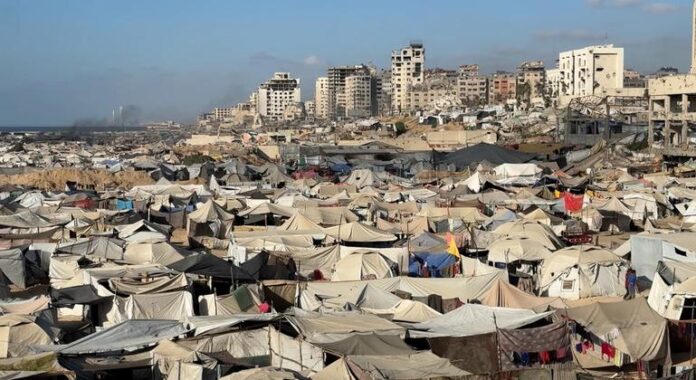
On the border of Sudan-Chad, the United Nations agency is now unable to provide a “basic refuge” to more than six out of 10 refugees fleeing the conflict. Thousands of more vulnerable people have also been blocked in locations of remote borders in South Sudan. “If we just had a little more support, we could bring them to colonies,” She insisted.

Due to the financing cuts, basic activities have already been hardly affected. These include registration of refugees, child protection, legal advice and prevention and responses to sexist violence.

All sectors of help strike

In South Sudan, 75% of safe spaces for women and girls supported by UNHCR have closed. This means leaving up to 80,000 women and girls refugee without access to medical care, psychosocial support, legal aid, material support or income -generating activities. This includes survivors of sexual violence, noted the UNHCR.

“Behind these figures are a real life suspended in the scale”, ” Ms. Hyde said.

“Families see the support on which they leaning on Vanish, forced to choose between feeding their children, buying medication or paying rent, while hope for a better future slips out of sight. Each sector and operation have been affected and critical support is suspended to maintain rescue aid. ”

Afflux de Libya

Many of them affected by the war in Sudan have made the decision to pass from Chad and Egypt in Libya, in the hands of smugglers who dangerously overload boats with desperate people seeking to cross the Mediterranean Sea in Europe.

“What we observe now is that in terms of arrivals in Europe of … Sudanese refugees, [it] has has increased since the start of the year by around 170% compared to the first six months of 2024“Said the HCR spokesperson, Olga Sarrado.

Reduced support from Niger to Ukraine

In the camps welcoming the Rohingyas refugees from Myanmar to Bangladesh, the education of some 230,000 children could now be suspended. Meanwhile, in Lebanon, “the UNHCR health program may be closed by the end of the year,” continued Ms. Hyde.

In Niger and other emergency circles, reductions in financial aid for the refuge have left families in overcrowded structures or at risk of homelessness. In Ukraine, financial aid has also been reduced, “leaving the uprooted families unable to afford rent, food or medical treatment,” she noted.

Assistance to the return of the Afghans has also become another victim of the reductions in the world aid. About 1.9 million Afghan nationals have returned home or have been forced since the start of the year, “but financial assistance for returnees is barely sufficient to afford food, not to mention rent, undergoing efforts to ensure stable reintegration,” said UNHCR.

Legal aid has stopped

Overall, several UNHCR operations have struck by serious financing gaps had to reduce investments in strengthening asylum systems and promoting regularization efforts.

In Colombia, Ecuador, Costa Rica and Mexico, any lack of prolonged legal status means prolonged insecurity for people in moving, said the United Nations agency. The result is the deepening of poverty “because refugees are excluded from formal employment and greater exposure to exploitation and abuse,” said Ms. Hyde.

About one of the 550 out of three offices in the world was affected by the cuts, Ms. Hyde told journalists in Geneva:

“We are not able to do so much contingency planning; What we are able to do is make decisions on priorities and, at this stage, priorities as I mentioned are dramatic. ”

For 2025, UNHCR needs $ 10.6 billion. Only 23% of this amount was provided.

“In this context, our teams focus on efforts to save lives and protect those who are forced to flee,” said Ms. Hyde. “If additional funding becomes available, UNHCR has systems, partnerships and expertise to resume and increase assistance quickly.”

Originally published at Almouwatin.com

Pakistan reels under monsoon deluge as death toll climbs

0
Pakistan reels under monsoon deluge as death toll climbs

Punjab, Pakistan’s most populous province, reported at least 63 casualties and 290 injuries in the past 24 hours, pushing the nationwide toll since the seasonal rains began on 26 June to over 120 fatalities, according to the National Disaster Management Authority.

The unfolding crisis – rising rivers, forecasts of further downpours, fragile rural homes collapsing and transport links severed – has revived stark memories of the catastrophic 2022 floods that submerged a third of the country and affected more than 33 million people.

More intense rainfall is forecast over parts of central and northern Pakistan in the next 72 hours. Weather forecasters have warned of “exceptional high” flood levels of up to 450,000 cusecs at some locations along the Jhelum River. One cusec equals one cubic foot of water – equivalent to 28.4 litres or 7.5 gallons – per second.

There are also fears of glacier lake outburst floods in the Khyber Pakhtunkhwa and Gilgit Baltistan regions.

Wider UN contingency – major stock gaps

Managed by the Office for the Coordination of Humanitarian Affairs (OCHA), the UN presence in Pakistan released an inter‑agency monsoon contingency plan earlier this month.

The plan lays out response triggers, sector roles and arrangements for floods, storms and landslides – under the leadership of the Government.

However, pre-positioned aid supplies remain far below projected need, with key sectors such as protection, nutrition, and shelter and non-food items facing severe gaps.

These shortfalls underscore the urgency of pre‑positioning relief items and securing rapid financing if the rains intensify.

Building resilience

Amid the emergency, the UN World Food Programme (WFP) and the Government of Pakistan this week launched a climate-risk project in Khyber Pakhtunkhwa’s Buner and Shangla districts.

The initiative will establish early warning systems, train communities in safe evacuation and strengthen local capacity for disaster response.

Recurring climate shocks are a driver of hunger and malnutrition, threatening lives, livelihoods and entire food systems,” said WFP Country Director Coco Ushiyama.

“This project represents a multi-layered investment in early warning systems and action.”

Flashbacks of 2022 devastation

The escalating disaster once again reveals Pakistan’s vulnerability to climate shocks.

In 2022, unprecedented monsoon floods killed more than 1,700 people, displaced millions and devastated water systems, leaving millions more in desperate need. The disaster also inflicted immense economic damage estimated at nearly $40 billion, and reversed years of development efforts.

Experts warn that erratic monsoon patterns, amplified by climate change, are hitting the country – and others across southern Asia – harder each year.

Source link

Syria crisis: Hundreds killed in ongoing violence, hospitals overwhelmed

0
Syria crisis: Hundreds killed in ongoing violence, hospitals overwhelmed

Briefing reporters in Geneva, UN human rights office, OHCHR, spokesperson Ravina Shamdasani highlighted “credible” reports of “widespread violations and abuses, including summary executions and arbitrary killings, kidnappings, destruction of private property and looting of homes” in the city of Suweida.

“Among the reported perpetrators were members of the security forces and individuals affiliated with the interim authorities as well as other armed elements from the area, including the Druze and Bedouin,” she said.

Many hospitals are struggling to cope with the influx of injured, the UN refugee agency UNHCR also noted.

Forced to flee

On Friday morning, OHCHR colleagues reported that clashes were continuing and that “a lot of people are trying to flee or have fled the area”, Ms. Shamdasani continued.

The latest updates from the UN humanitarian affairs coordination office, OCHA, on Thursday indicated that nearly 2,000 families had been displaced from areas affected by the fighting.

Hundreds have reportedly been killed since sectarian violence involving the Druze and Bedouin communities erupted on 12 July, triggering an intervention by Syrian security forces.

OHCHR’s Ms. Shamdasani highlighted an incident on 15 July in which at least 13 people were killed when “armed individuals affiliated with the interim authorities deliberately opened fire at a family gathering”.

Briefing an emergency meeting of the Security Council in New York on Thursday, UN Assistant Secretary-General Khaled Khiari also referenced reports of “civilians, religious figures and detainees being subjected to extrajudicial executions and humiliating and degrading treatment”. He urged all parties to protect civilians and civilian infrastructure.

Rumours and fact-checking

Ms. Shamdasani stressed that the UN human rights office has been trying to verify the information through “contacts on the ground…families of people who were killed, eyewitnesses”, but that obtaining reliable estimates of the death toll remains challenging.

“There are lots of videos circulating,” she said. “Some claim to be fighters who are in the area filming the abuses and violations they’re carrying out. We are trying to verify some of these videos, but there’s a lot of disinformation out there and a lot of it is being used to incite further violence to inflame tensions.”

The OHCHR spokesperson also expressed concern about reports of civilian casualties resulting from Israel’s airstrikes on Suweida, Dara’a and central Damascus.

“Attacks such as the one on Damascus on Wednesday pose great risks to civilians and civilian objects,” she warned, calling for the strikes to cease.

Israel had launched the strikes pledging to protect the Druze community.

The violence and displacement have sparked “considerable” humanitarian needs, with the health and aid systems struggling to keep up, said William Spindler of the UN refugee agency UNCHR.

“Many of the hospitals have been overwhelmed by the number of people who have been injured in the recent fighting,” he said.

According to OCHA, the UN World Health Organization (WHO) has dispatched enough trauma and emergency surgery kits for 1,750 interventions to the area, but many “remain undelivered due to access constraints”.

Since the displaced had to flee at very short notice, they are in desperate need of essentials – blankets, jerry cans, solar lamps – but providing these items has been a challenge.

Too risky to enter

“We have this in stock and we are ready to deliver them as soon as the security allows it,” Mr. Spindler said. “For now, this has not been possible.”

He also warned of water shortages due to electricity outages. He said people are unable to buy bottled water or food because of the insecurity.

UNHCR has an office in rural Suweida and Mr. Spindler expressed concern about the impact of the hostilities on the agency’s operations, infrastructure and personnel.

“We know that humanitarian infrastructure has been affected,” he said, describing an incident on 15 July in which a warehouse of the Syrian Arab Red Crescent was severely damaged by shelling.

The UNHCR spokesperson called on all parties to the conflict to respect and protect humanitarian premises, personnel and assets “in accordance with international humanitarian law”.

Source link

Protecting workers by limiting exposure to hazardous chemicals

0
Protecting workers by limiting exposure to hazardous chemicals

The Commission has recommended to set exposure limits for workers to several hazardous chemicals. This should prevent about 1,700 lung cancer cases and 19,000 other illnesses over the next 40 years. The new measures also cover welding fumes that can contain carcinogens.

Source link

EU ministers give green light to progressive start of Entry/Exit system

0
EU ministers give green light to progressive start of Entry/Exit system

The EU has adopted a new law that will see the progressive launch of the Entry/Exit digital border management system over six months. The system will digitally record entries and exits, including fingerprints and facial images, of non-EU nationals travelling for short stays in an EU country.

Source link

Guterres deplores Israeli strike on Gaza church

0
Guterres deplores Israeli strike on Gaza church

Three people were killed and at least 10 others were injured in the bombing of the Holy Family Church in Gaza City, according to media reports.

Stephanie Tremblay, a spokesperson for the Secretary-General, noted that the church was both a place of worship and a sanctuary for civilians.

“Attacks on places of worship are unacceptable. People seeking shelter must be respected and protected, not hit by strikes,” she said during the daily media briefing from New York.

“Too many lives have already been lost,” she added, before stressing the urgent need for an immediate ceasefire and the immediate and unconditional release of all hostages.

Strikes continue amid widespread displacement 

Meanwhile, Israeli strikes over the past 24 hours have hit sites hosting displaced Palestinians, some of whom were injured and killed.

The UN Office for the Coordination of Humanitarian Affairs (OCHA) reported that more than 11,500 people in Gaza were newly displaced between 8-15 July.

Overall, more than 737,000 people have been uprooted since the latest escalation of hostilities on 18 March, or roughly 35 per cent of the population.

Furthermore, nearly everyone in Gaza has been displaced, in many cases multiple times, since the war began in October 2023.

Ms. Tremblay reminded journalists that most housing in Gaza is flattened or otherwise unhabitable and families are staying in the open because the UN has not been allowed to bring in tents and other shelter materials since early March.

Mediterranean swimming ban

She also highlighted a “worrying development” as humanitarians report that many displaced people are wary of bathing in the Mediterranean Sea after Israel reinstated a ban prohibiting swimming and fishing.

“OCHA says that for many, the sea has been their only option to wash, as there is barely any functioning water infrastructure and almost no fuel to pump water, a much-needed outlet in the hot weather in Gaza,” she explained. 

More fuel needed

Humanitarians also continue to report that the amount of fuel Israel is allowing into Gaza is still nowhere enough to keep life-saving services operating and shutdowns are a real risk. 

Ms. Tremblay mentioned “a small but important step” that occurred on Thursday, as the UN was finally allowed to bring in some benzene – used to power ambulances and other critical services – for the first time in more than 135 days.

“That’s in addition to the limited amounts of diesel allowed over the past week. But it’s not enough,” she said.

“We are calling for more fuel – both benzene and diesel – to come in regularly. And the ban on shelter materials needs to be lifted immediately. Lives depend on both.” 

Source link

Russia’s war of aggression against Ukraine: EU adopts 18th package of economic and individual measures

0
Russia’s war of aggression against Ukraine: EU adopts 18th package of economic and individual measures

The Council adopted its 18th package of economic and individual restrictive measures designed to target vital sectors of the Russian economy such as energy and banking, further weakening the regime’s ability to wage its illegal, unprovoked and unjustified war of aggression against Ukraine.

Source link

While war rages in Ukraine, organized crime takes new forms

0

Since February 2022, the legal and illegal economies in Ukraine have been seriously disrupted by the war.

The report examines the evolution of the structures of the crime organized in the country and is focused on six distinct areas: drug trafficking and production, online and fraud scams, arms trafficking, economic crime, trafficking in people and facilitation of illegal exit and escape.

“War not only inflicted incalculable suffering on the Ukrainian people, but has also triggered a marked development of organized crime – which may have profound implications for the country’s journey to takeover and reconstruction,” said Angela Me, head of research and analysis Unodc.

Drug trafficking

While cocaine and heroin trafficking in Ukraine has decreased considerably since 2022, production and traffic in synthetic drugs such as Cathinons and methadone have increased.

The expansion of Cathinone traffic in recent years has been facilitated by Darknet, in particular through market platforms such as Hydra, which was dismantled in April 2022.

Regarding methadone, the report noted that most of Ukrainian production is treated in the country and not abroad, because domestic demand for drugs are increasing.

Arms trafficking

War has also increased the availability of weapons in the country, especially due to a massive influx of weapons in the battlefield.

This surplus leads to an increase in convulsions and violence among civilians, marked in particular by an increase in the violence of domestic and intimate partners.

Although there is no evidence suggesting that large -scale arms trafficking outside Ukraine, UNODC stressed the importance of monitoring the situation in light of the number of weapons available and the historic regional presence of criminal actors specializing in arms trafficking.

Although there is, for the moment, no evidence of drones used in a non -military context, civil drones and 3D printed components for front -line attacks could feed new illicit markets, according to the report.

Trafficking

As around 14 million people were moved by war, some criminal groups have exploited these populations by attracting them to shelters or dwellings disguised as humanitarian assistance suppliers, where they are subject to forced work.

While the intensified border patrol, associated with the almost complete closure of the eastern and northeast borders, limited the smuggling of migrants via Ukraine, the traffickers rather turned to the facilitation of the escape of the project by Ukrainian men.

“The reduction of organized crime is a key requirement to achieve sustainable peace, justice, national security and the protection of human rights,” said Matthias Schmale, United Nations humanitarian resideer and humanitarian coordinator in UkraineAs the World Organization is ready to support the country in this critical work.

Originally published at Almouwatin.com

Simplification: Council adopts law to ‘stop-the-clock’ on due diligence rules for batteries

0
Simplification: Council adopts law to ‘stop-the-clock’ on due diligence rules for batteries

Simplification: Council adopts new law to ‘stop-the-clock’ on due diligence rules for batteries. Source link

Source link

Media advisory – General Affairs Council of 18 July 2025

0
Russia’s war of aggression against Ukraine: EU adopts 18th package of economic and individual measures

Main agenda items, approximate timing, public sessions and press opportunities.

Source link