
In fast-moving work environments, communication breakdowns aren’t just inconvenient—they’re expensive. As organizations scale and teams operate across time
How AI Is Reshaping Workplace Tools — AI PPT Generator in Action
Gaza: The United Nations Rights Office deplores fatal strikes on the Palestinians who bring together firewood

Ohchr In the occupied Palestinian territory, expressed its dismay that “the Israeli army destroys the city of Gaza, forcing the Palestinians to flee and then kills them when they seek a shelter in the middle of Gaza, in particular in and around a nusirat camp.”
In the middle of the current trip and the influx of internal displaced persons (PDI), Israel has intensified the strikes on the northwest part of the Gaza governorate of the Middle, covering the areas of Nuseirat and Az Zawaida.
Tents, houses and a well -filled market
The authorities have at least recorded 12 incidents in the last five days that have killed at least 89 Palestiniansmost of whom seemed to be civilians – including many women and children.
Incidents have included strikes on PDI tents, houses and a crowded market in a Nuseirat camp where at least 17 Palestinians were killed.
” Furthermore, The Israeli army would have launched air strikes from unmanned air vehicles (UAV), artillery bombings and live shots against those gathered the firewoodIn particular in the north of the middle of Gaza, causing dozens of victims, “said the press release.
Between August 1 to September 23, the OHCHR recorded 14 such attacks that killed 21 Palestinians, including at least one child.
The office recalled that “Israel has completely blocked the entrance to cooking gas since March 2, 2025, forcing people to count on wood, mainly derived from flammable debris of destroyed buildings and broken furniture, as the only source of fuel available for cooking.”
Civilians attacked
The OHCHR stressed that Israel is forced to distinguish between civilians and combatants and to refrain from directing attacks on civilians.
“The strikes that kill many Palestinians, including children and women, as well as the use of living ammunition against Palestinians collecting firewood, seem to equip with civilians, clearly not participating directly in hostilities,” said the office.
Support the hungry
Separately, the United Nations coordination office, Ochha,, said These bombings and air strikes continued through the strip, with high -rise buildings would have struck in the areas of Gaza City, notably Ar Rimal, Beach Camp and Tal Al Hawa.
The teams work to provide help to support bakeries and community kitchens. Sunday, partners prepared and delivered some 658,000 meals across the enclave.
However, access north of Gaza is particularly complicated. Daily meals were reduced from 170,000 to mid-September to around 50,000 while the aid partners have moved and increased their operations in the central and southern parts of the enclave.
“Humanitarian partners report that this week, About fifty municipal ovens in Gaza City are operationalHelping some 2,700 families to cook their dough for free, ”said Ocha.
The agency recalled that the UN and the partners were not allowed to provide food aid by Zikim Crossing in the north of Gaza for more than two weeks.
Although many remain in Gaza City and the North, others continue to flee south with 6,900 trips of this type recorded on Sunday through four surveillance points.
Overall, Nearly 453,000 trips have been recorded across Gaza since mid-AugustWith the majority from Gaza City.
Originally published at Almouwatin.com
Ukraine suffers renewed, massive Russian airstrikes overnight
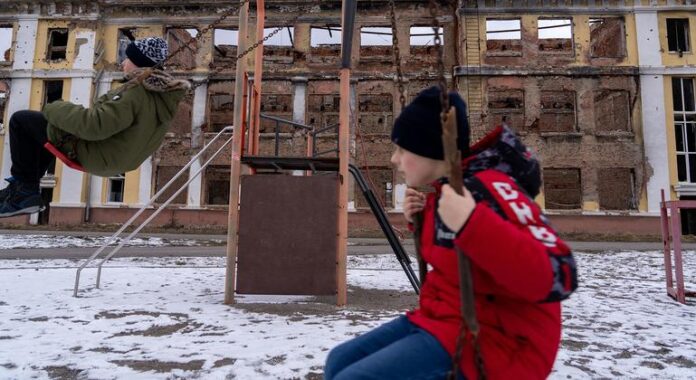
According to the Ukrainian authorities, the attack lasted around 12 hours and involved nearly 600 drones, 46 cruise missiles and five rockets.
“More lives have been lost…homes have been impacted [and] children are among the casualties,” said the UN aid coordination office, OCHA. Densely populated Kyiv and Zaporizhzhia were among the regions that came under attack that destroyed or damaged home and other public services.
The UN World Health Organization (WHO) reported on Sunday that a cardiology facility had also been hit in Kyiv, killing two.
Nuclear plant risks
In a related development, the Russia-occupied Zaporizhzhia nuclear power station continued to use emergency generators to power its six shutdown reactors and other essential nuclear safety and security functions, after suffering its tenth complete loss of offsite power supply last week.
In warning at the weekend, the UN International Atomic Energy Agency (IAEA) said that the plant had enough spare fuel to last at least 10 days and that it was in contact with both sides to restore outside power as soon as possible.
The nuclear watchdog also underlined the “constant dangers” to nuclear safety last week after a drone was downed and detonated approximately 800 metres from the perimeter of Ukraine’s South Ukraine Nuclear Power Plant.
An IAEA team on site reported that 22 unmanned aerial vehicles had been observed late Wednesday and early Thursday, some coming as close as half a kilometre from the site.
The team said that a crater measuring four metres square at the surface and one metre deep had been left by one downed drone. There were no reported casualties.
“Once again drones are flying far too close to nuclear power plants, putting nuclear safety at risk,” said Director General Grossi. “Fortunately, last night’s incident did not result in any damage to the South Ukraine Nuclear Power Plant itself. Next time we may not be so lucky. I continue to urge both sides to show maximum military restraint around all important nuclear facilities,”
Winter threat grows
As winter comes, attacks on Ukraine by Russia have continued to impact energy infrastructure, cutting power to thousands of people.
In the first half of 2025, the UN and partners provided some form of assistance to 2.4 million people throughout the country, with a focus on helping front-line communities. Total needs are more than twice that number.
In addition to significant access challenges in Russian-occupied territories, the humanitarian response remains stretched by the sharp increase in attacks in recent months which has caused new displacement and created additional needs.
The 2025-2026 Winter Response Plan which launched in July seeks $280 million and is about 40 per cent funded.
In line with the reprioritized relief plan for Ukraine – the result of reduced funding for humanitarian work globally – aid workers are focusing on four deliverables:
- assist vulnerable front-line residents,
- support evacuations,
- deliver emergency post-strike assistance and
- help internally displaced people.
OCHA stressed that relief assistance continues to be provided in areas outside the priority focus, particularly in western and central Ukraine.
Republic of Moldova: Statement by the High Representative on behalf of the EU on the parliamentary elections

Statement by the High Representative on behalf of the EU on the parliamentary elections in Moldova held on 28 September 2025.
World News in Brief: El Fasher Last Siege, shock at the attack of Michigan church, believed violent against the demonstrations of Madagascar

Information journalists in New York on Monday, deputy spokesman for the UN Farhan Haq said The taking of the RSF militia is tightening during the last redoubt, with satellite images showing “large groups of people who try to flee on foot” peripheral areas.
“Local sources report that civilians trying to leave the city have been faced with violence, harassment and looting along the unsafe itineraries.”
Help coordination office, OchhaCalls commanders of rival soldiers who fight against the control of Sudan to protect civilians in El Fasher, as required by international humanitarian law.
Mr. Haq stressed a safe passage must be given to those who wish to leave.
Death of malnutrition
Meanwhile, a local association of Sudanese doctors reports that more than 20 people in El Fasher-including children and pregnant women-have died of malnutrition this month only.
“These tragic deaths highlight the urgent need for humanitarian access to reach the besieged population with vital aid,” said Mr. Haq.
The humanitarian situation in the Kordofan region also remains disastrous. The current conflicts have limited access to food, essential supplies, banking services and humanitarian aid, while damaging critical infrastructure.
The UN chief expresses a shock against the deadly attack against the Morman Church in Michigan
The UN Secretary General expressed his shock from the murder of four people in the suburbs of Michigan during the weekend following an attack on a church in Jesus Christ of the last holy meetings.
According to reports, the reason for the attack – in which the church was burned on the ground while the only shooter was killed in an exchange of gunshots with the police – has not yet been determined.
Dozens of people have already been interviewed like the Federal Bureau of Investigation (FBI) continues to work on the case that officials have described as an “act of targeted violence”.
Michigan governor Gretchen Whitmer, during a press conference, asked for the decline in the “temperature of the rhetoric” surrounding the case.
UN deputy spokesperson Farhan Haq said that the UN chief António Guterres “firmly condemns the attack and offers condolences and solidarity to the families of the victims and the inhabitants of the canton of Grand Blanc. »»
‘Odious attack’
The senior United Nations officials Office Works to promote interreligious and cultural dialogue worldwide, Ángel Moratinos, said he was Alarmed “by the odious attack”.
In a press release, the high representative of the UN civilization alliance, Miguel Angel Moratinos, said that the worshipers are sacred sanctuaries where people find peace.
He reiterated that “such acts of hatred and violence are completely rejected and are unjustifiable in all circumstances”.
Mr. Moratinos stressed the urgent need to protect all religious sites and communities, regardless of faith or name.
Madagascar: the head of the United Nations rights condemns the “violent response” of the security forces
United Nations High Commissioner for Human Rights Volker Türk convicted Monday The “violent response” of the security forces during the weekend to peaceful demonstrations in Madagascar.
At least 22 people were killed and more than 100 injured after demonstrators went down to the street for three days, protesting against water and electric cuts.
Reports said that the Malagasy president had dissolved the government following the demonstrations led by young people who would have been inspired by the so-called “Gen-Z” demonstrations in Nepal and Kenya.
The United Nations Rights Office, Ohchrsaid the victims of violent repression by the security forces included both demonstrators and passers -by.
Others have been killed in subsequent generalized violence and looting by individuals and gangs not associated with demonstrators.
Shocked and saddened
“I am shocked and saddened by murders and injuries in demonstrations against water and power cuts in Madagascar,” said Türk. “I urge the authorities to guarantee respect for freedom of expression and the peaceful assembly, in accordance with their obligations under international human rights law.”
Pacific demonstrations began in the capital Antananarivo on September 25, but the security forces intervened, launching tear gas and beating and arresting demonstrators, said the OHCHR. Some officers also used live ammunition.
Other demonstrations quickly broke out in eight other major cities across the country.
The head of the Rights of the United Nations called for the end of the use of an unnecessary and disproportionate force. He demanded the immediate release of all arbitrarily detained demonstrators.
Mr. Türk also urged the Malagasy authorities to institute rapid, in -depth, independent and transparent surveys on violence and to translate those responsible.
Originally published at Almouwatin.com
The “tantamount” denuclearization relying sovereignty: the Minister of the DPR Korea

Kim his Gyong began his speech by congratulating the first address of the UN Secretary General António Guterres On September 23, where he said that no state could tackle global problems alone and promise a United Nations reform.
Although Mr. Kim recognized the role of the United Nations in the promotion of multilateral cooperation to deal with poverty, diseases and sustainable development, he declared that the organization was also confronted with “unprecedented severe crises” – that he blamed at “height and arbitrary and an greed of hegemonic powers”.
“The UN cannot be represented by a certain individual state or by a small group of states,” he said.
Developing countries deserve a larger word
He continued by suggesting that the UN “extends and strengthens the representation of developing countries which occupy an absolute majority of membership in the United Nations and to correct the inappropriate structure led by the West in the Security advice. “”
The North Korean minister noted the alliance between the United States, Japan and the Republic of Korea, saying that it could “evolve quickly to a more offensive and aggressive military block”.
It is only because of the powerful military deterrence of his country that “the will of the enemy states to provoke a war is completely contained”.
Kim said nuclear weapons were now listed in the Constitution of North Korea as “sacred and absolute thing that can never be approached and altered”.
The imposition of denuclearization in the State “is equivalent to requiring it to make sovereignty,” he added.
“We will never give up nuclear power which is our law of the State, national policy and sovereign power as well as the right to existence,” he said.
Economy of autonomy
Kim announced that in the context of efforts to develop an autonomous national economy and achieve production objectives, the completion of an economic plan of five years is “definitively at hand”.
He said 50,000 new houses are under construction in Pyongyang while a new rural development policy gave “tangible results”.
Vice-Minister called Israel to end his genocide and “crimes against humanity” in Gaza and withdraw from the enclave.
“RPDC will promote multifaceted exchanges and cooperation with countries that respect and adopt friendly approaches on this subject,” he concluded.
Originally published at Almouwatin.com
“ Do not submit to a world governed by the brute force ” urges Denmark to world leaders at the UN

She stressed that the UN is “as essential as ever”, even if conflicts will intensify, extreme poverty develops and respect for international law and that standards are eroding.
Since 1945, she noted: “More than a billion people have been out of poverty”, life expectancy and standard of living have increased, and a global network of economic, political and cultural ties has taken shape-the proof, she said, of the central role of the UN.
“As the world changes, the UN must also,” said Ms. Lassen, citing divisions in the Security advice.
“Too often, the Council is divided, incapable or does not want to act … The costs of inaction are felt around the world.”
She called for the expansion of the Security Council and the reform of the international financial system to create “a system that offers for all”.
Peace, climate and reform
Turning to world conflicts, the Danish ambassador described the humanitarian crisis in Gaza as “a disaster of an unbearable scale”, stressing that the two -state solution “remains the only solution to lasting peace”.
In Ukraine, she said that “the war of horrible and illegal choice” could end tomorrow “if only Russia wanted it”. It added the wide impact of the conflict-from the disturbances of the supply chain to world inflation-extends far beyond the battlefield.
She also underlined suffering in Sudan, Afghanistan, Haiti and Myanmar, urging Member States to deal with emergency humanitarian crises.
Climate change, she warned, is a decisive challenge: “In a world of competing crises, climate change and its impact remains real.”
It noted that in 2024, more than 90% of the new power added to the global network came from renewable energies, but said that new measures are essential to reduce emissions and accelerate a fair energy transition.
Call to unity
Quoting Nelson Mandela – “it always seems impossible until it is done” – the Ambassador Lassen urged nations to revive cooperation and solidarity.
“By working together, we arrived here,” she said, echoing the President of the General AssemblyTheme of Better together.
“By working together, we can take up the challenges of today – for people and for the planet.”
Originally published at Almouwatin.com
Nepal highlights young people focusing on young people and calls for global action

It has supervised the recent challenges and achievements of Nepal as part of a broader call to strengthen multilateral action.
Mr. Thapa opened its doors by noting the political movement led by young people at the beginning of the month-“Gen-Z demonstrations”-which required transparent governance, equal opportunities in Nepalese society and the end of corruption.
“Their aspirations concern nothing less than a just, fair and prosperous Nepal,” he said, while moving the violence that made lives and damaged public infrastructure during demonstrations.
He underlined the subsequent political stages as a result of transformational demonstrations, in particular the appointment of the first woman Prime Minister of the country and the next general elections in March 2026.
Mr. Thapa described these developments as stages towards the consolidation of democracy, the reconstruction of institutions and the restoration of public confidence.
World at a crossroads
Regarding global concerns, the ambassador Thapa warned against the increase in military spending, the undisputed commitments towards sustainable development and the worsening of the climate crisis.
He said they recalled that multilateral institutions, including the UN, had to be revitalized to respond effectively.
He also discussed crises in progress worldwide, including war in Ukraine and conflicts in Sudan and Sahel. He underlined the “heavy toll” carried by civilians in Gaza, while calling for the immediate release of all hostages, including a Nepalese student taken by Hamas during the attacks of October 7 in Israel.
Call for global solidarity
Mr. Thapa called for accelerating progress to the 2030 agenda And an ambitious climate action, emphasizing the reduction of emissions and the reduction of renewable energies.
He also underlined the need for a more equitable global representation in international financial institutions and the Security advice -Call them to become more inclusive, transparent and responsible.
Recalling that the UN served for 80 years as a lighthouse of peace, justice, human rights and development, the ambassador Thapa concluded with a plea for collective responsibility:
“When the United Nations succeeds, humanity as a whole succeeds. When it vacillates, it is the innocent and the vulnerable which bear the heaviest cost. Soft together, united and determined, to ensure lasting peace and prosperity in the world. ”
Originally published at Almouwatin.com
Israeli regulation activity accelerates in the West Bank, said the Security Council

Ramiz Alakbarov, Special Deputy Coordinator of the United Nations for the Peace Process of the Middle East, informed of the Secretary General’s quarterly report on the implementation of Resolution 2334 of the Council (2016).
He calls on Israel to “immediately and completely cease any colony activity in the occupied Palestinian territory, including East Jerusalem”, among other measures.
“The regulation activity has nevertheless accelerated,” he told ambassadors.
Advancement of regulations, annexation movements
The report covers the period from June 18 to September 19. Meanwhile, Israeli authorities have advanced or approved some 20,810 dwellings in occupied West Bank, including East Jerusalem.
On July 2, 15, the Israeli ministers and the president of the Knesset, or Parliament, signed a petition calling for Israel to annex the occupied West Bank. Three weeks later, the Knesset adopted a non-binding motion calling for “the application of Israeli sovereignty” in all the colonies there.
The demolitions and convulsions of the structures belonging to Palestinians also increased while the evictions continued.
“Citing the absence of a construction permit issued by Israelis, which are almost impossible to obtain for the Palestinians, Israeli authorities have demolished, seized or forced to demolish 455 structures“He said.
Thirty of the structures were funded by donors and overall, 420 people were moved, mainly women and children.
More deaths and travel in Gaza
Resolution 2334 calls for “immediate measures to prevent all acts of violence against civilians, including acts of terror, as well as all acts of provocation and destruction”.
Mr. Alakbarov addressed the situation in the Gaza Strip, where Israeli military actions have intensified, causing a large number of victims, massive trips and general destruction.
At least 7,579 Palestinians were killed and around 37,201 injured, according to local health authorities. He noted that “1,911 would have been killed while they were trying to collect aid, especially near militarized distribution sites. »»
At the same time, 37 soldiers with Israeli defense forces (FDI) were killed in hostilities while 48 hostages are still detained by Palestinian armed groupsWith 25 who would have died. Thirty UN staff members were also killed during the reference period.
He noted that Hamas and other activists have continued to sporadically shoot rockets without discrimination against Israel. Hamas and the Palestinian Islamic jihad have also published four videos seeming to show hostages in an emaciated condition.
“Alarming” violence in the West Bank
“Meanwhile, the violence in occupied West Bank, including East Jerusalem, continued at an alarming rate,” he said.
In total, 46 Palestinians were killed during Israeli security force operations, armed exchanges, air strikes, settlers, demonstrations, and other incidents, while 890 were injured, especially due to the inhalation of tear gas, living ammunition and by Israeli and other civilians.
The armed Palestinians killed seven Israelis, according to Israeli sources. 62 other people and 14 security forces were injured by the Palestinians in other incidents, including shooting attacks, stabs and blows.
Israeli security forces have also continued their large -scale operations in the cities in the north of the West Bank and refugee camps, in particular Tulkarm and Jenin, as well as operations in other regions.
The report stressed that the children continued to be killed by Israeli security forces, like a 13 -year -old Palestinian who was killed on June 25 during a research operation west of Jenin. Four other teenagers were killed in separate incidents.
‘No legal validity’
Mr. Alakbarov concluded his remarks by sharing the observations of the UN Secretary General on the implementation of the resolution.
He stressed that “Israeli regulations have no legal validity and constitute a blatant violation of international law and United Nations resolutions. They systematically shrink the territory of the Palestinian state and further anchor the illegal occupation of Israel. »»
In addition, the progress of a plan to build some 3,400 dwellings in the E1 zone “is A calamitous development».
He warned that “if he was implemented, he would effectively break the link between the north and the south of the West Bank, more soothing the contiguity of an independent and sovereign Palestinian state, increasing the risk of forced displacement and fueling tensions”.
Originally published at Almouwatin.com
Security Council LIVE: ‘Devastation’ in Gaza and beyond reinforces need to end Palestine occupation
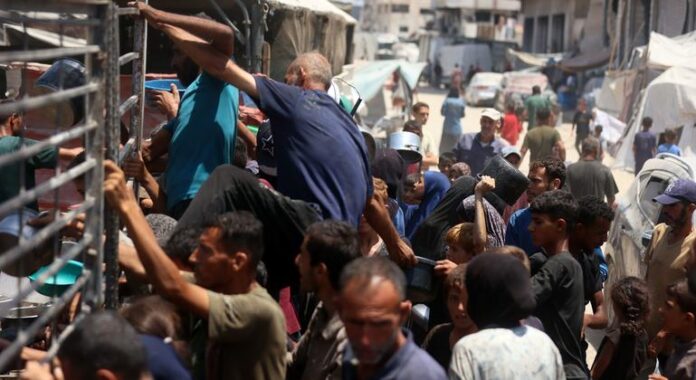
The UN Security Council is meeting to discuss the Middle East crisis and protection of civilians in conflict, as speculation grows of a potential deal to end the war in Gaza with US President Donald Trump and Israeli premier Benjamin Netanyahu meeting in the White House for talks on Monday. Follow live coverage from the council chamber in New York below; UN News app users can go here.
