Monday, May 4, 2026
Home Blog Page 464

‘Attacks on aid workers must end,’ Security Council told

0
‘Attacks on aid workers must end,’ Security Council told

Joyce Msuya, Assistant Secretary-General with UN aid coordination office OCHA, and Gilles Michaud, head of the UN Department of Safety and Security (UNDSS) were speaking during a meeting on the protection of civilians in armed conflict.

Debate focused on Council Resolution 2730 (2024) which calls for upholding the safety of UN and humanitarian staff.

“Allow me to go straight to the point,” said Ms. Msuya. “Attacks on aid workers must end. Perpetrators must be held to account.” 

Deadliest year ever

She told the Council that humanitarian workers are being killed in unprecedented numbers, and 2024 was the worst year on record with 377 fatalities across 20 countries.

This was nearly 100 more than in 2023, which already saw a 137 per cent increase over 2022.  Meanwhile, many more aid workers were injured, kidnapped, attacked and arbitrarily detained.

The past two years have been particularly brutal, she continued. At least 85 humanitarians have been killed in Sudan since war broke out in April 2023.  All were Sudanese nationals.

Killings in Gaza

Furthermore, just three days ago, teams from OCHA and the Palestinian Red Crescent Society recovered the bodies of 15 emergency and aid workers from a mass grave in Gaza who had been killed several days earlier by Israeli forces while trying to save lives.

She added that “this tragedy comes just 11 days after another deadly incident – on 19 March, when yet another United Nations colleague was killed, and six others were injured in Gaza.” 

These deaths bring the number of aid workers killed in Gaza since 7 October 2023 to more than 408, making it the most dangerous place for humanitarians ever. 

Appeal to Council members

Ms. Msuya issued a challenge to ambassadors. 

“Since we are here today to discuss the protection of aid workers, I must ask this Council: what are you going to do to help us find those answers and achieve justice – and avoid more killings?”

While there is no shortage of robust international legal frameworks to protect humanitarian and UN personnel, she said political will to comply is lacking.

Local staff mostly affected

Ms. Msuya noted that the vast majority of those killed, roughly 95 per cent, are local aid workers who are the cornerstone of relief efforts. 

“These colleagues deserve our highest respect. Yet, conduct harming our local staff rarely elicits reaction or makes the news,” she remarked.

Criminalization and misinformation

Humanitarians also face other challenges, such as the criminalization of their work. They are increasingly being detained, interrogated and accused of supporting terrorism simply for delivering aid to people in need.

Aid organizations are also targets of disinformation and misinformation campaigns in places such as Haiti, the Occupied Palestinian Territory, and Yemen. 

Moreover, funding shortfalls threaten to make matters worse, forcing the humanitarian community to make impossible choices, Ms. Msuya underscored.

Respect and accountability

She described the adoption of Resolution 2730 as an important step in the right direction, then made three requests to the Council and Member States at large.

“First, act to ensure respect for international law and to protect humanitarian and UN workers,” she said, listing tangible steps such as Security Council visits, fact-finding missions, or withholding of arms transfers. 

She also called for speaking out and condemning harm to UN and humanitarian personnel, including local staff, because “silence, inconsistency, and selective outrage only embolden perpetrators.”

Her final request was for accountability, highlighting the need to strengthen domestic and international legal frameworks to prosecute international crimes.   

The Security Council should play a key role in pushing for accountability; for instance, by asking concerned governments to pursue justice and by following up with them,” she suggested.

“When national jurisdictions fail, the Council can use international mechanisms, including by referring situations to the International Criminal Court.” 

Focus on survivors

Ms. Msuya insisted that accountability is not only about prosecution but must also centre on those who survive. 

In this regard, she reiterated the UN Secretary-General’s recommendation to adopt a survivor-centered approach to ensure that affected aid workers have a say in global discussions. 

In his briefing, Mr. Michaud noted that progress has been elusive in getting more countries to join the Convention on the safety of UN and associated personnel, while attacks on humanitarian workers have continued unabated.

Impunity now ‘a pervasive normal’ 

“Impunity for attacks on humanitarian personnel has become the new normal,” he said. “A pervasive normal. An accepted normal. One perpetuated not only by non-State actors, but also by governments and their proxies.” 

He said that against a backdrop of widespread disregard for international humanitarian law, UN agencies are now forced to significantly reduce assistance due to budget cuts imposed by several Member States.  

Humanitarian agencies are among the most affected, and the situation could lead to further insecurity.

Funding shortfall risks

“And if, where and when the United Nations and its partners are forced to deliver less aid, the risks to UN and humanitarian personnel will grow,” he warned.

“We are already seeing signs of this in Gaza and elsewhere.  Humanitarian personnel may become the first target of people’s despair.”

Mr. Michaud said that the UN must – and will – adapt, adding that budgetary pressures will also impact the level of security support available.

UN Security commitment

“We will need to adjust our footprint. And in some areas, we may even be compelled by resource constraints to completely withdraw,” he said.

“But the UN Security will do its part through these turbulent times. We will be present wherever our humanitarian partners need us.” 

He said UN Security will also continue to engage with the Council and Member States, including to protect investments made in the humanitarian, peace and security, and development spheres.

He underlined that the Department will always be a steadfast and reliable partner to the humanitarian and development community, as well as Member States.

“But we need attacks on United Nations and humanitarian personnel to stop,” he declared. 

Source link

ESMA consults on simplified insider list formats under the Listing Act

0
ESMA consults on simplified insider list formats under the Listing Act

The European Securities and Markets Authority (ESMA), the EU’s financial markets regulator and supervisor, has launched a consultation paper proposing changes to the format for drawing up and updating insider lists, as part of the Listing Act amendments to the Market Abuse Regulation (MAR).

The Listing Act mandates ESMA to review the Implementing Technical Standards (ITS) on insider lists to extend the simplified format – currently used by issuers on Small and Medium Enterprises (SME) Growth Market – to all issuers.  

The proposed changes aim at reducing the administrative burden on issuers required to draw up and maintain insider lists under MAR.  

Next Steps

The consultation will remain open until 3 June 2025. Based on the feedback received, ESMA will finalise the ITS and submit them to the European Commission (EC) in Q4 2025.


Further information:

Cristina Bonillo

Senior Communications Officer
press@esma.europa.eu

Source link

Danish Youth Take Charge: A Drug-Free Future, One Shop at a Time

0

KINGNEWSWIRE – Press release // In the heart of Copenhagen, a group of 15 young activists—aged 10 to 20—are rewriting the narrative on youth empowerment and community health. Inspired by the principles of the Convention on the Rights of the Child and their faith in the Church of Scientology, these teens are spearheading a grassroots campaign to create a drug-free environment. Armed with educational booklets from The Truth About Drugs initiative, they’re turning local businesses into hubs of prevention, proving that age is no barrier to driving societal change. 

From Booklets to Action: A Youth-Led Movement 

Having started over a month, the group visits shops across Copenhagen, gaining the support of owners and shop assistants to display drug prevention materials at checkout counters. Their approach is simple but impactful: make critical information accessible to everyday customers, sparking conversations about the dangers of substance abuse. “They’re not just kids handing out flyers,” says Giulia, who guides them in this endeavor. “They are showing adults that they care about our future—and that they are taking responsibility for it.” 

Their efforts align with global frameworks like the UN Convention on the Rights of the Child, which emphasizes youth participation in decisions affecting their lives. By engaging directly with businesses, the group embodies the spirit of some of UNICEF’s programs, which empowers young people to design solutions for community challenges. “These teens are bridging gaps between generations, ensuring their message resonates where it matters most” said Giulia, in charge of public affairs at the Church of Scientology in Denmark. 

Tackling a Local Crisis with Global Lessons 

Danish Youth Take Charge: A Drug-Free Future, One Shop at a Time

Denmark has long grappled with youth drug use, particularly in areas like Copenhagen’s Freetown Christiania, where hash consumption reportedly remains prevalent. The group’s campaign addresses this head-on, mirroring strategies from what is done in other countries, and try to instil this to every other European country, combining education with community outreach to combat addiction before it arrives. 

Their work also reflects a vision of supporting recovery and prevention, proving that empowerment starts long before crisis intervention. The program, one of the world’s largest non-state drug prevention initiatives, is fully funded by members of the Church of Scientology, inspired by L. Ron Hubbard’s research on drug prevention and rehabilitation. However, the teens emphasize the universal message of their materials: facts about drug risks, peer pressure, and making healthy choices “Our religion teaches us to serve others, and do it with factual information” says one of the participants, “this is about saving lives, not religious beliefs.” 

A Model for Youth Agency Worldwide 

The group’s initiative resonates with many international programs, by equipping young people to drive social change. By partnering with local businesses, this recently started Truth About Drugs youth group, is fostering a culture of collective responsibility. Their actions also echo WHO’s call for youth engagement in health advocacy, positioning them as allies in Denmark’s public health goals. 

As these teens inspire shop owners and customers alike, they’re proving that meaningful youth participation isn’t a fairy tale. It’s a blueprint for building resilient communities—one booklet and one conversation at a time. “They are not waiting for permission to change the world,” says Ivan Arjona, Scientology’s representative to the European Union and the UN “They are already doing it.”

Myanmar quake: UN calls for urgent protection for vulnerable women and girls

0
Myanmar quake: UN calls for urgent protection for vulnerable women and girls

As emergency aid trickles in, women and girls who were already vulnerable due to years of conflict, displacement and economic instability, now face even greater risks from gender-based violence and exploitation, according to a UN-led coalition responding to the crisis.

“Girls are particularly vulnerable, especially when separated from their families or living in overcrowded shelters without adequate privacy,” it warned, stressing the need for protection measures.

“With many caregivers injured or killed, urgent efforts are needed to identify, protect and reunify unaccompanied and separated children.”

The coalition, formally called the Gender in Humanitarian Action Working Group, is co-led by UN-Women and the UN reproductive health agency (UNFPA).

Reports of temporary ceasefire

News outlets are reporting on Wednesday that Myanmar’s military junta has announced a temporary ceasefire from 2 to 22 April to facilitate emergency relief and rescue operations.

This follows an earlier ceasefire declaration by armed groups opposing the junta earlier this week.

Myanmar remains engulfed in a deepening crisis since the Tatmadaw – as the military is known – overthrew the democratically elected government in 2021, imprisoning top leaders, including President Win Myint and State Counsellor Aung San Suu Kyi.

Pre-existing vulnerabilities

While estimates indicate that up to 20 million people may be affected by the earthquakes, women and girls – who already made up more than half of the 10 million people in urgent need of aid before the disaster – face mounting challenges.

More than 100,000 pregnant women have been caught up in the chaos across central Myanmar, with 12,250 expected to give birth in April.

The destruction of health facilities and damage to roads and bridges have cut off access to essential reproductive health services, endangering pregnant women and survivors of gender-based violence who rely on medical support.

“Prior to the earthquakes, women and girls in Myanmar were already facing significant mental health stress due to prolonged conflict, political instability, and economic challenges. The disaster has deepened this stress,” UN agencies added.

In Sagiang, destroyed buildings show the aftermath of the 7.7-magnitude earthquake that struck Myanmar on 28 March.

Prioritizing action

Women, especially from crisis-affected communities, must be actively involved in designing and implementing assessments to ensure their priorities are reflected,” UN humanitarians underscored.

Women and girls need safe shelter, clean water, and enough food. Shelters should have locks, lights and private spaces. They need secure toilets and bathing areas, along with dignity kits and menstrual hygiene products.

Adequate lighting near water points and toilets can reduce the risk of gender-based violence, especially after dark, with agencies also stressing the need to involve women-led organizations in the response.

Many women-led NGOs “are on the ground and ready to provide support, drawing on their deep community ties and understanding of the context to effectively identify and respond to the specific needs of women and girls,” the UN agencies added.

Limited funding undermines relief

UN relief chief Tom Fletcher has issued an urgent appeal for increased funding to support the aid effort, warning that access to survivors is severely constrained.

While $5 million has been allocated from the UN Central Emergency Respond Fund (CERF) the response “has been hampered by a lack of funding”, he said on Tuesday, alongside disruptions to communications and transport networks.

We are in contact with authorities on how the international community can do more. We must have unrestricted, safe access. All parties must uphold obligations to protect civilians,” he added.

Meanwhile, the UN Office for Project Services (UNOPS) has mobilized $12 million in emergency funding, which is being allocated to partners for cash and food assistance, non-food items, shelter, water, sanitation, debris removal and healthcare, including mental health support.

“We deliver assistance through our valued partners and are deeply grateful to our donors for their swift support, enabling this rapid response. We are prepared to scale up our support as the full extent of the damage becomes clear,” said Sara Netzer, UNOPS Director in Myanmar.

Source link

UN condemns killing of 1,000 people in Gaza since ceasefire collapse

0
Gaza aid worker killings: One humanitarian still missing in mass grave

He condemned the reported killing of more than a thousand people, including women and children, since the collapse of the ceasefire between Israel and Hamas on 18 March.

In his daily press briefing, UN Spokesperson Stéphane Dujarric said that large-scale Israeli shelling and ground operations have resulted in widespread destruction and the displacement of more than 100,000 Palestinians from Rafah in the past two days alone, most of whom have been displaced multiple times.

Deadly attack on medical personnel

“The Secretary-General is shocked by the attack of the Israeli army on a medical and emergency convoy on 23 March resulting in the killing of 15 medical personnel and humanitarian workers in Gaza,” he said.

Mr. Dujarric stressed that all parties to the conflict must protect medical, humanitarian and emergency workers at all times, and respect and protect civilians, as required by international humanitarian law. He underscored the need to end the denial of life-saving assistance.

Since October 2023, at least 408 aid workers have been killed in Gaza, including 280 UN humanitarian personnel.

Resume the ceasefire

Mr. Dujarric said the Secretary-General honours all humanitarian workers killed in this conflict and demands a full, thorough and independent investigation into these incidents.

The UN chief reiterated his strong condemnation of the 7 October 2023 attacks on Israel by Hamas and other Palestinian armed groups, stressing that there was no justification for the terror attacks or the collective punishment of the Palestinian people.

Mr. Guterres renewed his urgent call for the immediate resumption of the ceasefire, the immediate and unconditional release of all hostages, and unhindered humanitarian access throughout Gaza.

UN rejects any attempt at demographic or territorial change

Mr. Dujarric was asked about the plans Israel has announced to take control of more land in Gaza.

“The Secretary-General also reminds that Security Council resolution 2735 (2024) rejects any attempt at demographic or territorial change in the Gaza Strip, including any actions that reduce the territory of Gaza,” he said.

In this regard, the UN chief is increasingly concerned about inflammatory rhetoric which calls on the Israeli military to “capture extensive territory that will be added to the State of Israel’s security areas.”

‘Even ruins have become a target’

Philippe Lazzarini, Commissioner-General of the Palestine refugee agency (UNRWA), reported on Wednesday that Israeli forces shelled one of its buildings in Jabalia in the northern Gaza Strip on Wednesday.

He said in a social media post that the building was previously a health centre and had been badly damaged earlier in the war.  In Gaza, “even ruins have become a target,” he remarked.

Initial reports indicate that the facility was sheltering more than 700 people when it was bombed, and that “among those killed are reportedly nine children, including a two-week-old baby,” Mr. Lazzarini said, noting that displaced families had stayed in the shelter after it was hit because “they have nowhere else to go.”

Investigate all attacks

Since the war began, more than 300 UN buildings have been destroyed or damaged, although the coordinates of these locations have been shared regularly with the parties to the conflict. He said more than 700 people had been killed while seeking UN protection.

Mr. Lazzarini added that too many UNRWA premises have also reportedly been used for military and combat purposes by Palestinian armed groups, including Hamas, or by Israeli forces.

“The total disregard of UN staff, premises or operations is a profound defiance of international law,” he said.

I call once again for independent investigations to find out the circumstances of each of these attacks and the serious violations. In Gaza, all lines have been crossed over and over again.”

Gaza ‘a death trap’

Jonathan Whittall, acting director of the UN Office for the Coordination of Humanitarian Affairs (OCHA) in the Occupied Palestinian Territory, described the situation in the Gaza Strip on Wednesday as a “war without limits.”

He described what is happening there as “an endless loop of blood, pain, death,” saying “Gaza has become a death trap.”

Mr. Whittall was briefing reporters at UN Headquarters in New York via video link from Deir Al-Balah in central Gaza.

The top official noted that he was not sure what he could say to describe the situation on the ground, but decided against mincing his words especially after having coordinated a mission on Sunday that uncovered the mass grave of a number of humanitarian workers who were killed in Rafah.

The dead paramedics were “still wearing their uniforms, still wearing gloves” and killed while trying to save lives, he said. He added that their ambulances “were hit one by one” as they entered an area where Israeli forces were advancing.

He noted that the grave where they were buried had an emergency light from one of the ambulances. 

Mr. Whittall said he began by highlighting this case as it was emblematic of where the Strip stands today: “What is happening here defies decency, it defies humanity, it defies the law,” he said. “It really is a war without limits.”

He said that forced displacement orders resumed after the collapse of the ceasefire, and 64 per cent of the Gaza Strip is now under active forced displacement orders by Israel or within the so-called “buffer zone.”

One month since Israeli aid blockade began

“Nowhere and no one is safe,” according to Mr. Whittall, who said his colleagues tell him they “just want to die with their families” and that their worst fear is to survive alone.

We cannot accept that Palestinian civilians are dehumanized to the point of being somehow unworthy of survival,” he said, noting that a month has passed since aid supplies were blocked from entering Gaza.

Responding to reporters’ questions, he said there was nowhere else in the world, to his knowledge, where an entire population of 2.1 million people is under siege, denied all forms of humanitarian aid, and the commercial sector is destroyed and then expected to survive entirely dependent on aid in a besieged and bombarded area.

He added that the humanitarian crisis in Gaza was spiraling out of control, with all bakeries supported by the UN World Food Programme (WFP) closed, markets reduced to rubble, ambulance teams being killed, and people living on an aid system which is under attack.

Mr. Whittall emphasized the lack of humanitarian solutions to the problems facing Gaza. He stated that the crisis requires political action that begins with accountability, stressing that aid cannot compensate for political failures.

End the cruelty

“I think it’s important for us to acknowledge that what is happening in Gaza is not going to stay in Gaza,” he warned. “We cannot let the rules-based order be replaced by one set of rules for some people, and another set of rules for others.”

The UN official expressed hope that Member States would use their political and economic influence to enforce international law, that a ceasefire would be reached to stop the slaughter and free the hostages, that “Palestinians would be finally seen as human, and that this cruelty will end.” 

Source link

World is ‘failing’ people with disabilities: UN deputy chief

0
World is ‘failing’ people with disabilities: UN deputy chief

Although persons with disabilities represent a sizeable 16 per cent of the world’s population, they still experience a range of health inequities, including premature deaths, poorer health outcomes, and higher disease risk when compared to the general population.

Addressing the Global Disability Summit in Berlin in a video message on Monday, Ms. Mohammed said that providing opportunities to people with disabilities “is a matter of dignity, of humanity, of human rights,” adding that it is a test not only of “our common values,” but also “plain common sense.”

Conflict zones

The Deputy Secretary-General highlighted the vulnerability of people living in conflict areas such as Gaza, Ukraine and Sudan, noting that Gaza now has the highest number of child amputees in modern history.

Too often, persons with disabilities also face inaccessible evacuation routes, shelters, and services – an assault on their human rights and dignity,” she said.

UN research shows that they are often among the first casualties in conflict.

The UN deputy chief focused on a young Palestinian woman called Mai, working for the United Nations in Gaza, who “did not let her muscular dystrophy or her wheelchair confine her dreams.”

Mai, a top student, became a software developer for the UN, “bringing skill and determination to all she did,” but in November 2023, Ms. Mohammed said, “she was killed along with her family,” adding that her story still weighs heavily on our hearts.”

Internationally protected rights

The rights of people living with disabilities are protected by a treaty adopted in 2006 at the United Nations.

The Convention on the Rights of Persons with Disabilities is recognized as the first comprehensive human rights treaty of the 21st century which “clarifies and qualifies how all categories of rights apply to persons with disabilities and identifies areas where adaptations have to be made for persons with disabilities to effectively exercise their rights.”

In the wake of the Convention, nearly 90 per cent of developing countries have laws or policies protecting education for persons with disabilities, yet only about one-third of those countries have accessible schools.

Half of all people with disabilities in the same countries face inaccessible transportation.

“Behind these figures are people,” said Ms Mohammed.

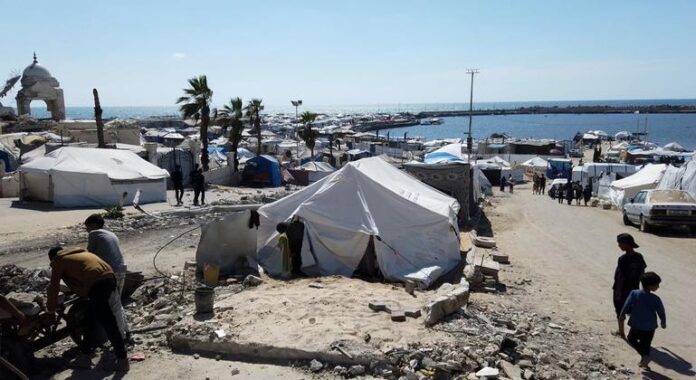
The ongoing war in Gaza has displaced more than 1.9 million people, many who seek shelter in makeshift tents.

Children shut out of classrooms. Adults who cannot get to work. Families denied essential services. This must change. And we must all be part of it.

The Global Disability Summit 2025 is taking place in Berlin from 2-3 April and is expected to bring some 4,000 people together. It has been organized by the governments of Jordan and Germany in collaboration with the International Disability Alliance.  

One significant outcome is expected to be the “Amman-Berlin Declaration on Global Disability Inclusion.”

Source link

Accountability for missing persons is ‘crucial’: UN human rights chief

0
Accountability for missing persons is ‘crucial’: UN human rights chief

That’s one of the alarming updates shared by Volker Türk during a General Assembly briefing on Wednesday, the first informal meeting dedicated to the issue of the thousands who go missing after being targeted each year.

The High Commissioner for Human Rights urged Member States to do more to address the “unprecedented” rise in disappearances, largely driven by armed conflict and growing disregard for international humanitarian law.

Persistent impunity for violations of international humanitarian law fuels more abuses,” he told delegates, calling the scale of the crisis “enormous”.

While the meeting focused on missing persons in armed conflict, disappearances today are also linked to State repression, counter-terrorism measures, migration and the targeting of dissidents and human rights defenders.

“It is precisely in circumstances of conflict, instability, and repression that people are

likely to go missing,” Mr. Türk stressed. “Accountability for those violations is crucial.

Echoing this sentiment, the President of the General Assembly, Philémon Yang, insisted: “We have a moral responsibility to determine and find every missing person.

‘Tip of a very large iceberg’

The Working Group on Enforced and Involuntary Disappearances has handled more than 62,000 cases across 115 countries in the past 45 years. “Sadly, this is just the tip of a very large iceberg,” said Mr. Türk.

Mr. Yang expressed that these figures demand “that we take decisive steps to lessen the hardship and distress.”

The High Commissioner pointed to recent momentum in addressing the issue, including this year’s UN-organized First World Congress on Enforced Disappearances, where governments, civil society and victims’ groups gathered in a show of global solidarity.

A call for stronger frameworks

Mr. Türk outlined three key areas for action, beginning with the need to strengthen and implement international human rights frameworks.

He urged States to ratify and implement the International Convention for the Protection of All Persons from Enforced Disappearance, adopted in 2006 and described as the “key global agreement” on the issue. Only 77 countries have ratified it so far.

The Convention guarantees the right to know the truth about the fate and whereabouts of disappeared persons and the progress of investigations – “exactly what family members need and demand,” said Mr. Türk.

“We must pursue justice and other forms of accountability,” continued Mr. Türk, pointing to widespread impunity as a major obstacle to reparations for victims.

For families, accountability begins with knowing the truth about the fate of their loved ones, regardless of how they went missing,” he said.

He called on States to thoroughly investigate cases, bring perpetrators to justice and build up forensic, judicial and law enforcement institutions to ensure proper identification.

Centre the victims

Mr. Türk said placing victims at the heart of the response is crucial. He emphasised the critical role of families, especially women, who often lead the search for loved ones in precarious and dangerous circumstances.

“In some cases, the law prevents them from obtaining the documents needed to exercise their rights to health, to education, or to property,” Mr. Türk noted, which leaves them stigmatised and at risk of falling into poverty.

Family members are often ignored, disbelieved, or intimidated into silence. “They must feel able – and safe – to speak out for their missing relatives, at home and abroad,” Mr. Türk insisted.

Momentum for change

International efforts can make a real difference, the High Commissioner said, referencing the recent creation of the Independent Institution on Missing Persons in the Syrian Arab Republic, established to clarify the fate of missing persons in the country and support survivors and their families.

In February, the institution’s head visited Damascus and met dozens of families – some of whom were being asked about their missing loved ones for the first time ever.

‘Our common humanity demands it’

Concluding his remarks, Mr. Türk reaffirmed the commitment of his Office to support victims and help States meet their obligations.

OHCHR continues to promote the ratification and implementation of the Convention, follow up on individual cases and connect victims with UN human rights mechanisms.

“We all have a role to play,” he said. “We must commit, together, to doing more for truth and justice, in solidarity with victims everywhere. Our common humanity demands it.

Source link

MSCA awards €608.6 million for doctoral programmes

0
MSCA awards €608.6 million for doctoral programmes

The European Commission has announced the results of the 2024 Marie Skłodowska-Curie Actions (MSCA) Doctoral Networks call.

The Commission will fund a total of 149 excellent doctoral programmes with €608.6 million to train over 1800 doctoral candidates in and outside academia.

€536.9 million will be awarded to 133 standard Doctoral programmes, to train PhD candidates and develop their skills.

Funding includes also €26 million for 8 Industrial Doctoral programmes to train PhD candidates and develop their skills outside academia, including in industry and business. Doctoral candidates will also benefit from joint industry-academia supervision.

An additional €33 million will be allocated to 8 Joint Doctoral programmes, which promote joint selection, training and supervision leading to joint or multiple doctoral degrees.

The European Research Executive Agency (REA) received 1,417 applications for this call. This means a success rate of 10.6 %.

Close collaboration beyond academia

These doctoral programmes are implemented by international partnerships, involving 9335 organisations in 130 countries in the EU, Horizon Europe associated countries and beyond. 4725 of these are private for-profit entities.

Selected projects are coordinated by organisations in 18 countries.

Source link

36 000 free EU travel passes for 18-year-olds

0
36 000 free EU travel passes for 18-year-olds

It’s time for a new DiscoverEU round! Nearly 36 000 free passes are available to 18-year-olds to travel across Europe by train for up to 30 days, from July 2025 to September 2026. Applicants must be born between July 2006 and June 2007 and live an Erasmus+ country. Apply by 16 April.

Source link

EU launches humanitarian air bridge after Myanmar earthquake

0
36 000 free EU travel passes for 18-year-olds

Following the 7.7 magnitude earthquake that struck Myanmar and the broader region, the EU is channelling further assistance to strengthen relief efforts. This includes sending 80 tonnes of tents, child protection kits, health and water and sanitation kits to Mandalay for distribution by EU partners.

Source link