Monday, May 4, 2026
Home Blog Page 465

EU launches humanitarian air bridge after Myanmar earthquake

0
EU launches humanitarian air bridge after Myanmar earthquake

Following the 7.7 magnitude earthquake that struck Myanmar and the broader region, the EU is channelling further assistance to strengthen relief efforts. This includes sending 80 tonnes of tents, child protection kits, health and water and sanitation kits to Mandalay for distribution by EU partners.

Source link

Gaza aid worker killings: One humanitarian still missing in mass grave

0
Gaza aid worker killings: One humanitarian still missing in mass grave

This is a huge blow to us…These people were shot,” said Jens Laerke, spokesperson for the UN aid coordination office, OCHA.

UN human rights chief Volker Türk issued a statement on Monday condemning the Israeli military’s attack, calling for an independent, prompt and thorough investigation into the apparently systematic killings. 

Normally we are not at a loss for words, and we are spokespeople, but sometimes we have difficulty finding them. This is one of those cases,” he told journalists in Geneva, referring to video footage taken near Tal-As-Sultan by an OCHA rescue party showing a crushed UN vehicle, ambulances and a fire truck that had been flattened and buried in the sand by the Israeli military.

Rafah mission

The clearly identified humanitarian workers from the Palestine Red Crescent Society, Palestinian Civil Defence and the UN Palestine refugee agency, UNRWA, had been despatched to collect injured people on 23 March in the Rafah area.

They came under fire from Israeli forces who were advancing in the area, OCHA’s top official in the Palestinian Occupied Territory said, in a detailed post on X.

Jonathan Whittall explained that on the day of the attack, five ambulances, a fire truck – and a UN vehicle which arrived following the initial assault – were all hit by Israeli fire, after which contact was lost with teams.

One survivor said Israeli forces had killed both of the crew in his ambulance, Mr. Whittall said. “For days, OCHA coordinated to reach the site but our access was only granted five days later…After hours of digging, we recovered one body – a civil defence worker beneath his fire truck.”

Bodies buried in the sand

The week-long rescue operation ended on Sunday 30 March with the recovery of the bodies of 15 humanitarian colleagues: eight from the Palestine Red Crescent Society (PRCS), six from the Palestinian Civil Defence (PCD) and the UNRWA worker.

The body of one more PRCS worker is still missing at the site, according to the International Federation of Red Cross and Red Crescent Societies (IFRC), which on Monday repeated its calls for information from the Israeli military.

Available information indicated that the first team had been killed by Israeli forces on 23 March; the other emergency and aid crews were struck one after another over several hours as they searched for their missing colleagues, OCHA said.

High Commissioner for Human Rights Türk said in his statement that the discovery of the bodies buried next to their “clearly destroyed” vehicles was “deeply disturbing”.

This raises significant questions with regard to the conduct of the Israeli army during and in the aftermath of the incident,” he added.

The fate and whereabouts of the missing PRCS worker must be clarified, he stressed.

On Monday, UN relief chief Tom Fletcher demanded “answers and justice” from the Israeli military.

408 aid workers killed

According to UNRWA, 408 aid workers including more than 280 UNRWA staff have been killed in Gaza since the war began on 7 October 2023.

Additional video footage released by OCHA taken from within a UN vehicle near the site of last Sunday’s incident also showed two people walking and then running to escape sniper fire.

According to OCHA, a woman was shot in the back of the head and a young man trying to retrieve her was also shot. The OCHA team managed to recover her body in the UN vehicle.

Despite a demand for “answers and justice” from Israel by the UN’s emergency relief chief Tom Fletcher, no information has yet been provided, his office said.

“We keep engaging with the Israeli authorities daily on this and on other burning matters including, importantly, the critical need to reopen crossings for supplies,” said Mr. Laerke. “Because while this is a huge blow to us on all levels, the crisis itself, just moves on and gets worse every day.”

Atrocity crimes warning

The development comes days after the UN agency warned that acts of war in Gaza “bear the hallmarks of atrocity crimes”, with hundreds of children and other civilians killed in Israeli airstrikes in intensely populated areas and hospital patients “killed in their beds, ambulances shot at and first responders killed”.

James Elder, spokesperson for the UN Children’s Fund, UNICEF, condemned “unprecedented breaches” of international humanitarian law (IHL) in Gaza linked to the resumption of Israeli bombardment and ground operations inside the shattered enclave.

Every day since the ceasefire between Hamas and Israel broke down on 18 March with heavy Israeli strikes, “100 children have been killed and maimed every single day since that moment”, Mr. Elder insisted.

Will-power alone will not help anyone survive “when we see breach after breach of IHL, breach after breach of restricting aid,” the UNICEF spokesperson continued, four weeks since the Israeli authorities shut Gaza’s borders to all commercial and humanitarian aid.

Echoing those concerns, IFRC’s Mr. Della Longa reported that hospitals “are literally overwhelmed” and running out of medicine and medical equipment.

The IFRC spokesperson also warned that a lack of fuel or damage have put “more than half” of ambulance teams of the Palestine Red Crescent out of action.

Source link

Commission presents a European internal security strategy

0
Commission presents a European internal security strategy


The Commission has presented ProtectEU, a new European internal security strategy to support EU countries in guaranteeing security for its citizens. It sets out a workplan with a stronger legal framework, better information sharing and closer cooperation. 

To address increasing security and hybrid threats like terrorism, organised crime, cybercrime, and attacks on critical infrastructure, Europe needs to review its approach to internal security. The strategy aims to adopt a whole-of-society approach that includes citizens, businesses, researchers, and civil society who can contribute to better safety for all. 

Key objectives and actions: 

  • a new European internal security governance 
  • anticipating security threats through new ways of sharing intelligence 
  • more effective tools for law enforcement and stronger justice and home affairs agencies 
  • building resilience against hybrid threats 
  • fighting serious and organised crime 
  • combatting terrorism and violent extremism 
  • the EU as a strong global player on security  

The actions are backed by evidence from the EU Serious and Organised Crime Threat Assessment (EU-SOCTA). The strategy complements the preparedness union strategy and the European defence white paper. Together with the forthcoming European Democracy Shield, they form a comprehensive framework for a safe, secure, and resilient EU. 

For more information 

Press release 

Factsheet 

Questions and answers 

Security and defence 

The European internal security strategy 

Internal Security 

Source link

INTERVIEW: Urgent aid needed as survivors of Myanmar quake struggle amid long-running crisis |

0
INTERVIEW: Urgent aid needed as survivors of Myanmar quake struggle amid long-running crisis |

The UN World Food Programme (WFP) swiftly launched relief operations, but ongoing conflict and funding shortfalls pose serious challenges.

Speaking from Mandalay, near the quake’s epicentre, Michael Dunford, WFP Country Director, described the destruction as overwhelming.

As you drive through the streets, you can see very quickly just the impact of this terrible, terrible earthquake…you hear awful stories that really speak to the need for the international community to respond and respond quickly.

With food, shelter, and medical aid in critically short supply, WFP and other agencies are calling for immediate funding to sustain relief efforts.

Without funding, we cannot do what we need to do…we cannot meet the needs of the people of Myanmar.” Mr. Dunford warned.

In an interview with UN News, he detailes the immense challenges facing survivors and aid workers, the impact of ongoing conflict and why urgent global action is needed to prevent further tragedy.

Read the full interview below. The text has been edited for brevity and clarity.

Michael Dunford, WFP Country Director in Myanmar, speaks to the media in Nay Pyi Taw, with the destroyed Ottara Thiri Hospital in the background.

UN News: You are right now in Mandalay, which is near the epicentre of Friday’s destructive earthquake. Can you describe what you are seeing right now and hearing from the people there?

Michael Dunford: What I am seeing is devastation. I was actually in Nay Pyi Taw on Friday when the earthquake struck. It was a terrifying experience. We ended up under a table, desperately hoping that the roof was not going to cave in on us. Immediately after, we cleared the building. We started to think about how we were going to respond to the needs of the people of Myanmar.

WFP started our first distributions in Nay Pyi Taw, the capital, two days ago, within 48 hours of the earthquake itself. And today I have driven from Nay Pyi Taw first to Sagaing city, which was the actual epicentre, and now I am in Mandalay, which is probably the second largest city and the city that has had the greatest impact from the quake itself.

As you drive through the streets, you see very quickly the impact of this terrible earthquake…you hear awful stories that speak to the need for the international community to respond and respond quickly

UN News: You drove through Sagaing today as you said. How did you see the situation there?

Mr. Dunford: Look, as you drive through the streets, you can see very quickly just the impact of this terrible, terrible earthquake. Buildings are down, infrastructure is disrupted, and you arrive at the feeding sites and you meet the beneficiaries, you meet the people who have been impacted and you hear their stories, and it is devastating.

Today, WFP was feeding the survivors of a mosque that crashed – collapsed – many people lost loved ones, and WFP was providing basic support to those who had lost their breadwinners. Awful stories to hear and it really speak to the need for the international community to respond and respond quickly and for the donors to respond generously.

UN News: There have been several aftershocks since Friday. Have they caused additional damage or hampered your efforts?

Mr. Dunford: I was actually at a distribution point this afternoon, probably around 5 o’clock, and there was a tremor. And immediately people scrambled for safety and got down onto the ground. Fortunately, it was not so severe, but you can sense that everyone is on edge.

We understand that there were two hotels that collapsed in Mandalay last night. A couple of days after the initial earthquake, people went back into hotels, and with these additional tremors, fatalities are still occurring.  

Many people are still sleeping out in the open on the streets or in the parks because they are too scared to go back into their homes. And of course, this is hampering our efforts to reach them and to provide the type of support that they need.

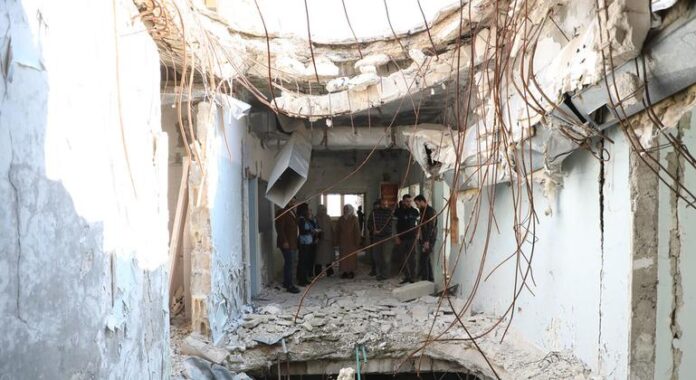
A building destroyed by the earthquake in Mandalay, Myanmar's second largest city.

A building destroyed by the earthquake in Mandalay, Myanmar’s second largest city.

UN News: For your immediate response, what are the key priorities?

Mr. Dunford: From a WFP perspective, of course, it is food and nutrition. We are also gearing up the interagency logistics cluster, and we are looking to see whether we also need to activate the emergency telecoms cluster. In addition, there is a desperate need for health, WASH (water and sanitation) and of course shelter.

UN News: What about other actors engaged in the response? Are there other international agencies on the ground, local partners?

Mr. Dunford: Sure, we are now sharing common offices with the likes of UNICEF (UN Children’s Fund), UNHCR (Office of the UN High Commissioner for Refugees), WHO (the World Health Organization) and OCHA (Office for the Coordination of Humanitarian Affairs).

We are working with national and local NGOs because they know the context, they know the environment and they know – most importantly – the people we are supporting

Many non-governmental organizations (NGOs) are also mobilizing, particularly national and local NGOs, so we are working with them because of course they know the context, they know the environment and they know – most importantly – the people we are supporting.

It is really a holistic effort to respond. It is a difficult situation. You have to remember that even before this crisis, Myanmar was a country already in crisis. At the beginning of the year, we estimated that over 19 million people needed humanitarian assistance, over 15 million were acutely hungry, and another 3.5 million were internally displaced.

UN News: Talking about the conflict. How is the conflict affecting aid delivery, particularly in remote areas or areas contested between the different armed groups?

Mr. Dunford: First and foremost, the conflict has made this country very, very vulnerable. As I mentioned, the humanitarian needs are considerable. And it continues to make our work very difficult.  

There have been approaches to the authorities requesting, first and foremost, an end to the conflict, at a minimum a ceasefire during this period when we all need to be able to respond. We are requesting unhindered humanitarian access. We need to be able to reach affected populations, conduct assessments, and launch our response quickly.

A UNICEF staff member distributes WASH supplies to affected families in Sagaing, the epicentre of the deadly earthquake.

A UNICEF staff member distributes WASH supplies to affected families in Sagaing, the epicentre of the deadly earthquake.

UN News: Even before this disaster, WFP and other agencies were already struggling with funding issues. Now, with the US and other donors scaling back, how much of an impact do you foresee on relief efforts, and what does this mean for long-term response?

Mr. Dunford: Well, without funding, we cannot do what we need to do. And without funding we cannot meet the needs of the people of Myanmar.  

In fact, the meeting that I was holding at the time of the earthquake on Friday was looking at our funding situation, how we would be forced to scale back our operations and even what the implications for our staffing would be.

Without funding, we cannot do what we need to do…we cannot meet the needs of the people of Myanmar

UN News: We spoke about the affected communities and your response. What about the UN staff, especially the national staff in Myanmar? Have they been impacted by this?

Mr. Dunford: Thankfully, from WFP’s perspective, no one has been seriously injured and to my knowledge, no direct family members have been either. That is a huge relief. Just over dinner, I was saying how devastating it would have been if we had lost someone from our team.

But many people in Myanmar have not been so fortunate. There are thousands who are grieving lost family members. The current estimated death toll is close to 3,000, but some fear it could rise to 10,000.  

And behind every one of those numbers, there is a story. Behind every story, there are family members left behind. This is a terrible tragedy – on top of the tragedy that Myanmar has endured for the past four years.

Listen to the full interview here:

Source link

Press release – EP TODAY

0
Press release – EP TODAY

Wednesday, 2 April Source : © European Union, 2025 – EP

Source link

Sudan on brink of famine as fighting ravages Darfur, UN warns

0
Sudan: Access to stricken Zamzam camp ‘is nearly impossible’

Spokesperson Stéphane Dujarric warned that “the humanitarian and security situation in Sudan remains dire and is worsening.”

He highlighted intense fighting around El Fasher, noting, “we are gravely alarmed by reports of intensified hostilities… including attacks in the past two days that resulted in civilian casualties.”   

The plight of displaced persons is particularly acute. “Yesterday, reported shelling in the Abu Shouk displacement camp… killed and injured civilians,” Mr. Dujarric confirmed.

Famine taking hold

This camp is among the critical hotspots where famine is taking hold, alongside Zamzam and Al Salam, and areas in the Western Nuba Mountains, affecting approximately 640,000 people.

The UN Office for the Coordination of Humanitarian Affairs (OCHA) is making an urgent call for action to prevent widespread famine, especially as the lean and rainy season approaches. “It is critical that aid organisations have the safe and unimpeded access to people in need,” OCHA emphasised.

Currently, around 25 million Sudanese face acute food insecurity, a number expected to peak between June and September. Beyond immediate food aid, agricultural assistance is vital to boost local production.   

The UN Food and Agriculture Organisation (FAO) requires over $82 million to support 7.5 million farmers with seeds and essential resources before the planting season in June.

‘Time is running out’

“With the rainy season starting soon, and flooding along key routes likely to compound access challenges, time is running out,” Mr. Dujarric warned.

The conflict has devastated agricultural livelihoods, a lifeline for two-thirds of Sudan’s population. “The ongoing conflict in Sudan has shattered agricultural livelihoods… disrupted market access and left millions of farming families unable to plant or harvest,” he explained.

Destruction of infrastructure and forced displacement have worsened the crisis.   

Economic decline and trade restrictions have driven up food prices sharply, limiting access to basic necessities, the UN Spokesperson added.

“OCHA stresses that timely support to Sudan’s farmers is essential – not only to avert famine…but also to restore livelihoods and build resilience.”   

He underscored the UN’s position that civilians and civilian infrastructure must never be a target. “All parties must uphold their obligations… and take the utmost care to spare civilians.”

Source link

Human Rights: Speech by High representative/Vice-President Kaja Kallas at the EP plenary on the 2024 Annual report on Human Rights and Democracy in the world

0
Press release – EP TODAY

Human Rights: Speech by High representative/Vice-President Kaja Kallas at the EP plenary on the 2024 Annual report on Human Rights and Democracy in the world

Source link

DR Congo: Surging violence as armed groups target civilians in the east, Human Rights Council hears

0
DR Congo: Surging violence as armed groups target civilians in the east, Human Rights Council hears

The grim revelation emerged during a high-level discussion at the UN in Geneva on the human rights situation in DRC.

​​The Council – the UN’s foremost human rights forum – also heard updates on allegations of ongoing abuses in South Sudan and the Central African Republic.

Surging violence

Despite best efforts, armed groups including the Rwanda-backed M23 rebel forces have made major recent gains – occupying cities such as Goma and Bukavu – causing mass displacement.

Conflict-related sexual violence “is being committed by all parties,” warned UN Deputy High Commissioner for Human Rights, Nada Al-Nashif, citing a 270 per cent spike in reported cases since January.

“Any plans for a sustainable peace must tackle the root causes of the conflict, including the illegal exploitation of the national wealth that lies in natural resources,” she said, also calling for action against hate speech and corruption.

She underscored the alarming scale of the crisis: nearly 26 million people face food insecurity, and over 7.8 million are now displaced nationwide. In the east – where multiple armed groups have battled national forces and allied militia for years – more than 1.6 million children are out of school.

Renewed conflict and repression in South Sudan

Turning to South Sudan, the UN human rights office (OHCHR) Global Operations Division Director, Maarit Kohonen Sheriff, painted a stark picture of escalating violence and political tension.

She noted a “severe security, human rights and humanitarian crisis,” including deadly attacks in Upper Nile State and aerial bombardments that have displaced civilians and destroyed infrastructure.

The Council heard that arrests and detentions linked to political affiliations, including members of the leading opposition militia, known as the SPLM-IO, have raised serious concerns, with some detainees held without access to legal representation or external monitoring.

“The recent house arrest of First Vice President, Riek Machar is alarming,” Ms. Sheriff said, warning of threats to the 2018 power-sharing arrangement under the Revitalized Peace Agreement.

Despite some progress – including new transitional justice laws and the creation of a human rights defenders’ network in Unity State – civic space remains severely restricted, and documented cases of conflict-related sexual violence have risen by 72 per cent compared to the previous year.

Urgent funding needs

Efforts to train prosecutors and police on investigating sexual violence were highlighted as positive, but Ms. Sheriff emphasised the urgent need for funding and international support.

“Human rights technical cooperation efforts will only bear fruit if the parties in South Sudan recommit to the peace agreement,” she said.

The international community must continue to support nation-building efforts and help “prevent a relapse into civil war,” she further emphasised.

Fragile gains in Central African Republic

The Council also heard updates from the Central African Republic (CAR), with Ms. Sheriff recognising the Government’s progress in adopting policies to promote human rights, including new protections for human rights defenders.

Nevertheless, she stressed that the situation “remains difficult”, with violations still being committed by all parties to the conflict.

Ms. Sheriff highlighted atrocities by armed groups such as the Azandé Ani Kpi Gbé militia in Haut-Oubangui, compounded by spillover violence from Sudan

An effective decentralisation process is essential for responsible governance,” she told the Council, urging inclusive local elections and more civic participation, especially by women and youth.

Transparent justice

Independent Expert Yao Agbetse echoed her call, urging full implementation of national reforms and increased transparency in justice. While noting progress, he warned that rights violations remain widespread, particularly in areas under armed group control.

CAR’s Justice Minister, Arnaud Djoubaye Abazene, reaffirmed the Government’s commitment to extending judicial institutions across the country.

“The population is thirsty for justice,” he said, citing efforts to expand courts and upcoming local elections as signs of resolve.

Source link

Myanmar earthquake latest: entire communities flattened, aid teams say

0
Myanmar earthquake latest: entire communities flattened, aid teams say

Speaking to journalists from Yangon on Tuesday, Julia Rees, Deputy Representative of the UN Children’s Fund (UNICEF) in the country described seeing massive needs rising by the hour, after a 7.7 magnitude quake.

“Entire communities have been flattened,” she said, with children and families sleeping out in the open with no homes to return to.

“I met children who were in shock after witnessing their homes collapsed or the death of a family member… some have been separated from their parents and others are unaccounted for,” she explained.

Some 72 hours after the quake rocked Mandalay and Sagaing regions as well as Nay Pyi Taw and southern Shan state, the death toll has risen to around 2,000, according to the country’s military junta, with hundreds unaccounted for and thousands injured.

“The window for lifesaving response is closing,” Ms. Rees said, while across the affected areas, families face acute shortages of clean water, food and medical supplies. But conditions remain extremely challenging as aid teams are working “without electricity or sanitation, sleeping outside, like the communities we serve”.

International response

The UN Office for the Coordination of Humanitarian Affairs (OCHA) said that local search and rescue teams, supported by international rescue units from a number of countries including China, India, Russia, Thailand and Bangladesh, have been “intensifying their efforts” particularly in central Myanmar, which has continued to experience aftershocks.

The UN’s top humanitarian official on the ground, Marcoluigi Corsi, freshly back from a visit to the country’s capital Nay Pyi Taw said that as the critical window for finding survivors under the rubble was narrowing, conditions in the affected areas continued to deteriorate.

“You have no electricity, you have no running water,” he said, while people were battling the summer heat. “Often there are aftershocks and people are scared to go inside their homes,” he added.

Hospitals overwhelmed

Dr. Fernando Thushara, the representative of the World Health Organization (WHO) in Myanmar, said that in Nay Pyi Taw, he saw hospitals “overwhelmed with patients”.

“The medical supplies were running dry. There were electricity disruptions in some hospitals… and shortages of running water,” he said, adding that in some cases power generators were not working and hospitals were short on fuel.

Dr. Thushara warned that a lack of fresh water and sanitation could fuel outbreaks of infectious diseases “unless we control them very quickly”.

He recalled that a few months back, several townships in Mandalay had been affected by cholera. About 800 cases of the water-borne disease had been reported until February across nine states and regions in Myanmar, while other infectious diseases such as dengue, hepatitis, malaria may spread further.

The dire health situation is not the only crisis confronting the people of  Myanmar. UN refugee agency (UNHCR) spokesperson Babar Baloch stressed that the country is “reeling” from four years of conflict sparked by a military coup in 2021, while the UN’s Mr. Corsi said that in the past few years it has suffered a cyclone and massive flooding.

Mr. Baloch spoke of a “double tragedy” for the people of Myanmar, highlighting the fact that even before the devastating earthquake hit, all the affected areas already hosted 1.6 million displaced people.

Mr. Corsi stressed that the disaster-affected communities’ resilience is now highly compromised. Close to 20 million people across the country were already in need of humanitarian assistance before the earthquake hit and over 15 million were going hungry. Over three months into the year, the UN’s $1.1 billion humanitarian appeal for Myanmar remains only five per cent funded. “This is time…for the world to step up and support the people of Myanmar,” he concluded.

Source link

The transformative power of AI

0
The transformative power of AI

Welcome address by Christine Lagarde, President of the ECB, at the ECB conference on “The transformative power of AI: economic implications and challenges” in Frankfurt, Germany.

Frankfurt, 1 April 2025

It is a pleasure to welcome you to our conference on the transformative power of AI.

In the early stages of a new technological breakthrough, it is often hard to discern fact from fiction. We struggle to imagine the ways in which the new technology will be used. And even if we predict the direction of technological change correctly, we rarely get the timeline or the size of the impacts right.

Today, we sometimes hear claims that AI is improving so fast that we are only a few years away from the nature of work being radically reformed. But we also hear arguments that the same barriers that slowed down the adoption of all past technologies will also delay AI adoption.

I cannot claim to know which vision will prove to be correct. But the early evidence is promising and, in my view, we must act on the basis that we are facing an economic revolution. This attitude will be particularly important here in Europe.

On this side of the Atlantic, we are still paying the price for having been too slow to capitalise on the last major digital revolution, the internet. The tech sector explains around two-thirds of the productivity gap between the EU and the United States since the turn of the century.

And now we are faced with a technology that can improve its own performance through self-learning mechanisms and feedback loops, enabling even more rapid advances and innovations. The risks of underestimating the potential of AI, and falling behind again, are simply too great to be ignored.

What’s more, we are facing a new geopolitical environment in which we can no longer be sure that we will have frictionless access to new technologies developed overseas. This new reality strengthens the case for Europe to establish itself at the technological frontier.

There are two main areas where we should expect, and prepare for, major changes in the economy.

The first is productivity.

We can already see the productivity effects of AI in sectors like the US tech sector, where output is expanding while employment is falling.[1] But we are still in the early phase of the “productivity J-curve”, where new technologies diffuse to the wider economy and are reflected in GDP.

As such, estimates about the productivity gains of AI vary widely – but even at the lower end they would be a game changer for Europe.

One widely accepted methodology estimates that the euro area could see a boost to total factor productivity (TFP) of around 0.3 percentage points per year over the next ten years.[2] Compare that with the past decade, when annual TFP growth averaged just 0.5%.

Other estimates point to much larger gains, with productivity expected to grow 1.5 percentage points faster annually if AI is widely adopted over the next decade.[3]

Whether Europe can achieve such productivity gains will depend on whether we can improve the environment for AI innovation and diffusion.

This comes down to funding, regulation and energy.

As I have been arguing for some time, Europe’s relatively small venture capital ecosystem is a major hindrance to building foundational models in the EU.[4] Between 2018 and 2023, around €33 billion was invested in AI companies in the EU, compared with more than €120 billion in their US peers.[5]

Building and developing this technology also requires considerable investment in data centres, and the EU currently has around 4 times fewer dedicated sites than the US.[6]

At the same time, ECB research finds that regulation and a lack of institutional quality are particularly detrimental to the expansion of high-tech sectors relative to more mature technologies. Investing in radical technologies is highly risky and needs a different set of framework conditions.[7]

The adoption of AI, for example, depends on access to data pools to train models, which requires smart regulation to avoid data fragmentation while ensuring data protection. It also requires good institutions as, for instance, effective legal systems are needed to defend a non-patentable asset like a set of AI prompts.

Our research shows that if the EU’s average institutional delivery were raised to the level of best practice, AI-intensive sectors would see their share in investment rise by more than 10 percentage points.[8]

Finally, unless we see major breakthroughs in efficiency, Europe’s energy supply constraints could pose a challenge to the diffusion of AI through the economy in the future.

The power consumption of data centres is expected to triple in Europe by the end of the decade.[9] AI training and inference is extremely energy-intensive.[10] And this surge in demand comes at a time when the green transition is also increasing the demand for electricity, for example for charging battery electric vehicles.

There is now a clear policy agenda in Europe to address these barriers. It is widely recognised that we need to build a savings and investment union to jump-start European venture capital, that we must simplify complex digital regulations and improve permitting speeds, and that we have to massively increase investment in data centres, fibre-optic networks and electricity grids.

But for Europe to make the most of the AI revolution, how the productivity gains from AI are harnessed also matters. Labour productivity can be increased either by reducing labour inputs relative to outputs, or by raising outputs relative to inputs. The employment implications of each route are vastly different.

This brings me to the second area of major change: the effect of AI on labour markets.

According to ECB research, between 23% and 29% of workers in Europe are highly exposed to AI.[11] This does not necessarily herald a “job apocalypse”. It is reasonable to expect that AI will follow historical patterns by displacing some jobs while creating new one.[12]

But there are two new questions that this technology poses.

First, will the pace of technological change be faster than in previous transitions? This question is critical for Europe, as our social model and traditionally high levels of job protection make it hard to see how a transition that leads to massive job reallocations could avoid a major backlash.

The key factor will be whether AI leans more towards job displacement via its “automation potential”, or towards changes in the nature of work via its “augmentation potential”. In the augmentation scenario, workers will still need to adapt to changing roles and tasks, but the transition will likely be easier.

Recent research by the ILO finds that only a small share of jobs – around 5% in advanced economies – meet the criteria for high automation. But a much larger share – over 13% – meet the criteria for high augmentation.[13]

The second question is about the distribution of gains.

Early studies suggested that AI could increase the productivity of lower-skilled workers the most.[14] But newer studies looking at more complex tasks – like scientific research[15], running a business[16]and investing[17]– tell a different story. High performers benefit disproportionately and, in some cases, less productive workers see no improvements at all.

So even if AI augments more than it automates, we are likely to see an increase in labour market inequality. Demand for higher-skilled workers who can use AI most effectively will rise, while those less able to learn new skills could suffer.

All told, I do see a path for Europe to adopt AI without fracturing its social model. But it will require massive complementary investments in skills to prevent a rise in inequality.

Crucially, this will not require everyone to become coders, which would probably set the bar too high. According to the OECD, most workers who will be exposed to AI will not need specialised AI skills to get ahead in their careers.

In fact, the most sought-after skills in highly exposed jobs will be linked to management and business – skills that many people have the capacity to learn.[18]

The CEO of Anthropic, Dario Amodei, has described the potential capabilities of AI as being like “a country of geniuses in a data centre”.[19] If this proves to be correct, it is both an awesome prospect for humanity and a daunting one for individual workers.

I believe we must act today, and especially in Europe, with the mindset that this future will likely come to pass. We must remove all the barriers that will prevent us from being at the forefront of this revolution.

But we must also prepare for the human and climate impacts of this transition, and we need to start now.

I trust that this conference will generate the ideas we need to move forwards.

Source link